
Breathing Through the Grey: Learning to Govern Air Quality in Punjab, Pakistan
Guest blog by Felipe Conceição, Vlad Dobrokhlib, Mallory Escobar González and Yamini Saxena
In Punjab, Pakistan, air pollution is not background noise. It is a defining feature of daily life, measured in school closures, hospital admissions, and years quietly subtracted from lifetimes. Residents of the province are losing an estimated seven years of life expectancy to chronic exposure to air quality that consistently exceeds both national and WHO safety standards. During peak smog episodes, nearly 14 million people face hazardous conditions. Children and older adults carry the heaviest burden; their face masks and inhalers are far more prevalent than they should be.
Our team, the Smog Navigators, spent seven weeks working on this problem through the Problem Driven Iterative Adaptation (PDIA) approach, in partnership with Muhammad Ahmad Awan Malik of the Smog Monitoring Unit (SMU) at Punjab’s Planning and Development (P&D) Board. What began as a broad concern about hazardous air became a precise reckoning with institutional design, political economy, and the stubborn distance between policy and practice.
We entered the project expecting to find gaps: missing regulations, absent monitoring systems, or underdeveloped enforcement tools. Punjab confounded those expectations. The province already has over 170 anti-smog activities coordinated across 14 departments, real-time monitoring infrastructure, and a comprehensive action plan. Competent, mission-driven public servants are working on the problem. The smog persists not because the state is absent, but because its efforts are episodic.
Engagement with government officials and Pakistani citizens quickly revealed what documents alone could not: the government operates on a crisis-driven attention cycle. Political attention, enforcement intensity, and departmental coordination spike during the highly visible winter smog season, from October to February. Once visibility improves and public pressure recedes, momentum dissipates, even though hazardous air exposure continues year-round. Citizens told us about children kept indoors during smog season and families retreating to the mountains simply to breathe clean air. These accounts sharpened what statistics could only approximate.
The real bottleneck, we came to understand, was not a shortage of action but an absence of actionable learning. Departments generate relevant data, including air quality indices, respiratory hospital admissions, and vehicle inspection records, but that information remains trapped in bureaucratic silos, rarely integrated and rarely used to assess what actually works. The system acts without a learning architecture.
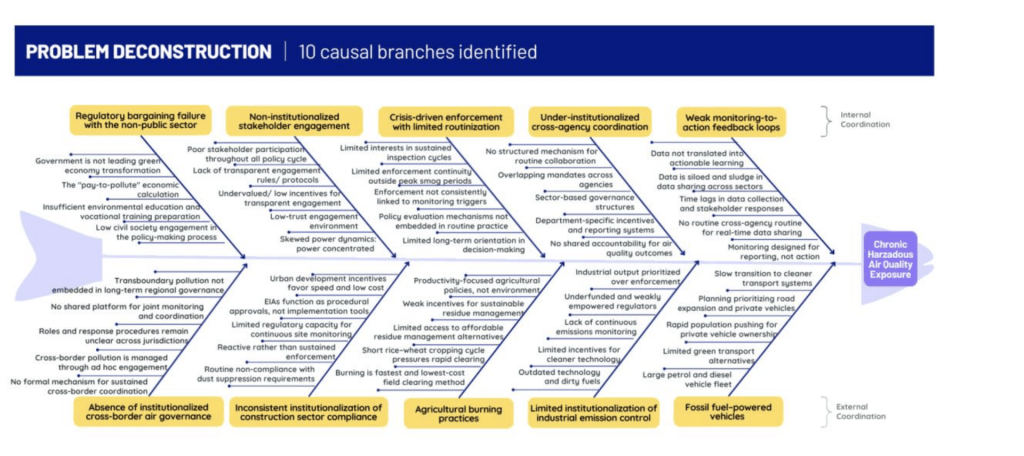
PDIA gave our team the discipline to sit with that complexity rather than escape into solutions. Using a fishbone diagram and the “5 Whys” approach, we mapped 10 root causes and nearly 50 sub-causes, eventually recognizing that they clustered into two categories of governmental coordination failure: internal issues, such as sluggish data sharing and weak leadership on private sector green transition, and external ones, including absent cross-border pollution agreements and intermittent enforcement. The fishbone was not a static artifact; we revised it repeatedly as new information arrived, and each revision forced a more honest conversation about what we actually understood.
The AAA Analysis, testing each potential entry point against authority, acceptance, and ability, proved equally clarifying. It helped us distinguish between ideas that were conceptually attractive and those that were genuinely actionable within existing constraints. This discipline moved us from broad reform ambitions toward specific, politically feasible entry points: a competitive Smog Innovation Fund to finance local mitigation solutions, a proposal to maintain existing coordination channels year-round rather than allowing them to go dormant after smog season, and a Regulatory Bargaining Pilot offering targeted sectors enforcement flexibility in exchange for measurable emissions reductions.
Our understanding of authorization evolved substantially across the seven weeks. Early in the process, we underestimated our authorizer’s influence. The SMU lacks dedicated analytical staff and a ring-fenced budget, which makes it appear limited. We learned, however, that it operates under the P&D Board, which controls cross-departmental development budgets across Punjab. That structural position carries significant latent authority, authority that grows as credibility accumulates. By running short iteration cycles and sharing regular briefs, we found ways to keep our authorizer informed without creating a burden. Small wins built a visible track record of evidence-based adaptation, and that track record expanded the political space available to us.
The proposals that gained traction were precisely those that aligned with what our authorizer could actually do. The Smog Innovation Fund and the Regulatory Bargaining Pilot, which offered targeted sectors enforcement flexibility in exchange for measurable emissions reductions, resonated because they matched the authority, acceptance, and ability levers our authorizer genuinely held. Solving complex problems, we came to appreciate, is less a technical exercise than a relational and political one.
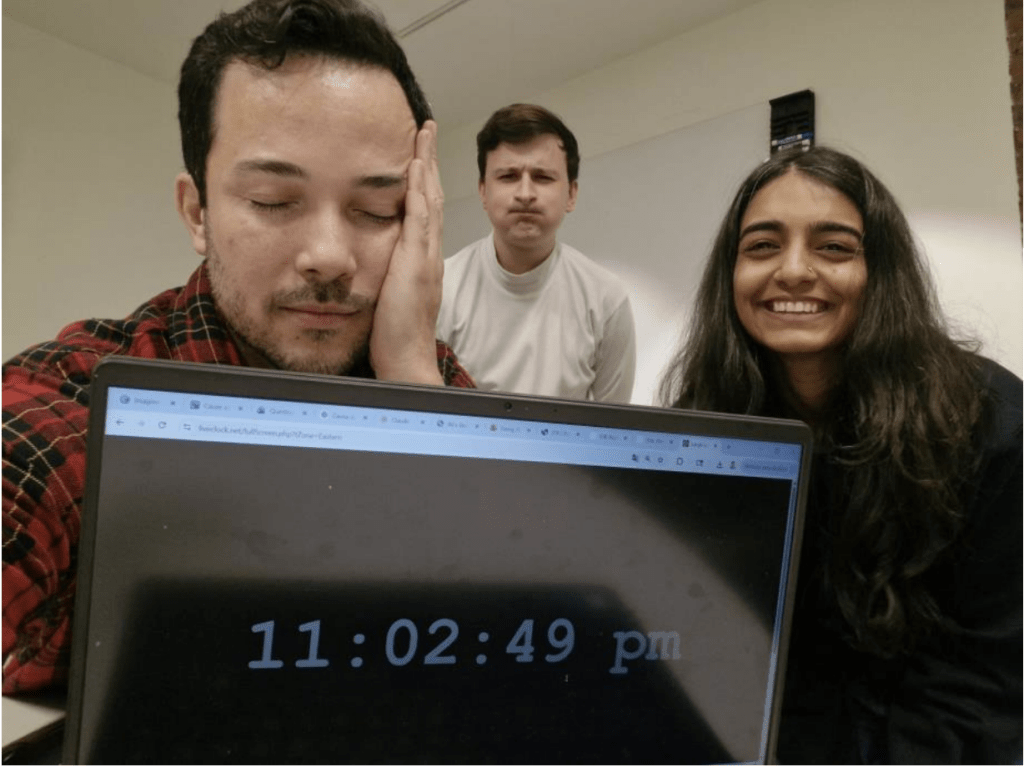
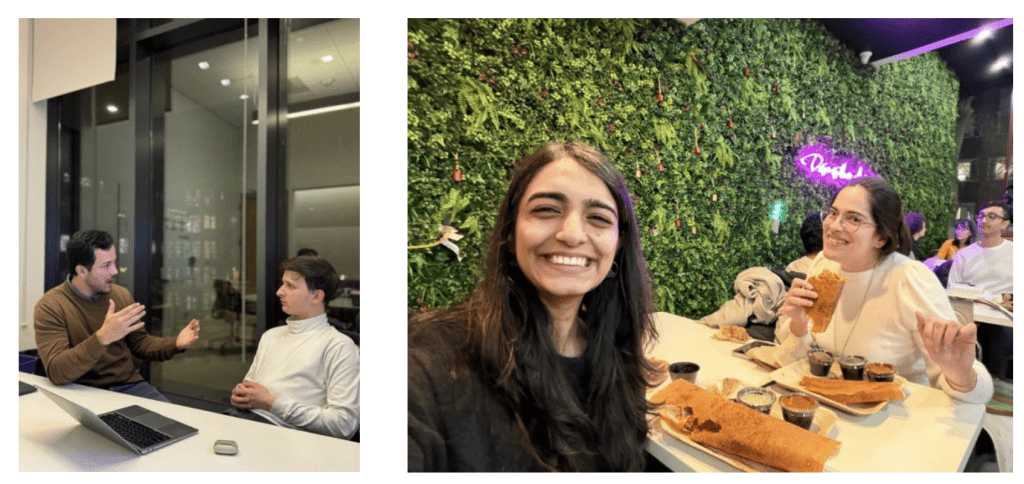
The team itself was a site of learning. We came from different professional backgrounds, time zones, and cultural contexts, and those differences were an asset we had to work to unlock. Without psychological safety, team members tend to self-censor and default to politeness over honesty. Building genuine trust required deliberate effort: modeling vulnerability, asking questions rather than asserting answers, and creating space for productive disagreement.
We were also vulnerable to a specific pressure common in short-term teams: the urge to reach consensus quickly in order to feel like progress is being made. We had to actively resist that pull, learning to treat a better question or a revised assumption as a meaningful form of progress, not a setback. When we eventually had an honest conversation about communication breakdowns, including unclear norms on our team channel and coordination problems across time zones and the demands of Ramadan, we amended our team constitution, and the friction dropped considerably.
Reaching senior political leaders in Pakistan through our networks proved harder than expected, which left gaps in our understanding of how political incentives shape enforcement. We widened our circle instead, drawing on Pakistani classmates and colleagues whose lived experience in Lahore offered a political economy context we could not have found through official channels alone.
The arc of our seven weeks was one of progressive clarification. We moved from a surface-level understanding of the smog crisis to a precise account of its institutional mechanisms, then onward to pitching concrete, bite-sized proposals to senior government leadership. Our fishbone grew more refined. Our entry points grew more specific. Our authorizer’s engagement deepened.
What we found, ultimately, is that Lahore’s smog is not primarily an environmental problem. It is a governance problem: the gap between what the state formally does and what it institutionally learns. Progress depends not on more plans but on building the routines that allow interventions to be tested, tracked, and adapted over time. A less smog-burdened Punjab requires not just better technology or stricter enforcement, but the institutional capacity to measure honestly, coordinate across seasons, and persist long after the visible emergency fades.
The PDIA experience changed how we think about our professional roles. We will resist the institutional pressure to arrive with polished, comprehensive reform proposals that look coherent on paper but cannot survive contact with political reality. The AAA framework will remain with us as a discipline for identifying what is genuinely actionable, rather than what is merely desirable. We will invest in iteration cycles and honest briefs rather than in final deliverables that age quickly and go unread.
Most durably, we leave this experience with a different relationship to uncertainty. Complex problems are not solved in a single cycle. They are addressed through coalitions, routines, and the accumulated credibility of people who stay engaged beyond the crisis period. Sustainable change, we learned, requires building capacity within the system rather than importing solutions from outside it. We will approach future challenges with intellectual humility, genuine curiosity, and a deep respect for the people who live inside those realities every day.
If there is one lesson we would offer to practitioners approaching problems like ours, it is this: do not chase solutions; chase the root cause. Start small enough to move, but meaningful enough to teach you something real. Hold the diagnosis long enough to earn the right to propose. And when you think you finally understand the problem, go back and ask one more question.
The smog in Lahore taught us that the distance between a good plan and a functioning institution is measured in relationships, routines, and the willingness to keep learning when the skies temporarily clear.
This is a blog series written by students at the Harvard Kennedy School who completed “PDIA in Action: Development Through Facilitated Emergence” (MLD 103) in March 2026. These are their learning journey stories.