


Story Spotlight
Discover how practitioners are taking what they learn in our programs and putting it into practice on real-world challenges.
Impact Stories
These are stories of our alumni who are taking small steps, learning by doing, and building networks to make progress where it matters most. Read their blogs and listen to their podcasts to learn more.

How IPP Transformed Her Public Service Career
Read Carolyn Kandusi’s reflections on applying PDIA principles to champion social-public partnerships across Africa—sharing how the journey reshaped her approach to problem-solving by emphasizing patience, deep problem construction, and the power of engaging entire ecosystems to drive change.

Using PDIA for Systemic Change in India
Hear Sampath Kumar reflect on how being introduced to the PDIA approach when he was a student at HKS, transformed how he leads public problem-solving. Sampath has leveraged elements of PDIA to build purpose, autonomy, and collaboration across frontline officials in India working on development challenges.

Tackling Public Financial Management in Gambia
Listen to Awa Touray describe how she and her team applied PDIA to address misalignments in Gambia’s public financial management. They worked together to reframe the problem, engage diverse stakeholders, and iteratively test solutions to stem budget arrears by 20 percent within a year.
One PDIA Practitioner’s Leadership Growth
Learn how Karina Stocovaz applied PDIA to tackle literacy challenges in Argentina’s schools. She shares how PDIA helped her build trust and legitimacy with her authorizers while also strengthening her leadership skills. Her story highlights the importance of celebrating small wins to build and sustain momentum.




Impact Cases
These curated case studies were developed in collaboration with practitioners. They synthesize learning across programs and contexts, allowing you to understand how PDIA works in practice.
Using PDIA to Advance Inclusive Education in Belize
Christy Almeida
Christy and her team took on one of Belize’s toughest challenges—making inclusive and special needs education work in practice, not just on paper. By breaking down this complex national problem into two parts, they gained clarity that helped guide their work. Through iterative learning, her team designed and tested practical interventions that scaled into a national intervention. Christy’s story highlights how PDIA helps practitioners move from big questions to real progress.
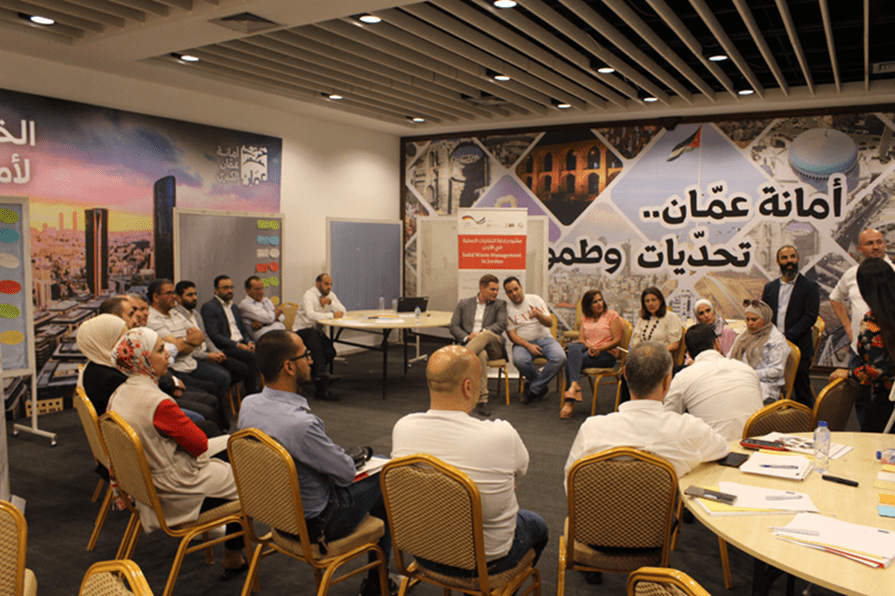
Using PDIA to Improve Waste Management in Amman
Multiple Authors
The Greater Amman Municipality (GAM) faced a growing waste crisis. The city’s rapid growth and population size had significantly outpaced its waste management infrastructure. In response to this challenge, a remarkable two-year transformation using PDIA took place that not only improved waste collection efficiency, but fundamentally changed how departments collaborated across GAM’s large bureaucracy.

PDIA for Systems Change: Tackling the Learning Crisis in Indonesia
Daniel Barjum
Indonesia is facing a learning crisis. While schooling has increased dramatically in the last 30 years, the quality of education has remained mediocre. A team of researchers affiliated with the RISE Programme at SMERU, an Indonesia think tank, adapted the Problem Driven Iterative Adaptation (PDIA) approach and deployed it in four district governments.

Contributing to a Problem Driven Project in Mozambique
Matt Andrews
This case details our experience working with a broad group of officials across Mozambique’s public financial management (PFM) sector and donors (particularly the World Bank) between March 2010 and December 2013. This was an early engagement in our learning on how to do PDIA, where we focused on helping government officials and donors design a problem-driven project on public financial management.

Increasing the Use of Digital Health in Croatia
Daniel Barjum and Matt Andrews
The government of Croatia has been committed to adopting digital policy solutions for years. The health sector was a focal point of this commitment. As is the case in many countries, Croatia’s health system is quite bureaucratic and generates lots of data—about patients and their care—in bureaucratic silos. The scattered nature of this data has negatively affected both health care quality and cost.

Facilitating learning and discovery-oriented industrial policy in Albania
Matt Andrews and Peter Harrington
Knowledge is often limited, especially when policies emerge from top-down technical experts or outsiders with limited contextual experience. Such policies are prone to mistakes. These can, however, be avoided by developing policies through collaborative ‘discovery processes’. This case narrative recounts a problem-driven learning approach undertaken to reinvigorate a struggling sector in Albania.

Subscribe to BSC
Sign up for our research newsletter to learn more about our team’s latest findings, papers, projects, podcasts, and more.