
Tackling Learning Poverty in Sierra Leone’s Education System through the Lens of the PDIA
Guest blog by Irina Bilyalova, Orlando Carvajal, Vaiba Flomo, and Sonali Verma
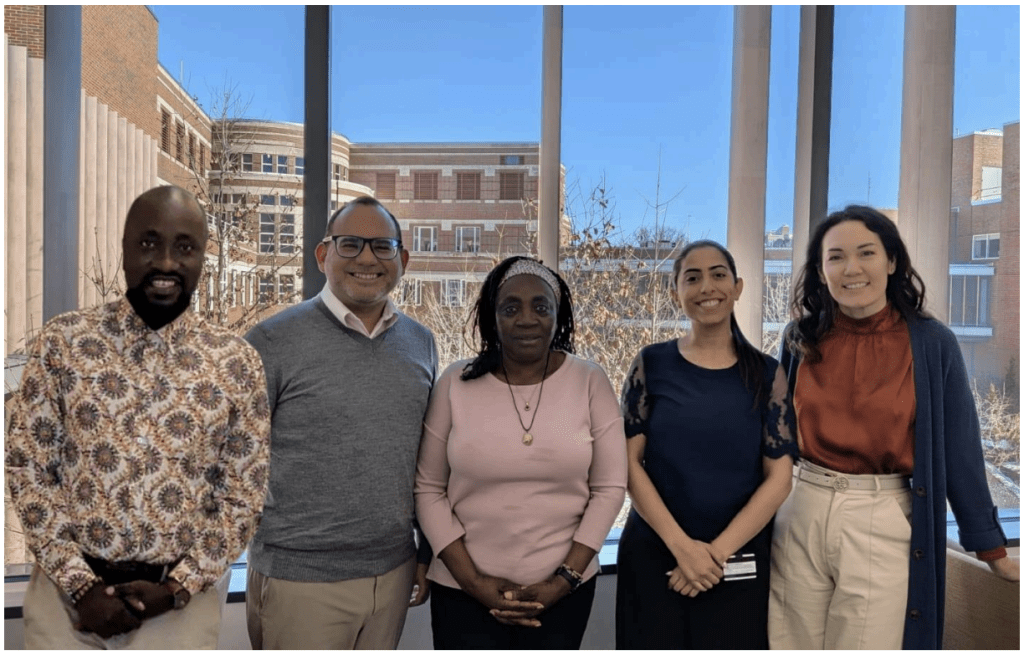
We were four students brought together by a shared interest in solving real-world problems. Three from the Harvard Kennedy School and one from the Harvard T.H. Chan School of Public Health. One of us was from the United States; three of us were international. At the start we were complete strangers and new to the PDIA practice, but over seven weeks. We became a team, excited to use the PDIA model to analyze problems in development.
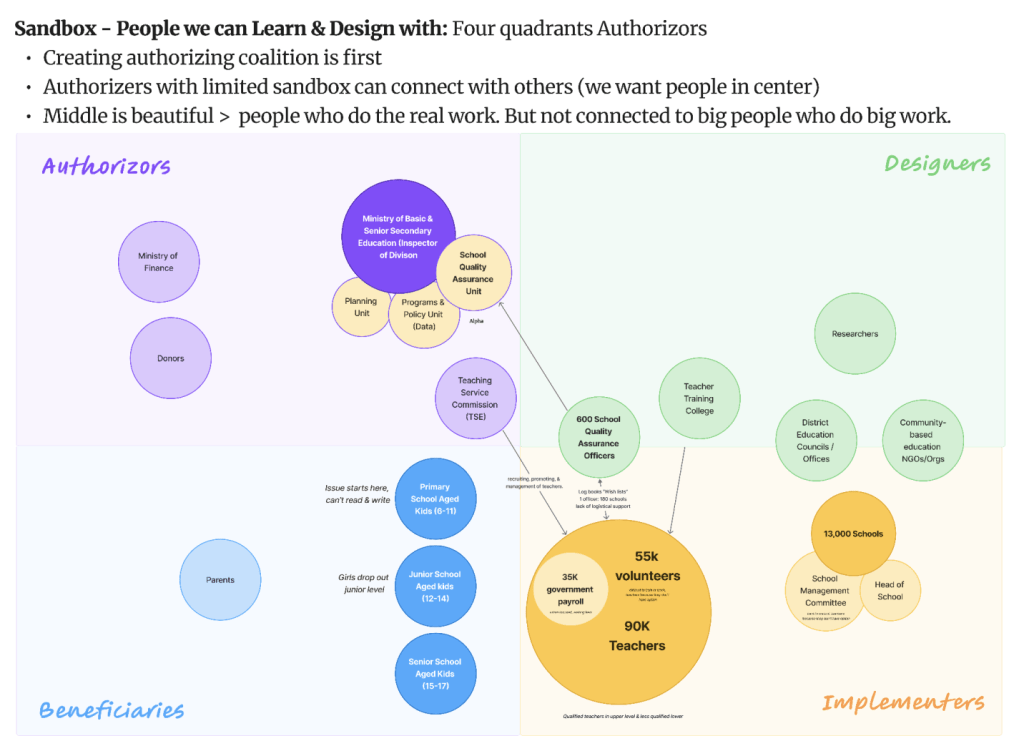
We were paired with Alpha Bangura from Sierra Leone’s Ministry of Basic and Senior Secondary Education, who served as our authorizer. From the beginning, Alpha made one thing clear: “Sierra Leone does not lack commitment to education. What it struggles with is ensuring that children are actually learning”.
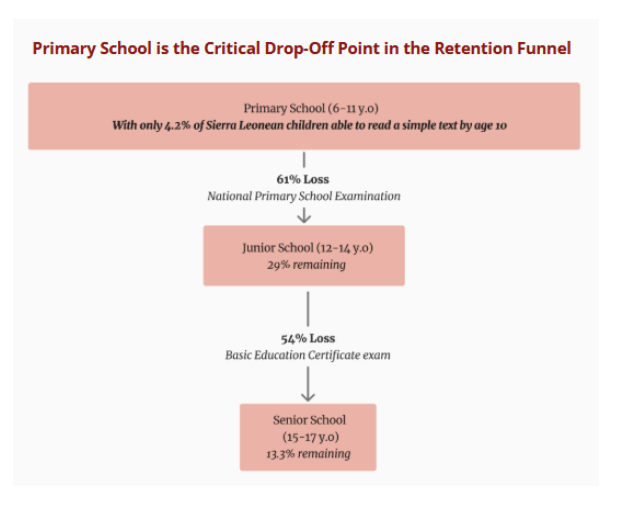
In Sierra Leone, learning poverty is a systemic problem. A staggering 61% of students drop out before reaching junior school, with children unable to acquire basic literacy, numeracy, and critical thinking skills. In primary school, only 4.2% are able to read a simple text by age 10. Weak foundational learning fuels dropout with a cascading effect. Children are enrolled, but they are not learning and it fuels early disengagement. As they move from grade to grade, participation declines, they fall further behind and by junior school many leave the system. Dropout reduces workforce readiness. And diminished human capital constrains Sierra Leone’s long-term development.
Through this course, we learned that the problem of learning poverty in Sierra Leone is more complex than it first appeared. While the initial concern focused on low learning outcomes and high dropout rates, applying the PDIA helped our team better understand the deeper systemic constraints affecting early-grade learning.
Using tools such as problem constructing and deconstructing, and the 5 Whys, we were able to move beyond to root causes. These tools helped us examine whether actors in the education system truly have the authority to act, the acceptance to support reforms, and the ability to implement effective teaching practices. Through this process, we learned that one of the key challenges may lie in classroom-level instructional capacity and the systems that support teachers. The tools also helped our team narrow the problem into a more manageable entry point, allowing us to think about small, practical steps that could improve foundational learning outcomes.
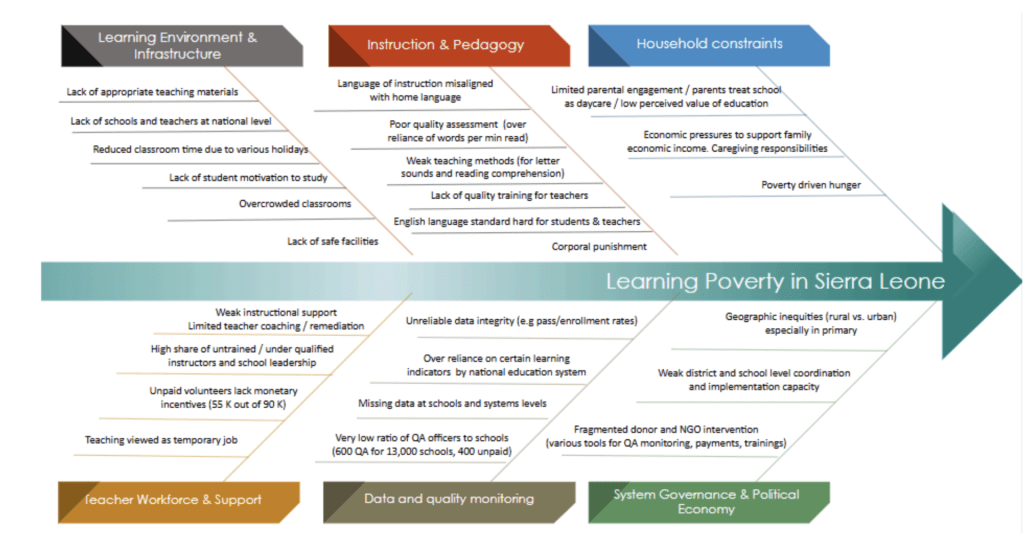
PDIA taught us new tools to analyze problems that focus on the problem, not jumping to solutions. We learned quickly that in our past experiences, we were rewarded for quickly jumping to solutions. The course challenged us every week to work as a team to peel more and more layers of the problem, putting aside our own assumptions. The fishbone and interviews with several stakeholders were the driving force in breaking down the problem of learning of poverty into several categories that addressed particular components of the problem. The AAA analysis helps us analyze each “bone” of the problem thinking where we could find possible entry points from the focus of authority, ability to act and acceptance by the stakeholders involved. This exercise was fundamental in helping us identify small action tasks that could be early entry points to build confidence within the system and make progress.
Authorization from the perspective of the PDIA model is about realizing that a title and mandate is not enough. In complex systems with multiple stakeholders, real authorization depends on building relationships, establishing credibility, and navigating the political and institutional realities that give leaders the “space and air” to act.
Through our work, we saw that authorization is dynamic — it can expand through small wins that build trust and demonstrate the feasibility of change, gradually strengthening an authorizer’s ability to convene actors and push reforms forward.
Professor Andrews shared “Read a whole lot less and talk and listen a whole lot more. Engage with real people.” Through action based learning, we were able to understand the nuance behind problems discovered through literature and secondary research. Engaging with others requires intentional preparation and good questions to get the most out of limited time. Although we were engaging remotely, we were surprised by how much we were able to learn about the challenges on the ground – and we recognize this is still scratching the surface.
We have embraced very different perspectives on the same issues. We were judging and trying to evaluate the information from an unbiased and objective perspective. Different lenses of the same problem highlight how qualitative research may need to be triangulated but also provide a rich view of the complexity.
As a team, we learned that iteration is a process of learning through small actions, reflection, and adaptation rather than designing a perfect solution from the start.
Through the Problem-Driven Iterative Adaptation (PDIA) approach, we realized that progress comes from testing ideas, learning from what works and what does not, and continuously refining our understanding of the problem. Iteration allowed our team to revisit our assumptions about learning poverty in Sierra Leone, adjust our diagnosis, and focus on practical entry points that could realistically be tested and improved over time.
Working as a team showed us that effective collaboration is essential for understanding complex problems and developing practical solutions. Through the PDIA approach, we learned that diverse perspectives strengthen problem diagnosis because each member contributes different experiences, insights, and questions. Our team process highlighted how collaboration and collective reflection help generate ideas, test small steps, and adapt strategies over time. Starting with individual reflection and then coming together for collaborative reflection was especially valuable. It allowed each person to think deeply about the problem first, and then bring those insights into the group discussion, leading to richer analysis and stronger collective learning.
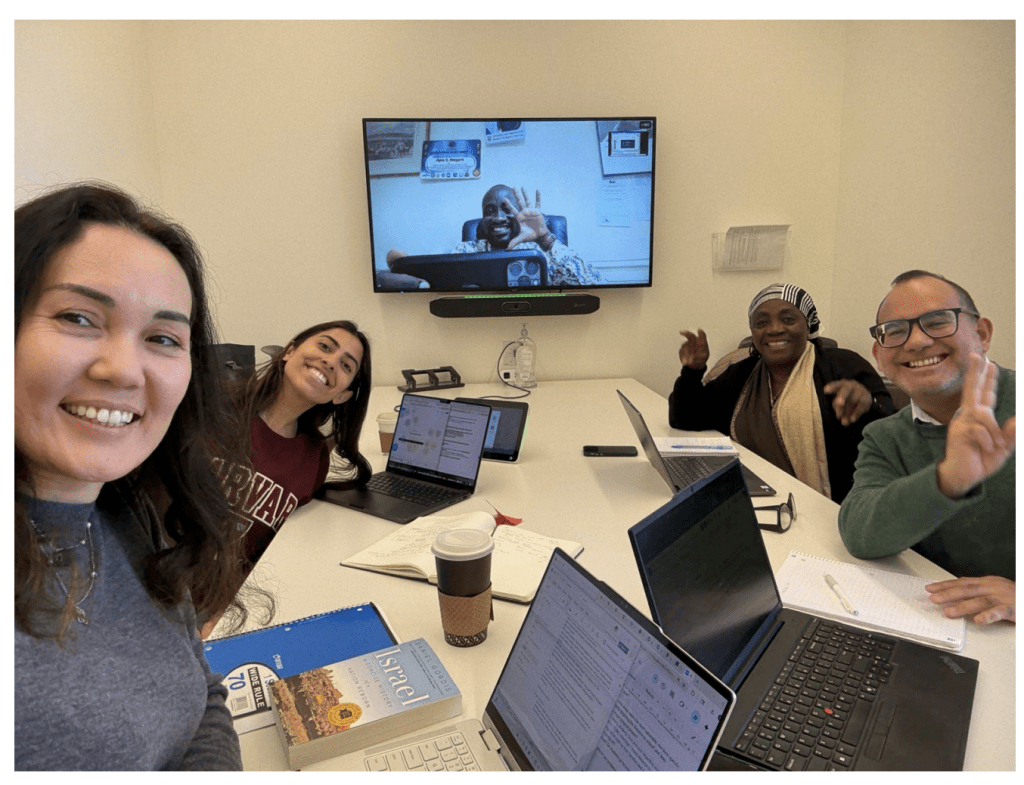
Engaging with people on the ground in the overstretched education system and limited connectivity is a challenge. We try to respect their time and consider their constraints by being adaptable in our approach – whether it’s quick whatsapp calls or voice notes – or timezones. This project required heavy investment to dive deep into a complex problem. Even after meeting two times a week to work on our project, it felt insufficient to be able to formulate fleshed out ideas in this short timeframe.
Over the past 7 weeks, we were able to learn from education experts, students, and NGOs in Sierra Leone. Here are a few key lessons:
- The crisis is widely recognized – foundational literacy failure is not disputed.
- Access has expanded, but instructional quality remains fragile.
- Binding constraints lie in implementation, not policy design.
- Teacher capability, weak coaching, language misalignment, and overcrowding are core drivers.
- Fragmentation across ministries and donors weakens coherence.
- Data systems exist but are unreliable and underutilized.
- Learning poverty reflects governance and incentive distortions as much as poverty itself.
The PDIA approach changed how we will tackle problems in the future. In policy work, it encourages us to break complex challenges into small, manageable learning actions and to develop solutions iteratively over time. We would also seek a broad range of views to ensure diversity of perspectives and a fuller understanding of the problem. Stakeholders often see solutions through the lens of their own roles and capacities, rather than from a broader system-wide perspective. Additionally – what appears to be the most obvious cause of a problem may not be the main issue – or the highest priority for the stakeholders we engage.
Words of Wisdom to Future Students
Getting out of google docs is helpful when working on complex problems! We used physical or virtual whiteboards (e.g Figma) to get our juices flowing when we felt stuck on defining our problem. It helped create clarity in the ambiguity and add structure that can be missed in non-visual ways of thinking. The problem may seem too big but small steps will be helpful to untangle it. Reminding yourself that you should not jump to solutions before exploring the depth will facilitate
your work on the problem.
This is a blog series written by students at the Harvard Kennedy School who completed “PDIA in Action: Development Through Facilitated Emergence” (MLD 103) in March 2026. These are their learning journey stories.