
Building a Competitive Mayoral Project in Medellín, Colombia
Guest blog by Sebastian Lopez Valencia, IPP ’26
Learning to Start with the Problem
One of my biggest learnings from this course is the importance of defining the problem correctly. Many times, we start working on what we think is the problem, but in reality we are working on possible solutions or on only one of the causes of a much bigger problem. I learned that taking the time to understand and define the real problem is essential before trying to solve it.
My second learning is to be pragmatic. Solutions do not always need to be complex. Sometimes we spend too much time designing the perfect solution instead of identifying practical actions that we can actually implement, test, and improve.
Finally, I learned not to give up. Implementation is not a straight line. Sometimes things work and sometimes they do not. The important thing is to learn from mistakes, adjust, try again, and keep iterating. For me, this is one of the most valuable lessons from PDIA: progress does not mean getting everything right the first time; it means continuing to learn and move forward.
My Implementation Challenge
During IPP, my implementation challenge evolved. I initially began working on a public policy challenge related to housing and urban development in Medellín. However, during the program my professional circumstances changed, and I realized that I needed to work on a problem where I had real authority and the ability to act.
I therefore redefined my challenge around the need to articulate and coordinate people, teams, and leadership around a shared vision for Medellín in order to build a competitive political project for the next mayoral election. This was not simply a question of creating a campaign plan. The real challenge was how to bring different people, knowledge, interests, resources, and capacities together around a common purpose.
Understanding the Problem Differently
The fishbone exercise was especially useful because it forced me to stop thinking immediately about solutions. Instead, I had to break the challenge into causes and sub-causes and ask why the problem existed. This changed the way I looked at the challenge. Some things that I initially considered problems were actually symptoms, and some ideas that I thought were solutions did not address the deeper causes.
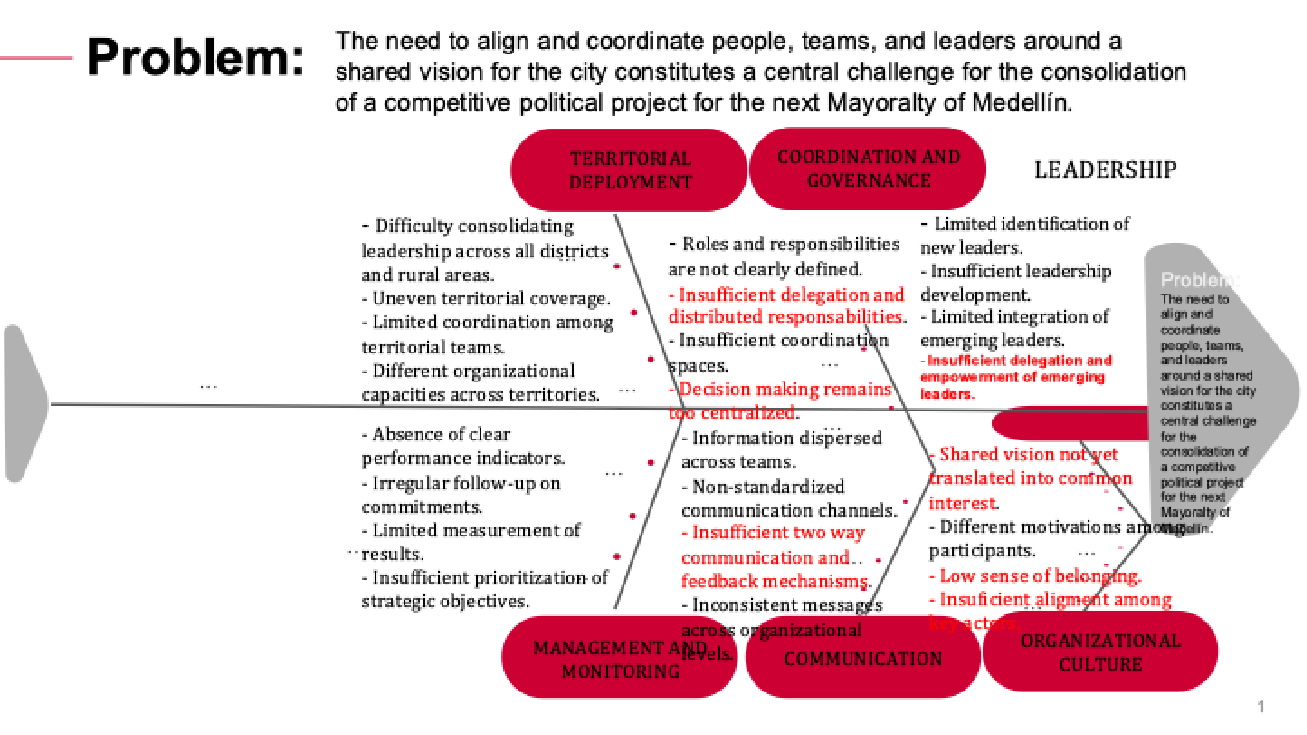
The process also helped me understand the importance of finding entry points where there is enough acceptance, authority, and ability to act. Instead of trying to solve everything at the same time, I learned to identify actions that were possible now, test them, learn from them, and use that learning to decide the next step.
Progress Through Iteration
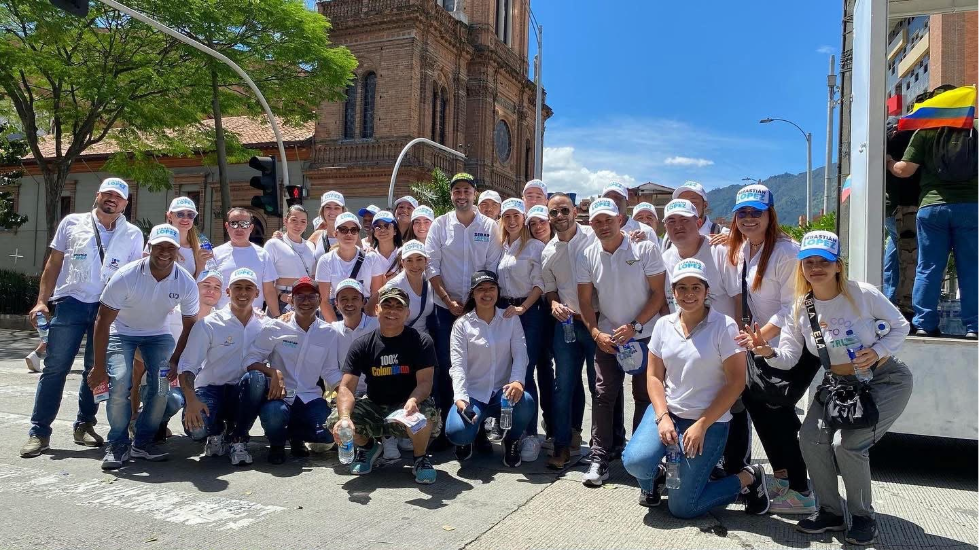
One of the clearest areas of progress was team building. During the iterations, I was able to consolidate a programmatic team with professionals from different areas who began contributing their knowledge to a broader diagnosis of Medellín. We also developed our own software to collect and organize information that can support our understanding of the city, our public discussion, and future proposals.
At the same time, I strengthened the digital strategy team, combining people and technological tools to improve the way we work with social media and digital content. These advances did not happen because we had a perfect master plan from the beginning. They happened through small decisions, experimentation, conversations, learning, and adjustment.
The iterations also showed me the constraints around the challenge. Aligning different actors was not always easy, and access to financial resources became an important limitation. Instead of treating these difficulties only as obstacles, PDIA helped me see them as information. Each constraint tells you something about the problem and about what you need to do next.

How This Changes the Way I Will Tackle Problems
Before this course, I probably approached many challenges by thinking first about the solution. Now I want to start by spending more time understanding the problem. I will ask what is really happening, why it is happening, who is involved, what is preventing progress, and where there is space to act.
I also want to avoid the idea that a leader needs to have every answer before acting. Complex problems change as we work on them. For that reason, I see much more value now in taking practical steps, learning from what happens, and adjusting the strategy rather than waiting for a perfect solution.
Using What I Learned
I will use what I learned in this course in the way I organize teams, diagnose public problems, and make decisions. The concepts of problem definition, fishbone analysis, entry points, acceptance, authority and ability, iteration, learning, and adaptation give me a practical way to work on complex challenges.
I also learned that implementation depends on people. A good idea on paper is not enough. You need people who understand the purpose, people with authority, people with the capacity to act, and a team that is willing to learn when things do not work as expected. This is something I want to carry with me in future public leadership roles.
A Final Reflection for Other PDIA Practitioners
If I could share one message with other PDIA practitioners, it would be simple: do not fall in love with your first definition of the problem or with your first solution. Ask questions, listen, test, and be willing to change your mind.
And do not give up when an iteration does not work. Failure in one step does not mean that the entire process has failed. Sometimes the most useful result of an action is the learning it produces. Define the real problem, be pragmatic about what you can do, learn from mistakes, and iterate again. That is probably the most important lesson I am taking from this journey.
This is a blog series written by the alumni of the Implementing Public Policy Executive Education Program at the Harvard Kennedy School. 33 Participants successfully completed this 5-month hybrid program in September 2026. These are their learning journey stories.