
Unlocking Inclusive Growth in Kenya
Guest Blog by Mauro Goncalves Filho, LEG ’22
First of all, this program reminded me of the importance of defining the problem well. I started with what I thought was a well defined problem, but turns out it was, at best, an idea of a possible solution for a small portion of the problem. Related, I learned to recognize complex and complicated problems, and I left the program convinced that the two types of problems require fundamentally different approaches to tackle them.
Second, I got quite a few additions to my problem-solving toolkit. The growth diagnosis tree and the differential diagnosis heuristics were my favorite on this front. I keep spotting “Camels not Hippos” and “Hippos in the desert” across several areas of my professional practice. Turns out that spotting successful outliers can be as revealing of constraints as spotting patterns.
Third, I learned to analyze economic complexity and to unpack its implications (and the implications of the lack thereof) on understanding the presence/absence of know-how as well as other factors and public goods that may be the binding constraint, preventing further growth. Besides, I learned to correlate changes in economic complexity with good governance and with the presence of a good PDIA approach to solving growth problems.
Around week 4, I didn’t think I would make it through the end. I started with a problem that wasn’t a problem, and with a geographic definition that was too broad to be workable. As I understood that part and evolved the problem statement, I struggled with my limited knowledge of the subset of that geography (Kenya, instead of sub saharan Africa), its institutions and key people – after all, my vantage point is from one single firm. But, as I got more familiar with the toolkit and leaning heavily on the amazing support I got from both my peer learning group and my TA, I managed to turn it around.
I credit, above all, the set of very clear and practical frameworks such as the fishbone, the growth diagnosis and the differential diagnosis – when I combined those three and took a deep-dive on the Atlas of Economic Growth combined with some economic data readily available online, things started to make sense and I got to a plan I feel good about. It was quite the journey.
Serendipity has it that I will be in Kenya in the next few days to run a workshop seeking to understand drivers of the digital divide, and what technologies, if made available, could help address. I will definitely use a lot of what I learned – fishbones, methods to identify the binding constraint, a systematic approach to crawling the solution space.
In addition, I have started using some of the frameworks I learned in contexts that are completely outside of the realm of growth problems. Recently, I needed a framework to classify possible solutions in the context of product development – which features to include or not include on a specific design. Turns out that looking at candidate features in terms of their ability to solve the problem and in terms of our confidence that they will work is a pretty neat approach to screen out features, as it is a fairly concrete way to describe potential return (“solve the problem”) and risk (“works”).
I am still very curious about the various possibilities to fund some of the changes needed to unlock growth acceleration, especially when it comes to public goods and infrastructure items that used to be public goods but have recently seen more and more participation from the private sector. I believe my next exploration will be “Infrastructure on a Market Economy”.
This is a blog series written by the alumni of the Leading Economic Growth Executive Education Program at the Harvard Kennedy School. 71 Participants successfully completed this 10-week online course in May 2022. These are their learning journey stories.
My Takeaways from LEG
Guest Blog by Sanni Ahmed, LEG ’22
Here are some of my key ideas/learnings from this course:
- The product space complexity using the Atlas of Economic Complexity, problem driven iterative approach –PDIA – and the growth diagnostic approaches are effective tools to deconstruct and understand economic problems, but not a solution to the economic problem itself.
- Having deconstructed the economic problems, spending time and resources to properly identify the best entry point that can quickly yield desired result, can grant acceptance, legitimacy and proof-of-concept from an approving authority.
- A high bandwidth organization as a communication mechanism to foster interaction between the government entities and the private sector in understanding why a country isn’t growing, how to grow the country and who to engage, is sine-qua to addressing government bureaucracy and inefficiency.
- We learned to crawl the design space by not limiting ourselves to the current practice or external best practice and also looking and learning from the positive deviants to replicate can create innovation and invention of new ideas or solutions to our economic problems. Albeit, context is imperative.
- The friendship, bond and support for each other in the SHAKTI group will outlive the Harvard LEG program, as we now have one another’s contact details and are willing to host any group members in our respective domains.
- I started off with an ambitious goal of wanting to solve a major economic problem in my country, which in the course of the program, I discovered through the mentorship and guidance of Pablo – Our Group Teaching Assistant – not to be simple, measurable and achievable within a short time frame. As such, my big growth challenge of addressing the inadequate government revenue through diversification metamorphosed into a simple problem of addressing the epileptic power supply in my country. This new growth challenge aligns with one of my group members and as such we were able to leverage and interconnect on the similarities and differences in our governments’ approaches to solving the problem.
- The knowledge acquired in the LEG program particularly the fishbone diagram is an effective tool that I will constantly use to understand and deconstruct any problems at work and in my private life so as to identify the best entry point. This will consequently help in preventing the natural instinct of jumping into solving problems.
This is a blog series written by the alumni of the Leading Economic Growth Executive Education Program at the Harvard Kennedy School. 71 Participants successfully completed this 10-week online course in May 2022. These are their learning journey stories.
Applying LEG Insights to Growth Challenges in Azerbaijan
Guest Blog by Anar Azimov, LEG ’22
I have come across to the Leading Economic Growth quite by chance. We were discussing with my colleague’s various capacity building options and resources, and one of our colleagues referred to this particular course at the Harvard Kennedy School. Of course, it goes without saying that quality and professionalism of Harvard Schools is a brand. I have read about the course consulted with wide range of colleagues and made decision to take it. After the 10 weeks of course, I can confidently say that it was right decision. First of all, the curriculum, materials provided, lecturers and live Q&A sessions was very well articulated and suited for learning the content of the course.
The major takeway from the course is identification of growth challenge in my country and my job, as well as the process of development of Problem Driven Iterative Adaptation concept, fish bone exercise, economic complexity and Atlas of economic complexity, moreover the network of professional colleagues from all over the world. I have gained the insight of my current challenge which is related to the development of agricultural extension service.
At the beginning of the course I had more broad challenge which I decided to narrow down to the problem which can be solved and contribute to the more higher-level problems. Actually, I’ve identified agricultural extension as an entry point, where I could immediately start working to solve the growth problem. Instead of thinking of a policy for every cause, I narrowed my thinking down to the sub-cause which is the most promising. This entry point I can start, based on my work/capabilities and on current authority.
I will definitely employ the knowledge which I gained in the course in my work and will try to share this experience with my management colleagues and subordinates. Actually, I have already started to apply the fish bone diagram with my colleagues and they all found it quite instrumental. In fact, I will continuously refer to the material in the Canvas and ensure iteration with adaptation.
Finally, I will miss the jargon and funny comparison of serious development items with monkeys, trees and letters, which was used by our respected professors. This is good memories and in fact interesting tools to remember and simplify the complex issues.
This is a blog series written by the alumni of the Leading Economic Growth Executive Education Program at the Harvard Kennedy School. 71 Participants successfully completed this 10-week online course in May 2022. These are their learning journey stories.
LEG Learnings: Inclusive Growth and Redistributive Inequality in Namibia
Guest Blog by Charlotte Tjeriko-Katjiuanjo, LEG ’22
The growth problem I chose to look at for Namibia is a lack of a diversified sector, which has caused high unemployment and low economic growth. The country has a high and increasing public debt, limited fiscal space, fiscal consolidation, increasing unemployment with limited product space.
The course has taught me to look at the problem with a different eye, distinguishing between the actual cause of the growth problem to the symptoms of the growth. This was quite a revelation to me, that sometimes as a country, we think something is a problem while the problem is something completely different. This made sense as to why the country was failing to the growth problem into positive trajectory after so many good policies were introduced, because they were diagnosing a problem that didn’t exist. Looking at the 3 As (ability, authority and acceptance) and asking the 5 why’s was quite an eye-opener.
The fishbone diagram was quite an eye-opener, because at times we already have the solutions (mainly from a laundry list of reforms we got from some index), and in most cases this means diagnosing a non-existent problem. What I learned from the fishbone diagram was the need to ask why a problem is a problem, getting the underlying and real cause of the issue.
In the course we learned about product space and the importance of a diversified economy, this was not something new because a few years ago, during the Bank of Namibia annual symposium, we had a speaker from the Asian Development Bank (Dr. Felipe), who said the exact same thing. However, as a country, we took this to mean that we needed to add value to our raw materials, not knowing that we do not always have the set of skills needed for this value addition. What I learned from the course was that we needed to work with the set of skills already in abundance in the country.
What was most interesting to me during the course was the inequality part. As a country with one of the highest inequality in the world, it was quite interesting learning about the different types of inequality. Ultimately, the course taught us the difference between redistributive inequality which was scarce resources being dedicated to redistribution, compensating those with low-productivity for low productivity, from inclusive growth, which should aim to better include low-productivity workers in high-productivity activities. Inclusive growth calls for a rethink of the role of transportation and urban policy. As a country, we have been more focused on redistributive inequality, which, to a certain degree, is understandable due to the nature of how the inequality was formed (apartheid). This tends to create a bit of division between the citizens and doesn’t actually fix the inequality problem.
Creating a sense of us has always been at the back of our minds, but that some policies could be lacking because there isn’t a sense of us (or sufficient) was interesting to learn.
I am also glad that we had quite a diversified team from Namibia that went through the course, which was commissioned by the Namibian government, this means we have at least some acceptance and authority from the government. What we plan to do as the team from Namibia is to come together and go through what we have learned over the 10-week duration and how we can address the issues in the country and come up with strategies from our fishbone diagrams. What we have done throughout the course was to have weekly meetings on Fridays to go through the material and help each other understand it better.
The course was all-around interesting and worth the time and effort. I am thankful to all the faculty members for their outstanding work and patience with us. I am also very thankful to our group (Go with the Flow), it was interesting to see the diversity in the group, the care and patience they showed, and their willingness to give advice on our different problems. I am also grateful to my TA, Anne, her advice to the assignments assisted me to understand the problem better and look at avenues that I did not think of before.
This is a blog series written by the alumni of the Leading Economic Growth Executive Education Program at the Harvard Kennedy School. 71 Participants successfully completed this 10-week online course in May 2022. These are their learning journey stories.
Understanding the Need for Industry Diversity, Complexity, and Knowhow in Western Australia
Guest Blog by Michelle Sidebottom, LEG ’22
What an exceptional learning experience! Thank you. My key ideas/learnings from LEG2022 included:
- Examining the ‘Product Space’ enabled a clearer picture for identifying realistic pathways for jumping short distances to ‘near-by trees’ to create opportunities for industry diversification, innovation and increasing complexity in the Peel Region of Western Australia.
- How to tackle growth diagnostics, identifying binding constraints, and deconstructing problems within a local context to reveal root causes and possible next steps towards opportunities and actions for positive change.
- The Problem Driven Iterative Adaptation (PDIA) approach presented a simple, yet highly organised and practical method for learning, actioning, and accelerating economic growth that can be undertaken by teams within any national, regional or city context.
- The concept of ‘Growth+Inclusion’ highlighted the importance of equity and inclusion for all members of our community, and how growth and social agendas are one and the same.
- The benefits of becoming high bandwidth organisations and the creation of effective pathways to economic growth through multi-agent leadership.
- I particularly enjoyed the diversity and comradery of my Peer Learning Group (team name ‘Global Brew’) throughout the program. We represented very different countries and cultures however despite this, we realised we all have a common goal to help our respective nations, regions and cities, and the people within them, to achieve a better life through economic growth and social inclusion.
Our group showed compassion, kindness and support for one another over our 10 weeks together and through this we have not only established new international networks, we have become friends. I will miss our weekly Global Brew talks, WhatsApp Group exchanges, and our fun little chats about our lives outside of the program.
The LEG course equipped me with a better understanding of the importance of economic development to our society and what actions and leadership is possible to achieve growth and inclusion.
The insightful information communicated through the faculty, guest speakers, staff, peer learning group, tools, and resources made it possible for me to apply this newfound knowledge directly to the context in which I am working i.e. the Peel Region of Western Australia.
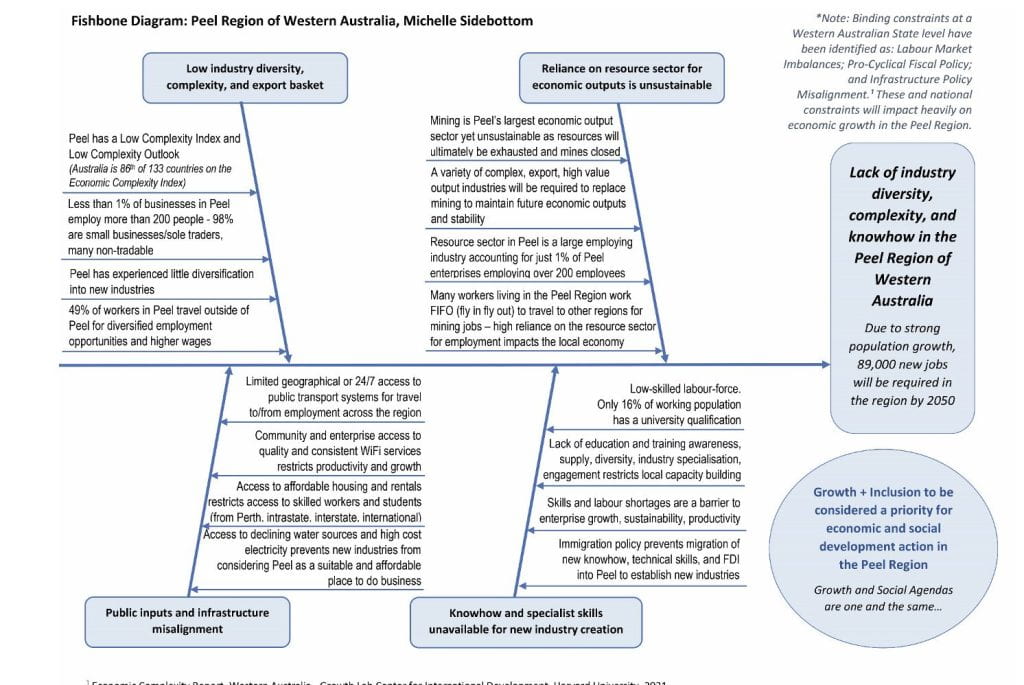
Using my new skills, I was able to identify a Growth Challenge for the Peel Region of Western Australia [Lack of industry diversity, complexity, and knowhow in a region of strong population growth – an additional 89,000 jobs will be required by 2050]. From there I was able to conduct a growth diagnostic; deconstruct individual barriers using the ‘Fishbone Diagram’ method; identify opportunities for further research, learning, advocacy, and action; and progress to the development of a growth strategy concept for implementation by high bandwidth teams through a ‘Problem Driven Iterative Adaptation’ (PDIA) approach.
The program has educated and motivated me to design a new ‘pilot program’ model under this framework and PDIA approach of which I have shared and has been well-received by my colleagues at the Peel Development Commission.
The practical skills and confidence I have acquired is swinging straight into action. I have already created a draft growth strategy to tackle the need for more industry diversity, complexity, and knowhow in the Peel region of Western Australia entitled the ‘Peel Development Commission Industry Accelerator Pilot Program’.
I will now fine-tune this pilot program (and other socio-economic development Action concepts I have drafted, including useful tools such as the PDIA Tool Kit and City Leader Guides), for sharing with the Peel Development Commission Board, Executive Team, and other organisations I am involved in across the public and private sectors, and advocate for, and lead, positive action.
I am also, more than ever committed to Growth + Inclusion for our Aboriginal people, women, youth, and other marginalised members of our community.
To say I am highly motivated to take advantage of my newfound knowledge and awareness is quite the understatement…
I enjoyed learning about the benefits of multi-agent leadership and highly functional teams to achieve economic growth, so would like to explore better ways to improve my own leadership skills and qualities to maximise continuous learning, better decision making, mobilising teams, and motivating people to achieve collective success.
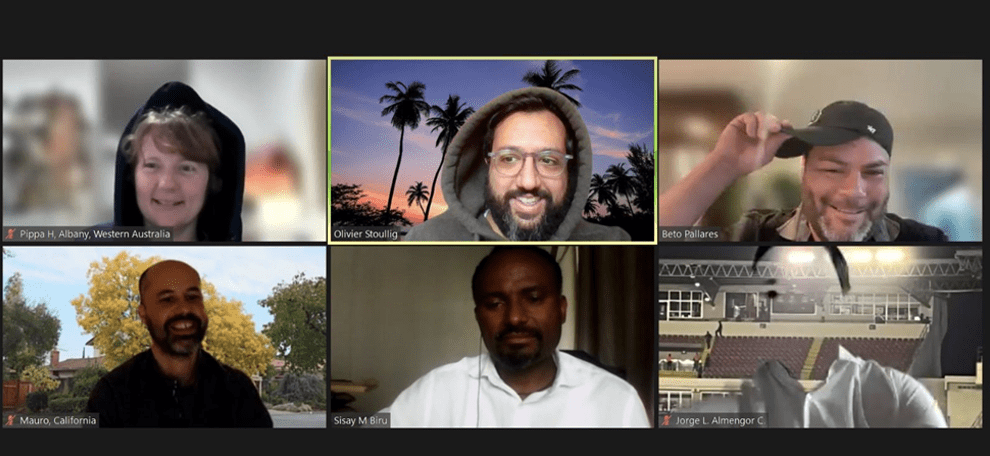
Our LEG2022 Group #2, Global Brew team, was nased in Ethiopia, USA, Honduras, Australia, and Pakistan. We are a melting pot of global perspectives and visions for positive action and change.
International networks and lifelong friends!
My Fishbone Diagram: Challenge for the Peel Region of Western Australia:
This is a blog series written by the alumni of the Leading Economic Growth Executive Education Program at the Harvard Kennedy School. 71 Participants successfully completed this 10-week online course in May 2022. These are their learning journey stories.
Exploring Opportunities for FDI-led Growth in Belize
Guest blog by Alex Sanchiz Vincente, LEG ’22
There are different methodologies to evaluate why countries, cities or regions do not achieve a sustained and inclusive economic growth and strategize around how policymakers can reorient their efforts to creating the necessary conditions for this growth to happen.
By participating in this new edition of the Leading Economic Growth course, I have witnessed how new approaches can be applied, that unlike more classical theories, allowing to i) better contextualize the obstacles preventing the prosperity rather than focusing on a set of solutions, and ii) define an actionable agenda targeting the implementation of practical steps to generate change.
The concepts and frameworks presented in this course, particularly the Problem Driven Iterative Adaptation (PDIA) and the Economic Complexity Index (ECI)[1],[2] have proven to be effective in the initial design of new strategies for my specific growth challenge: through the Inter-American Development Bank (IDB) current technical cooperation portfolio, increase inward investments in Belize as a mean to generate employment, growth, diversification of the economy and the reach of SDGs targets.
Belize has traditionally presented an array of systemic issues that affect the country’s international competitiveness and prevent to reaching its development full potential, including unemployment, informality, lack of innovation and low insertion in value chains. As important as this is, the weak track record of Foreign Direct Investment (FDI)[3], and low number of exporting firms. Coupled with its vulnerability to global warming effects, as it happens with virtually every nation in the developing world, these issues make the case for the National Government, with the support from Development Finance Institutions (DFIs) to mobilize resources and deploy interventions focused on climate resilience, for the benefit of the local communities and industries.
In the course, I have gained a more nuanced understanding of the FDI problem by applying the diagnostic tree approach, which provided a holistic view on the contribution of each key variable. By applying the economic complexity analysis, I could have a better sense of the current capabilities and sector competitiveness, as well as the country’s chances to diversify into related economic activities which would be new (such as Blue Economy industries), hence providing an opportunity to craft the storyline for policy reforms to make these possible.
Based on the preliminary work that stems from the last 10 weeks, factors that may affect the investment competitiveness are the inefficient concentration of public goods (e.g., transport infrastructure) as well as policy-related factors (e.g., large educational inequality and lack of incentives). Regarding the key aspects to be considered as priorities for reform area:
- A strong legislative and regulatory framework,
- An investment promotion strategy and additional resources through Belize’s Investment Promotion Agency (IPA),
- New partnerships and collaboration and advocacy mechanisms with the private sector, and
- An increased focus on results management.
What is more, this exercise allowed me to pay closer attention to the inclusion variables and have it as a pivotal part examine why the growth has not been inclusive. The current population of Belize is 412,190.[4] The fact that the rural areas are not very dense in comparison with the country’s main economic center in Belize city contributes to the regional inequalities: currently the economic activity mainly revolves only around this and that of Belmopan – where the capabilities lie, productive firms and formal jobs are based, etc. This is also related to the FDI track record, since most of the foreign multinational Companies (MNCs) are established in these two areas. In rural areas of Belize, given the huge importance of agriculture – that employs well over one-third of the country’s labor force – agglomeration seems to be the main root cause and the people in rural areas lack opportunities to shift to other promising sectors such as tourism, services, garments or blue economy.
In this case, the Framework for Policy Action on Inclusive Growth by the OECD is a helpful tool to consider inclusion as a pivotal part of any growth strategy; in the case of Belize, a good start in this area would be to treat inclusion data collection as a top priority for the statistical office and economic research departments, to get deeper knowledge on the factors contributing to this inequalities.
During this journey, I have also learnt how to frame every course of action in a more iterative way, including feedback loops from the stakeholders, so that functionality can be communicated, and authorization from the decision-makers can be gained from early stages. These, I consider, are key factors for succeeding in the implementation of potential strategies to solve any economic challenges.
I was expecting to learn from a well-renowned faculty and get high-level insights from different examples around the world on strategies to make countries grow, however, I never expected to amplify my current set of skills and challenge my previous thinking towards my economic growth in the way I did in just 10 weeks’ time. The interaction and exposure to other students’ contexts and experiences has also contributed to my learning process, in particular to i) think of potential alternatives courses of action, ii) reaffirm what actions implemented are indeed working, and iii) acknowledge that starting small can have a significant impact in the process, by identifying the right entry points to trigger further changes.
All in all, despite the complex nature of this economic challenge in Belize – involving many factors and varied stakeholders across the public and private sector spheres – now I have a greater set of tools to address every step in the process of assisting the Belizean Government in attracting and retaining FDI.
[1] https://www.ncbi.nlm.nih.gov/pmc/articles/PMC2705545/
[2] https://growthlab.cid.harvard.edu/files/growthlab/files/atlas_2013_part1.pdf
[3] https://www.imf.org/External/np/sta/fdi/eng/2003/102803s1.pdf
[4] UN estimates at July 1, 2022.
This is a blog series written by the alumni of the Leading Economic Growth Executive Education Program at the Harvard Kennedy School. 71 Participants successfully completed this 10-week online course in May 2022. These are their learning journey stories.
Industrial Development and Economic Diversification in Senegal
Guest blog by Olivier Stoullig, LEG ’22
Here are some of my key ideas/learnings from the Leading Economic Growth course:
Measuring a country’s growth potential through its complexity- Growth happens by accumulating letters and matching consonants (productive know-how) with vowels (public goods) to make the longest possible words.
Technology has 3 facets: tools, or embodied knowledge, recipes or blueprints or codified knowledge and know-how or tacit knowledge. The hardest to move is tacit knowledge, as it is lodged in brains. It takes 40 000 hours to master a subject
Economic development depends on the accumulation of know-how. To diversify, you need to accumulate know how. To accumulate know how, you need to move brains. This is done through migration, diaspora mobilization, FDI attraction. You need to find ways to identify what is missing to move to new sectors in terms of capabilities and public goods, as you don’t what’s required: mechanisms to promote self-discovery are essential.
It is easier to go from BEAR to ZEBRA than from BEAR to LION: what countries produce matters and conditions what they are able to produce. The clusters in the product space define potential policy options.
Exports are key to generate sufficient foreign currency to import intermediate goods. They are also essential to drive competitiveness.
Defining a growth strategy starts with a diagnostic of both the economic issues and political economy issues. Growth diagnostics and differential diagnosis allows one to identify the binding constraints, which should be addressed to unlock potential growth. This is a more practical and impactful way of prioritizing reforms and avoiding unmanageable, and economically ungrounded laundry lists of reforms.
Implementing a growth strategy is a complex problem, which requires decomposing the issues, asking the right questions (five whys) and getting to the root cause of the problem (fishbone), and repeating these steps until the problem is solved.
People matter and methods to facilitate solving complex problems do too: setting up high bandwidth organizations, obtaining support from the right authorizers, empowering others, finding accurate and useful data.
Inclusion has a higher economic rationale for growth than redistribution does: you need to find ways to include your letters in other words.
The main insights I gained are linked to:
Better defining the problem. I went from a very broad problem, which is how to achieve structural transformation in Senegal, to a more focused and manageable problem: How can Senegal increase its exports by diversifying into higher-productivity industries? This entails identifying ways to attract investment in new export-promoting or import-substituting sectors. This matters because it will sustain growth patterns less volatile and vulnerable to external shocks, create jobs for a growing youth population, support macroeconomic stability and balance of payments. It matters for private entrepreneurs, job seekers, and should matter more for government bureaucrats and political leaders.
Better understanding the role of complexity in economic growth and how this should be at the heart of industrial policy.
Better understanding the role of attracting foreign investment in generating know how spillovers and self-discovery for missing public goods.
Overall, this course has been what you’d call a game-changer in the way I perceive economic growth challenges and the tools required to address key challenges. In terms of perception, the course has provided more than intelligent concepts and frameworks for analysis. It gave me hope, as a dedicated professional, that some of the most complex challenges on the African continent, such as industrial development, can be addressed, step by step, by decomposing the problem, finding solutions through iterations, collective work, and the right framework for analysis.
It has changed the way I perceive industrial policy and how it should be designed and implemented.
It has changed the way I think about how to structure and lead reforms and policy interventions and organizational challenge.
This is a blog series written by the alumni of the Leading Economic Growth Executive Education Program at the Harvard Kennedy School. 71 Participants successfully completed this 10-week online course in May 2022. These are their learning journey stories.
LEG in Practice: Exploring Growth Opportunities and Renewable Energy in Western Australia
Guest Blog by Warner Priest, LEG ’22
In many cases, I find when faced with a challenge it is difficult to know where to start and what to do and I find myself procrastinating. The step-by-step approach to Problem Driven Iterative Adaptation (PDIA) has become a useful tool to getting whatever challenge I am faced with underway. Breaking down the problem into its root cause, looking for possible solutions, identifying entry points then taking action, reflecting upon what was learned, adapting and then going through the process again – gets the process or journey underway.
I like the fluidity of this process with the small successes along the way that help build authority, acceptance and legitimacy, providing one with the feedback that ultimately leads to a solution that suits.
I found the ATLAS tool very powerful and useful, being able to understand what our countries exports are made up of, whether our exports have evolved over time and what we as a country produce and the complexity of our products.
Through the ATLAS tool I discovered to what extent the Australian economy relies on the export of just a few of its natural resources like Iron Ore, Coal and Natural Gas. And whilst Australia up until COVID had experienced 27 years of uninterrupted growth, the economy is on a knife-edge due to the likely disruption in fossil fuels, its reliance on China for its export commodities and its lowering complexity index due to the closing down of it manufacturing sector and its lack of diversity.
My growth challenge, working with InterContinental Energy, our large-scale renewable energy projects to produce green fuels at Oil & Gas scale, provides Australia, in particular Western Australia with a unique opportunity to diversify its economy by manufacturing green products using very cheap renewable electricity and hydrogen as its key competitive advantage to do so.
Over the last 10 weeks I’ve had an initiative underway with the Western Australian State Government on the concern around our economies lack of diversity. I have been using the processes and tools I learned on this program to initiate the engagement, garner the interest and to cut through the bureaucratic red tape of government.
Just recently, we submitted an application to government detailing our vision and what needs to be done between the government and the private sector to take advantage of this unique opportunity in the renewables sector. It is clear that there is interest, but that this is just the very beginning of a long journey.
This is a blog series written by the alumni of the Leading Economic Growth Executive Education Program at the Harvard Kennedy School. 71 Participants successfully completed this 10-week online course in May 2022. These are their learning journey stories.
Learnings from LEG & Exploring Growth Challenges in El Salvador
Guest Blog by Abdi Aguirre, LEG ’22
When I enrolled in the Leading Economic Growth Program of the Harvard Kennedy School, I thought that I was clear about the economic challenge I wanted to address along the course. As part of the admission process, they ask you to write some lines about it, so I believed that what I had stated there was a good starting point. However, after the first weeks in the program I realized that addressing such economic challenges is not a merely a “complicated journey,” but a “complex task;” in the first one you just have to follow a certain path or set of instructions to solve it (solution-oriented approach), but the second implies an iterative process to address the problem.
When talking with colleagues from my work group we all faced that iterative process in practice. Every week we had to adjust the definition of our economic growth challenges, it turned to be a continuous learning process for understanding what the real problem was. As a result, some of the main takeaways of the course lay around problem construction (and deconstruction!): it is important to ask the right questions to get to the roots of the problem, and some tools like the fishbone diagram are useful to have a better understanding of it.
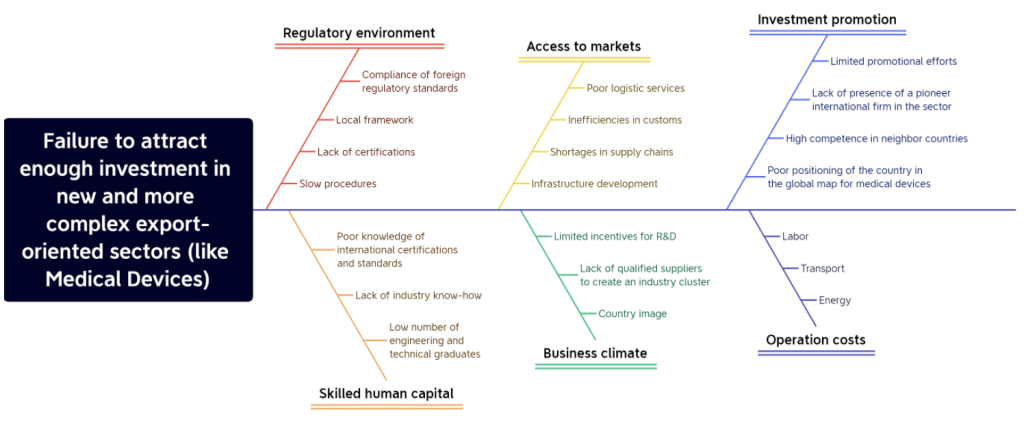
One has to keep in mind that this can be a data-intensive process, but the use tools such as the growth diagnostics, help to identify what are the real constraints that are limiting growth in a country. By the way, I was really excited to know that this methodology was first developed for El Salvador by professors Ricardo Hausmann and Dani Rodrik.
In terms of how to jump from diagnostics to practice, I found really useful the approach of identifying small entry points to start making some progress toward the solution of the problem, rather than trying to implement a 5-year strategy or trying to comply with a set of predefined “desirable policies”, which tend to be the most common approach that governments follow. The practice has been to pursue policies to improve doing business rankings for instance, or building infrastructure to trigger economic activity only to find out this was not the real constraint for economic growth. I am certain that all lessons about PDIA (Problem based iterative adaptation) method lectured by Professor Matt Andrews will be a useful tool to address complex matters going forward.
Last but not least, I can say that the whole course has challenged some traditional conceptions and approaches to economic growth. I found of particular interest, the reflections of professor Ricardo Hausmann regarding the “Scrabble theory”, a metaphoric and ingenious way of thinking about development: a country can grow by accumulating capabilities (the letters in Scrabble game!) which allows it to develop not only more activities but more complex activities (more words and longer words!).
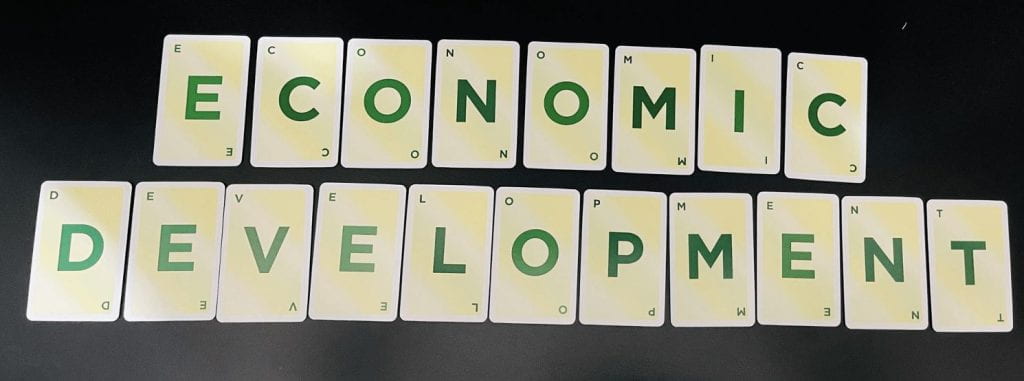
It has definitely been a 10-week journey full of new learnings from other countries cases and experiences, and I am sure this learning will continue with the implementation of the given tools.
This is a blog series written by the alumni of the Leading Economic Growth Executive Education Program at the Harvard Kennedy School. 71 Participants successfully completed this 10-week online course in May 2022. These are their learning journey stories.
Approaching Growth Challenges with a New Lens
Guest Blog by Phillipa Kirby, LEG ’22
Some of my takeaways from the Leading Economic Growth course include:
- The importance of defining and deconstructing the problem well prior to jumping to solutions. Deconstructing the problem also assists to define the binding constraints and entry points to effect change.
- Identifying binding constraints assists to focus energy and resources in those areas that are most likely to unlock growth rather than working on an extensive list of generic actions.
- How building economic complexity supports growth in productivity.
- Growing collective knowhow assists to grow the product space of an economy. Growing collective knowhow isn’t about individuals knowing more, rather individuals knowing different and working collectively. As such policies around migration and inclusion should be considered.
- PDIA as a method of activating a team to address a growth problem and the value of this approach in learning, iterating, and adapting.
The course content made me look at a different approach to my growth challenge. At the commencement of the course, I defined my growth challenge as “diversifying the towns economy away for the current dominant coal mining and coal-fired energy generation sectors”. Through the course I reframed my growth challenge as “how to grow industrial sectors other than mining and energy generation in the town to diversify the economy”. While it is a subtle change it helped to focus on the factors that may be barriers to growing the other sectors.
While I haven’t yet been able to integrate the learnings from this course into my work there are a number of key areas that I believe will be valuable into the future, including:
- The PDIA to work towards addressing complex issues that don’t have a clear pathway to a solution.
- Fishbone Diagrams to deconstruct problems and identify potential entry points and binding constraints.
- Economic complexity theories around growing the numbers of letters in the economy and the importance of recognising the need to develop both public goods (vowels) and private goods (consonants).
- Frameworks for measuring growth and inclusion – Measuring of inclusion in economic growth strategies and re-iterating the importance of inclusion as a strategy to enhance growth.
I thoroughly enjoyed the course, particularly engaging with other practitioners across the globe. Discussing their challenges and contexts assisted to better understand my own. The other element of the course I enjoyed was that it delivered practical frameworks and structures that can be utilised in my work.
This is a blog series written by the alumni of the Leading Economic Growth Executive Education Program at the Harvard Kennedy School. 71 Participants successfully completed this 10-week online course in May 2022. These are their learning journey stories.