
Our PDIA for Education Systems Online Program
Written by Salimah Samji
We developed a 12-week custom PDIA for Education Systems online action learning program for Education Development Trust (EDT), funded by United Kingdom’s Foreign Commonwealth and Development Office (FCDO), to help build the capability to improve foundational learning outcomes through practical action-oriented work. 56 education practitioners across 9 country teams from Ethiopia, India, Kenya, Malawi, Pakistan, Rwanda, Sierra Leone, and Zambia, participated in this program from September to December 2022.
(more…)The Power of Listening: The Beginning of our PDIA journey in Malawi
Guest blog written by: Lindiwe Chide, Joan Keaney-Bray, Grace Milner, Martha Sineta, Joshua Valeta, Arianna Zanolini
Our Malawi team of six just ended a 12-week journey into Problem Driven Iterative Adaptation (PDIA) for Education through the Harvard Executive Education Course. We were a group of Directors at the Ministry, a District Education Manager, and two Foreign, Commonwealth and Development Office education officers. We were asked to borrow PDIA for 12 weeks, but- as it turns out-we won’t be returning it.
(more…)Underperformance in Schools in the Port Loko District of Sierra Leone
Guest blog by Zacharia Bangura, Foday C Kalokoh, Kabiru Mansaray, Miriam Mason, Ibrahim Kanu, Rugiatu Alimatu Kamara
This has been a real learning journey, where there are opportunities to test theories and put them into practice, review and revise, try again and after as many iterations as needed to get set for scale up.
Small is beautiful
In the course materials, there are many useful tools to help structure an approach for tackling problems, to work step by step and acknowledge small achievements & small opportunities to start having an impact.
Together we can
It becomes clearer and clearer as the journey goes on that teamwork is crucial, particularly with government if there is to be sustainability. It is absolutely vital to listen to multiple perspectives and then come together to do the work. One perspective won’t be sufficient. One actor alone cannot begin to tackle the complexity of the issues under review
Let the love flow
Where there is no relationship, no communication, no trust, there will be no progress. Working in development is a human activity and requires the building of trustworthy relationships with the authoriser(s) and the team and key stakeholders and keeping the communication flowing about each step in the process.
A complex problem needs careful and structured deconstruction and reconstruction
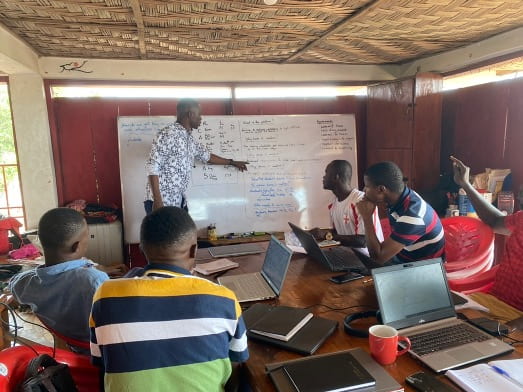
Constructing the problem – why does this matter?
For 12 weeks, the Port Loko combined team of EducAid and three representatives of the Ministry of Education & local government worked to explore the various factors contributing to under-performance in foundational literacy and numeracy in schools across the Port Loko district.
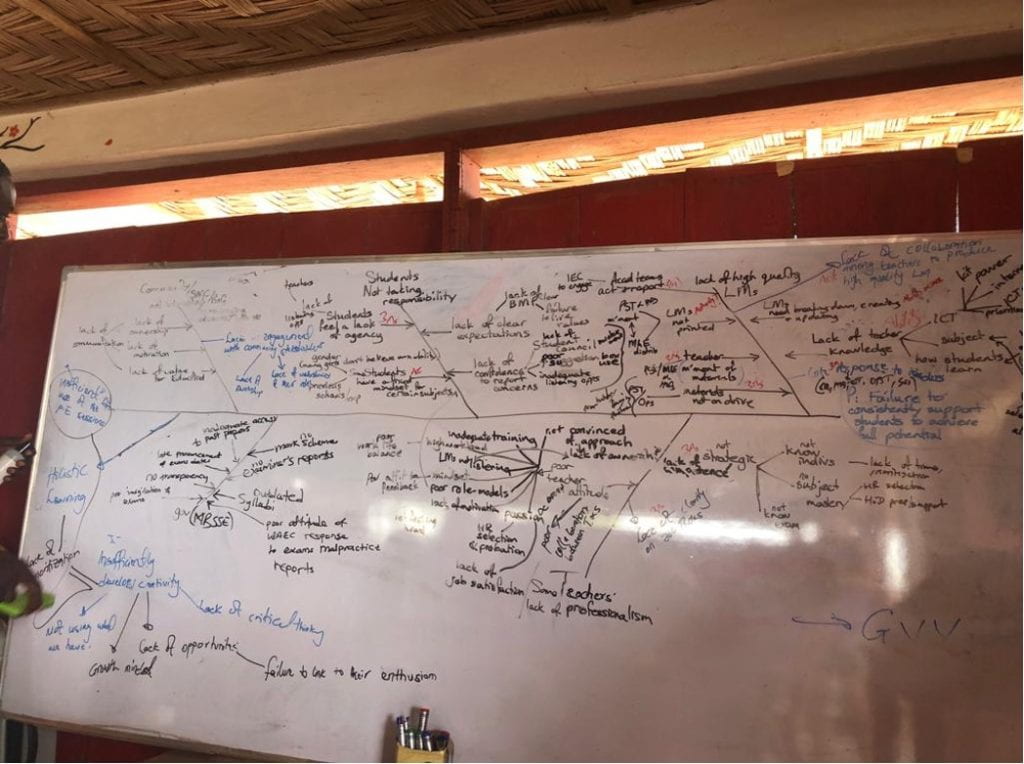
Deconstructing the problem – exploring the complexities opens up possibilities
Through the use of the Ishikawa diagram, we were able to explore some of the deeper complexities of this issue. On the face of it, the problem is poor teaching. When one gets under the skin of the issue, one realises that there are many contributing factors and that simply training teachers in better FLN pedagogies will still not solve the problem. There are numerous additional concerns such as the lack of focus on the particular needs of girls within the system, the complete failure to engage parents and community members around their own responsibilities to the school’s success, the limited strength and clarity of the School Quality Assurance Officers (SQAOs) on how to stand firm against the pressures towards corruption, the limited knowledge of most schools of how to positively manage student behaviour resulting in antagonistic relationships and poor attendance, and so on.
As we explored these issues in greater depth, through discussions with students, teachers, school leaders and so on, trying to take a more curious than judgmental approach, our understanding grew of a. What the real problems are and b. Where the opportunities for hope and for action are.
A complex problem presents many small entry points.
Through an exploration of some positively deviant examples of schools managing behaviour very differently with consequently much higher attendance and student performance, it was possible to identify opportunities for looking at ways of supporting schools to change their own approaches. In further discussions exploring school leaders and students’ responses to the possibility of trialling these interventions, we heard stories of real concern particularly from female students who had experienced significant punishment when they had resisted the pressure to give sex for grades etc. This highlighted not only the urgent need to actually introduce respectful and positive behaviour management but also the urgent need for better clarity on how and what to report in terms of child protection incidents too.
Through an exploration of good practice used elsewhere in Sub-Saharan Africa, it was possible to identify ways in which the SQAOs might be supported to make better, more ethical decisions and hold schools and school leaders to account more effectively. Discussions with the SQAOs in question were initially a bit tense, with them feeling accused and judged. As a result of a few more curious and open discussions, a better understanding was established and when the day came for the first ‘Giving Voice to Values’ session, it seemed to be warmly welcomed and everybody appeared enthusiastic about the learning opportunity. Our authoriser supported and joined in, giving additional weight and status to the event.
While 12 weeks has not been enough time to completely address such a massively complex problem, the whole team is now convinced that a. One does not have to be able to immediately address everything in order to be able to tackle something; b. Because the problem is complex, there are many small openings that can be exploited. Using the triple A analysis (do we have authority, ability and acceptance? and building them where we have not!), small entry points can be identified and exploited building confidence that the bigger and more seemingly intransigent problem may be broken down into small and manageable pieces.
We are starting to trial small things with a view to reviewing and revising and then having a story to tell so that we can have an influence on resource allocation in the future. The needs are great within the country and in particular this district which is one of the lowest performing districts in Sierra Leone. It matters that when resources are allocated here, they are well-used.
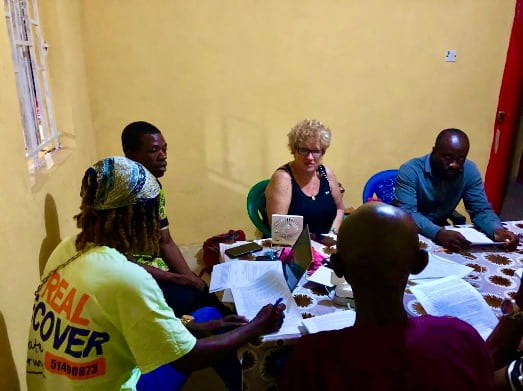
The first meeting with the SQAOs to explore the ‘Giving Voice to Values’ materials together was well-received.
This approach is going to help us solve complex individual and societal problems more effectively by making sure that we always construct a problem that really matters and is persuasive, understand the root causes, engage with different people, take small steps and continue to learn.
Some of the most powerful concepts:
- I don’t like him very much. I must get to know him better.
- Approach curiosity.
- You don’t have to buy the idea. Just rent it for now.
Where to find good ideas:
- Latent practice
- External best practice
- Positive deviants
- Existing practice
- Your team is your gift
After initial trials and further iterations over the next few weeks, the team expects to be able to tell the story to the Ministry of Education centrally and show how these and other opportunities are available to take significant transformative actions as key to solving the under-performance challenges which are blocking the future of so many children.
Breaking the problem down into its component parts opened the way for numerous smaller interventions and actions that little by little will undermine the stronghold that this problem seems to have over so many schools, teachers and children. One iterative step at a time, this problem can be overcome!
This blog was written by the alumni of the PDIA for Education Systems Online Executive Program at the Harvard Kennedy School. 56 participants from 8 countries successfully completed this 12-week program from September – December 2022.
Breaking down the Youth Unemployment Challenge in Kenya
Guest Blog by Maureen Gitata, LEG ’22
I have found this course to be invaluable in teaching new approaches to economic development challenges, that ensure that the root cause/systemic challenges of issues have been addressed. My favorite course takeaways include:
(more…)Learning, Relearning and Building Small Team Influence: Navigating Complex Education System Problems in Zambia
Guest blog by Amosi Chipasi, Agness Mumba-Wilkins, Besnart Simunchembu, Cornelius Chipoma, Laura Brannelly and Mutinta Kawina
After 12 weeks of participating in the Problem Driven Iterative Adaptation (PDIA) course conducted by the Building State Capability (BSC), the ‘Aspiring Ants’ Team reflects on a learning journey that has provided great insights on how a small team may resolve complex education challenges systemically in Zambia. The team comprised a mix of members coming from the Directorate of Secondary Education (DSE), Ministry of Education, Teaching Service Commission (TSC), Foreign Commonwealth and Development Office (FCDO), Promoting Equality in African Schools (PEAS) and the British Council.
The key learning for the group is that small teams can assist in resolving complex education system problems. Even though the team was broadly tentative about how much could be done to trigger system reform over the short course period, the group learned that the potential to cause a policy change process lay in the power of teams. The power of teams, in turn, derives especially from learning and relearning given a relevant mix of people, authority, skills, backgrounds and expertise that allows legitimacy to identify and solve complex problems. The team was able to grow its network of people resources and especially those with authority to take appropriate action on a problem. The team built its potential for success by engaging authorizers in the learning process, thereby closing information gaps and building legitimacy for further action and engaging higher-level authority (Matt Andrews’ two dimensional ‘policy success’ diagram or ‘stairway to policy change success’).
Although the whole team never met physically, we managed to work together depending on our comparative skills and building trust. The course and the demands it put on team members’ busy schedules and commitments also proved that if you are determined to get something done, you can get it done. The team members learned new concepts such as iteration, positive deviance, the ‘fishbone diagram’, crawling design space and others. These important concepts guide on how to inform a learning process that seeks to understand and solve a complex education problem. The team also learned that policy reform failure is typically a consequence of starting with importing solutions instead of contextually understanding the problem first.
The problem identification process in PDIA practice is crucial because it is not just about understanding what is going but also about building a coalition of interested stakeholders that then come up with the most appropriate solution. This coalition building process starts with a small team and then escalates with each iteration. Each iteration produces small wins that are crucial for expanding the authorizing space. While, at first, we were not sure how we were going to work as a small team since we mostly did not know each other, the approach used for building team commitment, by developing a constitution, helped to resolve the initial anxiety. The team had, however, wondered why it needed to develop a constitution. But, the idea of committing to the group through a constitution, helped us to stay on track. Even when team members were busy, sometimes travelling locally and internationally, we committed to attending the course sessions and submitting assignments.
The team also learned that it is important to have good relations with superiors as authorizers. Besides, it was good to hear that the superiors also know the problems. Meeting the authorizers provided the insights and belief that the team could succeed. Ultimately, however, the team could see how learning, and depending on others, is the power of the agency of many. The team also could see why it was important to be intentional about working as a team. Trusting others on the team to make individual and country submissions without fail, for example, was reassuring. The commitment of ‘Team Aspiring Ants’ shows the aspirations we had for the course because attending the PDIA is a privilege. The teamwork made it possible for us to believe that even complex problems can be solved. Because of the PDIA course, we have also expanded our networks even for personal purposes.
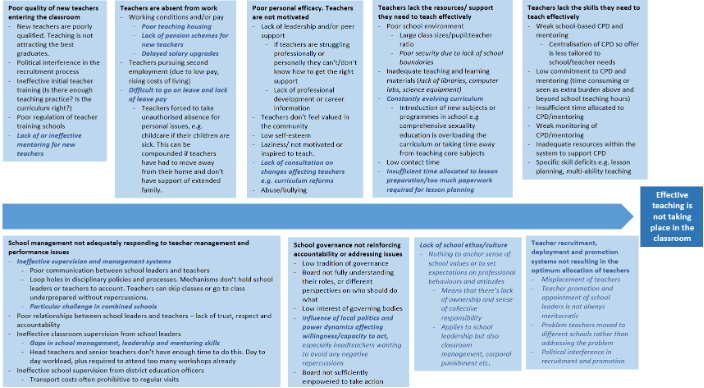
At the beginning of the PDIA course, the team had identified ineffective teaching as the problem explaining poor learning achievement, but this changed when we spoke to the key actors at various levels of the education system such as the Provincial Education Officer (PEO), the District Education Board Secretary (DEBS), the Permanent Secretary (Education Services) and Head Teachers. We then learned that teacher supervision might be a bigger problem. Accordingly, we revised our fishbone diagram (see below).
When we first started developing our fish bone diagram, we were almost certain about our problem and what the sub causes were. Even as we held meetings, our understanding of the problem did not change. However, when we put some of the ideas to test through interactions with the PEO, DEBS, Permanent Secretary and Head Teachers, we got some great insights which influenced the team to change the problem that we had initially identified. Earlier, when we had identified the problem and the sub causes on the fish bone diagram, we only made assumptions without doing any research. The lesson we learned is that with further research and talking to more people on the ground, we were able to rethink our problem. The people we spoke to, however, had different views adding to the complexity of the problem. The different authorizers had varying views or voices especially given their perspective on the issues that caused education system failures. Accordingly, even though the team finally settled on teacher supervision, it is still the case that the problem is dynamic and requires further interrogation.
Team ‘Aspiring Ants’ Fish Bone Diagram
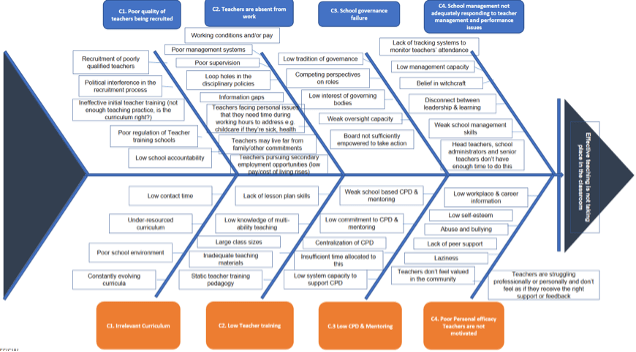
Working off the first version (above), the team made adjustments to the fish bone diagram working especially on the sub causes (see below in blue). The figure below highlights the sub causes that shift the blame from the teachers to more management and systemic issues. The key authorizers, for example, talked about creating a school level ethos about teaching and learning that ensures accountability not just for teachers but also their supervisors. The chain of accountability also extends to the higher level authorities who are responsible for teacher discipline or deployment.
Team ‘Aspiring Ants’ Final Fish Bone Diagram Adjustments
The PDIA course has validated the way some of us already work. The effort to codify the PDIA process is helpful and allows for application to different contexts. Focusing on problems rather than fronting solutions is an important discipline for correctly aligning what needs to be done. The solutions should be localised to be relevant and effective. It has been easy to provide solutions instead of tackling problems and contextualizing them. We will not, for the future, advance solutions and will apply this approach to many situations. We tend to assume a lot of things before we even engage people. The PDIA course has shown that when we engage with people, we learn more and are inclusive, whether from authorizers or positive deviance cases. That means that we cannot assume a one-size-fits-all approach to problem solving. System reform fails because the challenges are dynamic and lack a coalition of stakeholders committed to solving a problem.
The information can be used in many ways, including for personal issues and other sectors. It is relatable to many situations. Currently, some team members are using some of the lessons learned in the PDIA course to manage teams through building relationships and trust. We are also using some skills on time management and applying the delegation of work. Others are thinking more academically about the future of development work and if PDIA represents or can be the paradigm shift.
The team believes that the knowledge gained can be applied to many other situations. They should encourage non-practitioners to try the PDIA process as the concepts learned in the course are applicable to all sectors in terms of problem identification and solving. The very active and formative approach to learning through the PDIA process is effective, allowing us to know what works and what does not. The PDIA is a contextualized, rich, and real-time learning process.
This blog was written by the alumni of the PDIA for Education Systems Online Executive Program at the Harvard Kennedy School. 56 participants from 8 countries successfully completed this 12-week program from September – December 2022.
Using PDIA to Tackle Educational Inequalities in Arid and Semi-Arid Areas in Kenya
Guest blog written by: Frederick Haga, Ezra Mwiti Manyara, Lydia Njoki Muchemi, Rosaline Muraya, John Ochieng, Evelyn Owoko.
The national primary level education outcomes mask disparities based on gender, location and socio-economic factors (National Education Sector Strategic Plan 2018-2022). Children from households classified as poor, those from Arid and Semi-Arid Lands (ASAL) and urban poor have a low chance of being in primary school and transiting to secondary school. The Net Enrolment Rate in ASAL is at 42 percent compared to other areas that are not ASAL at 96.8 percent. The ASAL areas register very low learning outcomes compared to other areas nationally.
It is in this background that we decided to tackle educational inequalities that result to low learning outcomes in ASAL areas in Kenya. This problem is manifested by children not acquiring basic learning competencies at the appropriate grade compared to children from non-ASAL areas.
When we started the PDIA course, we were eager to know how we could solve such a complex problem that had been bedeviling our education system for so long. Many solutions to the problem have failed and still the ones being tried don’t seem to give a permanent solution. The PDIA journey started with us all looking forward to learning extremely difficult stuff but to our surprise! It was everything we knew, we learnt that we would work with what we knew; homegrown solutions for local problems and we were to learn how to do it ourselves!
The PDIA approach towards addressing complex problems is quite unique in the sense that the focus driving the whole effort is based on the problem, not simply in pursuit for a solution. After the problem has been identified, constructed, deconstructed and fully analyzed, a more holistic scenario of the issue emerges.
We started by learning how to construct a problem where we realized that the manifesting problem is just, but a tip of the iceberg, and we needed to deep-dive and understand how get to the root of the problem. We were also able to deconstruct our problem and by so doing, managed to learn more causes of the problem that we had no hint of before.
We started by identifying six causal problems that contribute to achieving low learning outcomes. These are inadequate qualified teachers in the ASAL schools; insufficient resource allocated to marginalized areas; policies that don’t target the diverse needs of ASAL areas; Cultural practices that affect school participation; Low school attendance and high pupil teacher ratio.
>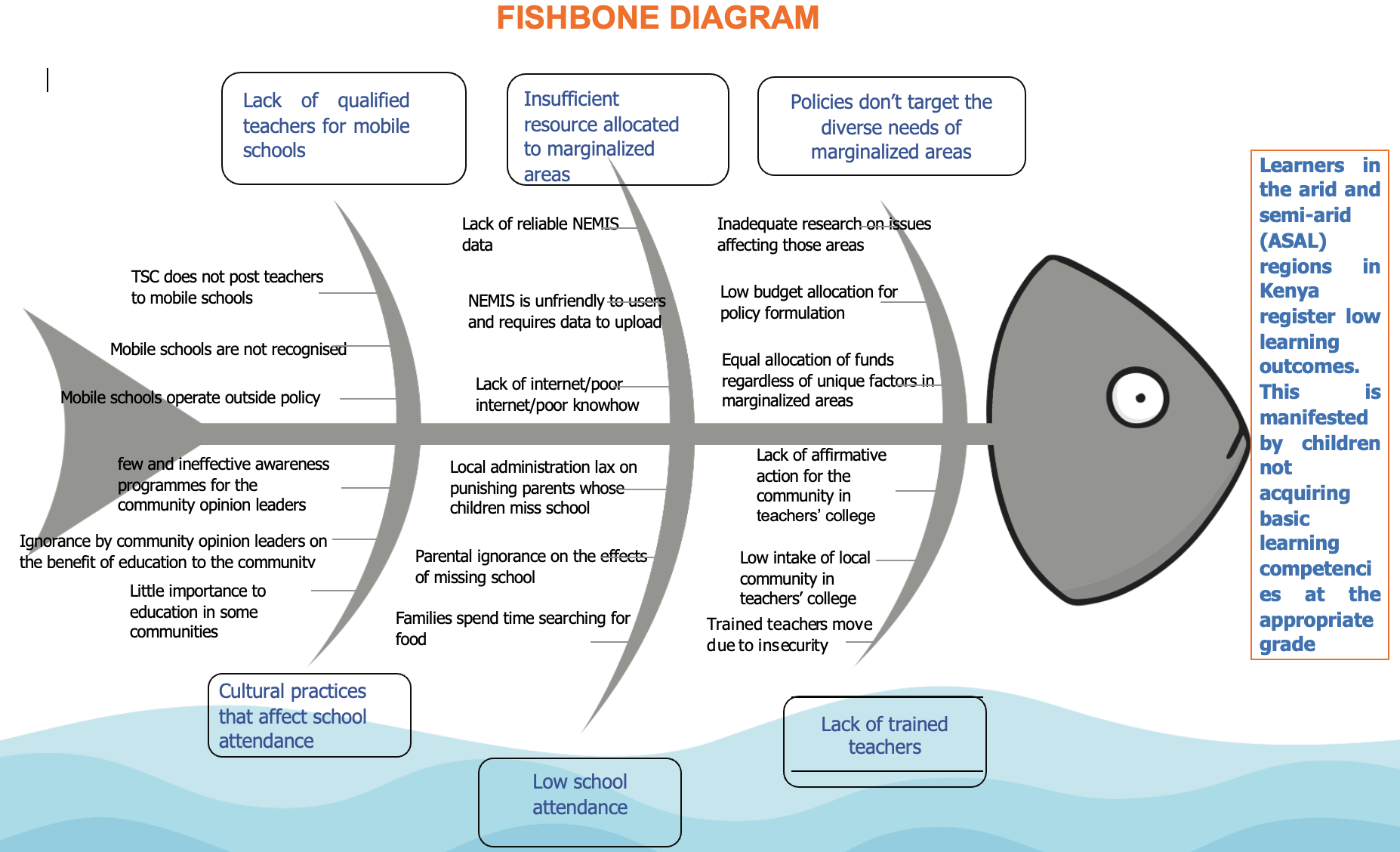
We came to understand that even the causal problems had other sub causes and there was no single solution to solve the manifesting problem. Each causal problem was deconstructed further to an identifiable problem that could be solved with a unique solution as an experiment to see if it could bring a permanent change. We really wondered where to start as our fishbone was overwhelming with problems that needed to be solved if we were to improve learning outcomes for children on ASAL areas.
We decided to start with the policies that don’t address needs of education in ASAL areas. In attempting to solve this problem we learnt a lot and we came to the realization that there are some things we cannot be able to change overnight. For example, we reviewed education policies on ASAL areas to establish gaps and get an entry point. We learned there was a review being undertaken and there was a draft policy which we could enrich with our new found knowledge if we managed to get the authorizer allow us to add some information. This we felt could refocus the direction of ASAL education priorities and this could solve most the other sub-causes of our problem. We learned authorization can hinder one’s progress and great patience is required. We are still at it as we come to the end of the course.
In addition, we learned that the plight of mobile (literally mobile schools that move with nomadic families as they search for pasture and water for their cattle) schools is not adequately addressed in the policy. We felt we had a chance to influence the inclusion of remaining concerns relating to mobile schools in the implementation guidelines. We also spoke to many people; colleagues, members of the communities affected, authorizers, Teachers Service Commission on positive deviance of teachers who remain in ASAL areas despite the challenges. We are planning to extensively engage with NACONEK the Commission charged with education matters in ASAL areas. We are sure to get somewhere in our iteration and learning.
With the knowledge and skills acquired during the Course, we will no longer look at problems in the same way again. This implies that our view and approach towards problem-solving has forever changed! We have learned the value of taking time to fully appreciate the context of the problem at hand before systematically making an attempt at addressing it.
Further to this, we now appreciate the value of iteration and the lessons that comes with the constant engagements. The importance of deliberately building an effective team, celebrating progress, however minimal it might be, and using the lessons learned from various stakeholders affected by the problem cannot be overemphasized.
At the superficial level, it might look like more time will be required as we address different problems in the education sector, but we now know better – one would rather take time understanding the problem through iteration so that the intervention developed is wholesome and gets buy-in (Acceptance) from the stakeholders.
The role played by our supervisors has become clearer in terms of both their strengths and limitations. We now understand that to get authorization, you may not necessarily have to deal with your direct supervisor, but we can employ different approaches towards obtaining authorization from different individuals and offices. For instance, while our team embarked on a problem that appeared purely education related, with expanded iteration and engagement the role of security organs emerged as a key consideration.
Equally important, we now know, and will be intentional in building teams that can assist in the process of pursuing a problem-driven approach in addressing matters that concern the sector.
We reckon that applying the PDIA approach in our daily duties, especially asking questions that might at first appear irrelevant, may initially not go down well with all our colleagues; however, we will go about it gently so that the connection between asking the Who orWhy questions can be linked to our effort of addressing the complex problem at hand. Towards this end, we may not immediately be overt in our approach, but ease our way into bringing our colleagues to appreciate the PDIA way.
The tools, skills and knowledge acquired are phenomenal, we are better than we were before. We shall continue to solve the problems we have on the fishbone one by one and celebrate this journey. We also have other complex problems in our sector and we shall use the acquired skills to solve them. We have also realized PDIA allows us to learn more about the problem and therefore we shall continue learning as we tackle each problem.
Kenya is in the process of changing the curriculum and a lot of teething problems are emerging. Our acquired skills will be of great importance in supporting our ministry in identifying long lasting solutions to complex problems. We hope to celebrate with the global PDIA fraternity when we achieve higher learning outcomes for children in ASAL areas and nationally as a whole.
There is surely no end to learning, every experience is a learning curve that we need to take in and work on until we get the desired results.
This blog was written by the alumni of the PDIA for Education Systems Online Executive Program at the Harvard Kennedy School. 56 participants from 8 countries successfully completed this 12-week program from September – December 2022. Learn more about this program
Why are Students not achieving the Foundational Reading and Mathematics Skills in Rwanda?
Guest blog by Dr. Flora Mutezigaju, David Mugabo, Emmanuel Niyomana Mico, Gervais Mabano, Valens Ngaboyera, Ntaganira Jean de Dieu
Rwanda aspires to become an upper-middle-income country by 2035, and a high-income country by 2050. Her development agenda is centered on prosperity and high-quality standards of life for all Rwandans. The realization of this vision is anchored on human capital development: the transformed workforce for higher productivity. To realize the transformative power of education, children need to acquire foundational literacy and numeracy skills as the building blocks for more advanced skills. However, students in early grades fail to achieve the minimum levels of literacy and mathematics proficiencies.
The Learning Achievement in Rwandan Schools (LARS) found that student performance in English for P3 Literacy was low, with only 10.08% of the students meeting grade proficiency benchmarks in English, the current language of instruction in lower primary. Numeracy levels were much more positive (60.94% of the participants achieved the grade level benchmarks) when assessed in Kinyarwanda, however grade proficiency dropped to just 16% when assessing numeracy skills in English.
Over the last two decades, Rwanda has made great strides and reforms, which have led to many successes, especially in access to education for all. There is, however, more to be done to ensure that all students acquire the foundational learning skills that are important for future learning.
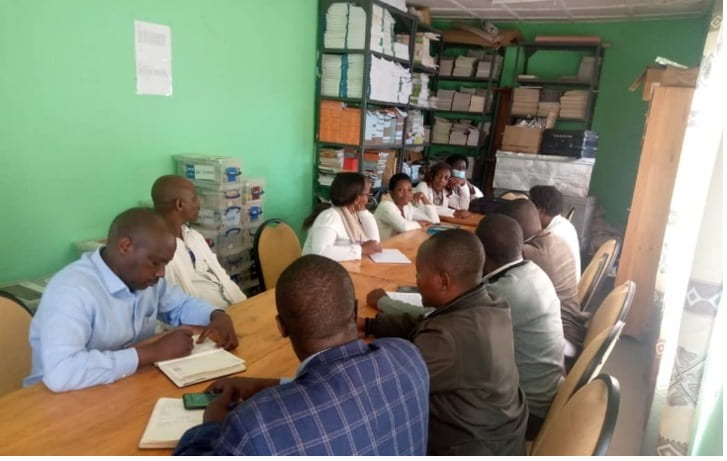
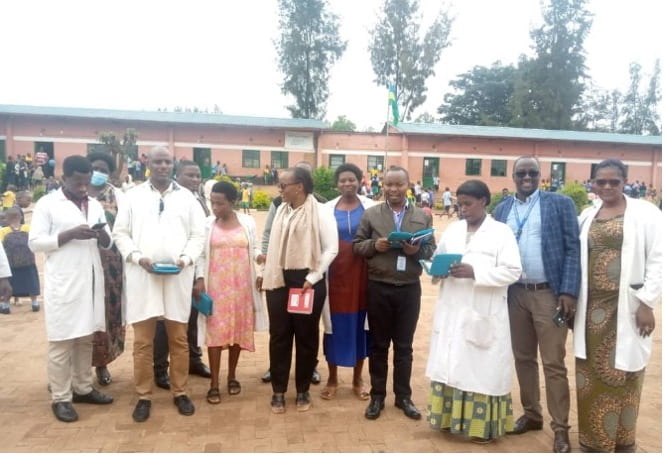
The Harvard Kennedy School provided an opportunity for the Rwanda team to take stock of the problem of poor learning outcomes among students of Rwanda in early grades and try to find solutions to this problem. The PDIA course was a nice opportunity for all of us to learn from each other and get views from different education stakeholders on the magnitude of the problems and understand what we should do together to address the issue.
Our key learnings from this course
Through out this course, we have leant so many things, however, I can single out the most five lessons we got from the course:
- Looking at the problem differently: We have learnt that there are two ways of looking at a problem: solution-driven approach, and the problem-driven approach. We have realized that the latter is more effective in addressing a problem.
- Iteration of problem and solutions: Throughout this course, we have learnt that iterating to properly understand a problem rather than jumping to solutions is very key to problem solving. We have also learned the importance of iterating local problems to local solutions. We noted that instead of rushing to adopt solutions from different countries, we should first seek to understand solutions in our local context. Locals can own the problems and try to solve them knowing the politics, context and motivations. We need to listen to our people to iterate solutions and keep revisiting authorizers to keep their engagement.
- Team working and engagement: We appreciate that there is a benefit of working in a team, and the more you engage the real stakeholders, the more the team’s ability to solve a problem effectively.
- The Importance of building trust: We recognize the importance of trust in a team and its elements: authenticity, logic and empathy. People tend to trust you when they believe they are interacting with the real you (authenticity), when they have faith in your judgment and competence (logic), and when they feel that you care about them (empathy). We learn that building trust allows people to fully realize their power and capacity.
- Authorization is important: Building trustworthy relationships with the authorizer(s) and keeping the communication flowing about each step in the process is very important in solving complex problems in education.
The problem we worked on over the past 12 weeks
Over the past 12 weeks, we tried to find solutions to the problem of poor learning achievements of students in early grades, especially in foundational skills (Literacy and Numeracy). Foundation skills are a minimum requirement so that individuals can survive and progress in an international ‘knowledge-based’ economy and society. Through many discussions with different stakeholders, we have identified the causes to poor achievements in early grades and proposed the enabling conditions necessary for students to master the foundational learning skills, particularly reading, writing and mathematics.
Insights we have about our problem through this process
From the many discussions and consultations, we had with different stakeholders in education, we learned that the problem is real, but also together we can put an end to this problem. We get insights on the cases of the problems and possible solutions to address the problems. We realized that the causes to poor achievements of students in foundations learning are the following:
- Poor teachers’ competencies: We realized that teachers lack requisite pedagogical training to teach foundational skills.
- Insufficiency of Teaching and Learning Resources: The quality, availability and use of textbooks and other teaching and learning materials are inadequate.
- Parental support for learning is low. Community participation in children’s schooling is low in Rwanda.Aside from paying school-related expenses, parents do not see it as their job to be involved in their child’s education.
- Insufficient supervision and monitoring of teaching and learning. While District Education Officers and Sector Education Officers are tasked to supervise and monitor schools, evidence suggests that DEOs and SEOs may not be properly trained to provide pedagogical oversight.
- Poor school readiness: We have realized that many children arrive at school without foundational skills (or abilities) to learn.
We noted that the above all the main causes of poor mastery of foundational skills, which also have many other subcauses. However, we observed that through proper trainings of teachers, the provisions of appropriate teaching and learning materials and the involvement of parents coupled with really time monitoring of the progress, students in Rwanda can learn and get the foundational learning skills essential for future learning.
The insights we got include the fact that learning achievement cannot be improved if any of the above causes are not addressed. It was also made clear that the problem is addressed by removing all the causes starting from their root causes.
This approach changed the way we tackle problems
The PDIA approach changed our understanding on how we must tackle problems in a more effective and sustainable way. Based on PDIA Principles, we will now be handling any problem by analyzing its root causes. We got more understanding that solving problems involves the understanding of the standing point of others. Why do they care and what they care about? To solve problems in education, we must engage all the people concerned. And from now on, we will ensure any decision taken to solve any issue in education has taken into consideration the views of as many people as possible. We have also changed our understanding that external best practices are always the best. We will try and identify our local best practices, because in the end, we have them.
How we are using what you have learned in this course
We have started using skills acquired on this course in our daily work activities. For any problem that arises, we first must analyze it deeply by breaking it down and find its root causes. We also engage as many people as possible to get their views as we seek solutions. We understand that getting colleagues views and options help us solve problems in a sustainable and honest way. Teamwork and engagement are the principles we use now in our daily work. Celebrating small wins and tracking records of progress are also skills we got that we are now using, and it is helping us to stay motivated and focused. We now use our daily reporting requirement as an opportunity to celebrate our daily wins.
Words of wisdom to share with fellow PDIA practitioners around the world
Dear Fellow PDIA practitioners, I hope you agree with us in Rwanda that this course is a life changing course. After doing it, you never remain the same. You change for the better. Here are our words of wisdoms for you to note:
- A problem well stated is a problem half solved
- Iterations lead towards right direction
- Celebrating small wins is a great way to build confidence and start feeling better about yourself. Do it everyday
- Build Trust: Its presence cements relationships by allowing people to live and work together, feel safe and belong to a group.
This blog was written by the alumni of the PDIA for Education Systems Online Executive Program at the Harvard Kennedy School. 56 participants from 8 countries successfully completed this 12-week program from September – December 2022.
Not Enough Time is Spent on Quality Teaching in Ethiopia
Guest blog written by Alemu Tesfaye, Gebre Negash, Nisha Makan, Tamene Keneni, Teshager Mersha, Yeshitla Mulat
PDIA is an innovative approach to problem-solving and capacity building that involves frequent iteration and reflection. Such iterative and reflective process allows teams and individuals to move back and forth and correct and learn from mistakes. It also helps to gain deep insights into the problem and its causes and sub-causes and decide the right entry point and time to tackle the problem. The iteration process also builds an individual’s and teams’ capacity to understand and systematically solve the problem. It is also a powerful approach to engage actors at all levels from authorizers to frontline actors (implementers). Working in teams and collaboration with all actors is a key aspect of the PDIA. PDIA is a solution to a fall into the trap of wanting to get to answers to big questions fast. PDIA is also a remedy to not fall into traps of coming up with solutions without taking time to properly understand the problem. PDIA’s focus on adaptation to the local context makes it a uniquely relevant approach to educational challenges in linguistically and culturally diverse countries such as Ethiopia. Overall, we learned that PDIA is a problem-focused approach that rests upon (1) articulation and prioritization of concrete problems to be solved, (2) encouragement of experimentation and positive deviance, (3) iteration, reflection, and adaptation, and (4) collaboration with all actors at all levels.
Read more: Not Enough Time is Spent on Quality Teaching in EthiopiaInitially we tended to be over ambitious and began with a very general problem- “a learning crisis in Ethiopia in which many children are leaving their primary education at early grade levels (G1 &2) without basic numeracy and literacy skills”. However, through weekly iterations and reflections we narrowed down our problem to “Not Enough Time is Spent on Quality Teaching” which is one of the key contributors to learning crisis in Ethiopia though least recognized as such by actors particularly frontline actors.
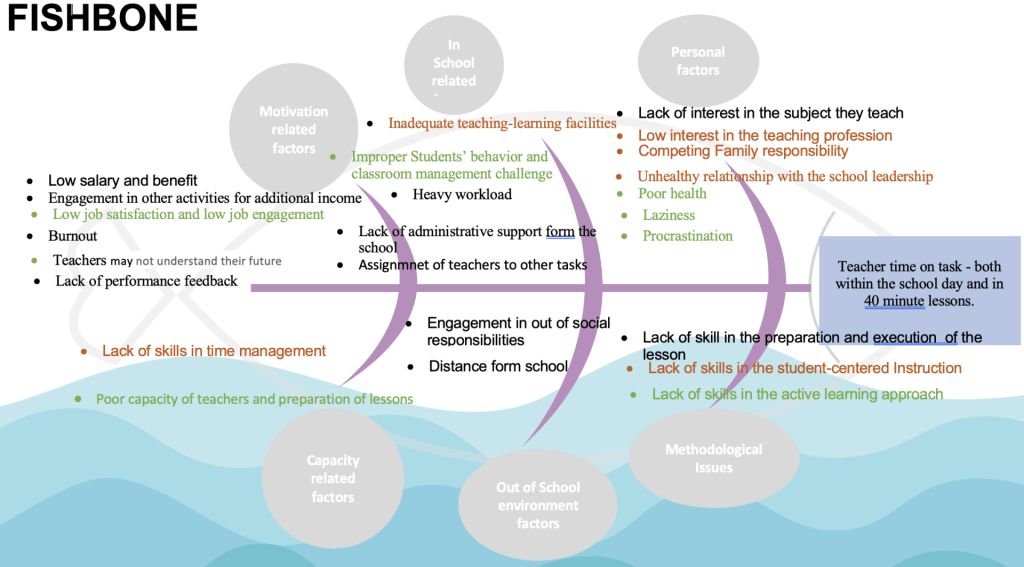
The progress we made and/or the insights we have had so far are:
- We began to understand that while some of the obvious sub-causes (like teacher salaries) do not have a large change space, there are other areas where we can make change
- We realised that teacher motivation and action can be affected without necessarily more pay
- We realised that teachers and schools already recognize the same problems but have given up due to not being heard, being under resourced, etc.
- We realised that it really is considered okay in the context to have women work different hours to men so they can care for their own children
- We seemed to move from focusing on teacher time in classroom to move back towards teacher absenteeism in general- even though that has been a sensitive subject in the past
- We made progress on speaking to schools and seeing their framing and engaging them to try some things
- We captured some positive deviances on reducing absenteeism
- We also resorted to traditional solutions like the ministry giving top-down instructions which only seems to work if the ministry then keep re-visiting to reinforce those rules
- We realized that ineffective use of an allotted instructional time was an underestimated factor contributing to learning crisis that stakeholders in the education sector didn’t recognize well; from our school visits, we noticed that at the beginning and end of a lesson session more than 10 minutes are wasted from the total 40 minutes allotted and this is not understood as a waste even by the schoolteachers themselves.
- We realized that understanding the problem from the perspective of the frontline actors and looking into the solution with meaningful engagement of thereof is essential
- We also understood that constructing a problem that matters is very important
As a country team, we are convinced that there is a lot to take forward on team building, trusting others, empowering others, sharing credit, delegating others, slowing down the pace and managing upwards on unrealistic expectations, building authorization and engagement by sharing and iterating the problem rather than the solutions. We also understood that engaging as many stakeholders as possible meaningfully is key to creating ownership and ensure sustainability. We realized that effectiveness of a solution to a certain problem is a function of the degree to which stakeholders and local actors are engaged and we will take this and other principles of the PDIA forward in our current and future engagements with the ministry of education and other stakeholders.
In a country like Ethiopia where greater numbers of schools are in rural areas, PDIA seems highly viable. It allows local actors such as district officials and school communities be part of solution makers than mere implementers of solution from the center. Thus, we recommend the approach be part of Ministry of Education’s plan. When doing future strategy, policy, or planning roles, we intend to go back to issues trees (fishbones), problem framing and building a coalition before jumping so quickly to final products. We will make PDIA an agenda in all meetings and interactions that we will have with regional education bureaus and lower-level actors in the education system. Subject to budget and approval, we will have orientations and engagement with wider ministry and downward. We are also aiming to cascade it in our respective organizations and departments.
We have these wisdoms to share with the world:
- The whole idea of PDIA seems to align with the saying form John Dewey (American philosopher, psychologist, and educational reformer) which says, “A problem well stated is a problem half solved.”
- Please know that all problems aren’t meant to be fixed, at least by you. Therefore ask “Is this a problem I should fix, put up with, or walk away from?”
- We all need to make a step at a time-one problem at a time—just figure out this one problem.
- I will not work out of PDIA; hence my slogan becomes “Local solutions for Local Problems”.
- An Oromo proverb “Kan abbaa irra beeku budaadha” which literally translates as “people are experts of their own problem” aligns well with the PDIA principles. PDIA aims at building local capacity and seek local solution for a local problem than importing ready-made solutions.
- PDIA coincides with the African proverb “No shortcuts exist to the top of a palm tree” in that no shortcuts exist to effectively a problem.
This blog was written by the alumni of the PDIA for Education Systems Online Executive Program at the Harvard Kennedy School. 56 participants from 8 countries successfully completed this 12-week program from September – December 2022. Learn more about this program. (Link to PDIA for education program page)
Treading the Path to Better FLN Outcomes in Punjab, India
Guest blog written by: Jasmine Dhingra, Sunil Sharma, Nitin Sharma, Isha Shingte, Gurtej Singh
In one of the very first individual assignments during the PDIA for Education Systems course, we learnt about 1804 challenges – ‘How would it be like to travel from one part of the country to another in the year 1804?’ Building capability in the system for FLN implementation is a similar wicked, hard and complex challenge that requires us to work with uncertainty in an environment that is affected by multiple dynamics. Matt and Salimah emphasised early on that PDIA is not about delivering pre-packaged solutions but traversing the path to solving a problem through repeated trials and consistent effort. We remember discussing that this approach looked different – it was real and we were finally interacting with coaches who understood and helped us deal with the issues that we
faced working in the public sector on a day-to-day basis.
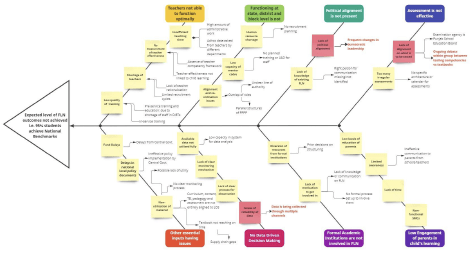
We started on a very specific cause to be addressed during the course and the 5-Why drill helped us reflect that our problem statement was a solution that we had presumed to solve the problem of low learning outcomes in foundational stages. After a good number of deliberations, the group arrived at a consensus on the problem construction, that is, Punjab had not achieved the expected level of FLN outcomes (95% of students achieve National Benchmarks). Further, a breakthrough came for us during problem deconstruction through the Fishbone Diagram wherein we were able to brainstorm on the intricate causes and sub-causes of our problem. During the process, we realised the importance of diverse perspectives and the availability of data to justify them. We were overwhelmed by the number of ‘bones’ that our diagram had but the next sessions came to our rescue as they helped us to zoom in and identify key areas of immediate action. The triple A analysis tool helped us identify the entry points by looking at the problem through multiple lenses of Authority, Acceptance and Ability in the system.
The team then Crawled the Design Space to find ideas to act upon. As a team, we had discussed concepts such as Isomorphic Mimicry explained in research by RISE but the framework of the design space was the first time we were able to practically map out solutions that are technically correct as well as administratively and politically feasible for our context. Our biggest discovery in this process was to realise that we need to identify and tap into latent practices within the state and iterate on them for which speaking to as many stakeholders as possible was essential.
The last stage of the PDIA process was the combined practice of building authorisation and iterating on our solutions. Slightly before this last stage, our team had begun facing major turbulence due to changes in the state’s bureaucratic leadership and our authoriser. We remember feeling slightly dejected at first that we might not be able to build the right kind of momentum for implementing FLN better. But while studying how to maintain an authorising environment we saw that the uncertainty and fickleness of authority structures were integrated into the concepts of PDIA. A key statement that stuck with our team was – ‘Authority needs to be treated as a variable and not as something fixed.’ The resultant shift in mindset allowed us to find our strength and grit to come up with solutions and get authorisation through unconventional means.
Iterations on our selected strands of the fishbone followed and we remember discussing in our group initially that the phase of iterations sounds like just regular work. But we soon realised that doing this work was one of the biggest learnings. Consistent effort, regular reflections, celebrating the small wins and finding motivation in each other was a different experience from just ‘regular work’. We were able to create two major breakthroughs in the period of merely four weeks – setting up a core group to review and create new teaching-learning materials for FLN for the upcoming academic year and planning for organising a state-level event with the Education Minister and multiple levels of officials, from teachers to state, to discuss and align the purpose of education going forward.
Completing this course resulted in significant shifts in our mindsets towards creating an impact with the work we do. One of our key shifts in approaching solutions was to not hesitate to iterate consistently. We realised the importance of rapid implementation of latent solutions in the system and then learned from what didn’t work to adapt as we moved forward. We also inculcated more patience and resilience. It was important to not look for immediate big results in some of the aspects of our work and instead celebrate our small wins. We also experienced first-hand the effects of having a team that leads to balancing out of levels of motivation and focus in the face of repeated challenges.
One of the most innate elements of the PDIA process was a constant reflection on what we have done and what we aim to do. Unfortunately, during the final stages of our sessions, the team couldn’t meet in person, however, the motivations were higher than ever and we all ensured to connect from different parts of the region. Reflecting on our key learnings from the programme, all of us concurred with each other that focusing on the problem and not on the solution was integral for us and it helped us sail through other steps much more smoothly. During our discussion, we all agreed that developing the team constitution helped us learn the importance of teaming. Six different people, with different backgrounds and perspectives, could utilise the constitution and the tools provided over the course to
communicate effectively, build trust, manage time and support each other while holding themselves and others accountable. Our authoriser was extremely appreciative to observe our output and team dynamics and shared his learning with us. He learnt that, as a leader, having a better conscious of
people’s emotions and the ability to regulate one’s own emotions, can be equally rewarding as it helps individuals to get their share of success. He also shared that the perspectives on effective delegation were different and made him reflect collectively with other leaders across different countries. The overarching learning for all of us was that we started thinking better and together each day.
Towards the end of the discussion, we realised that our Tuesdays won’t be the same now but we resolved to meet once every ten days to check on each others’ progress in our action areas the same way as we did during the programme. PDIA has helped us improve our outlook towards problem-solving, towards people we worked with or will in the future, and towards our stakeholders. It is an approach which is not necessarily restricted to one context and that is its best feature. We intend to continue using the approaches that we learnt to apply to the next set of ‘bones’ that we will address to solve our problem. Moreover, looking at the progress we made, we realised that these approaches can not only help us solve foundational learning problems but also various other challenges arising in different levels of school education. Hence, we decided to orient the key resource persons from Upper Primary and Secondary levels of education on the PDIA tools and methods and aim to make their processes as systematic as possible.
During the last sessions, while we iterated on our interventions, we learnt some of the most valuable lessons about our communications, teamwork, trust, celebrating our small wins, and leadership in our action areas. These intangibles are going to help us in the long term both in our professional and
personal endeavours to improve the quality of education in the country. While we always looked up to Matt and Salimah for words of wisdom each week, a few aspects that we understood and that will stay with us – There will be challenges, especially unforeseen and peculiar ones, at each step. But it’s still possible to
keep finding ways by being willing to take action in whichever capacity one can and by focusing on building the team stronger and honing the skill of teaming.
In sum, we realised that the power and capacity to shift the system do lie with us.
This blog was written by the alumni of the PDIA for Education Systems Online Executive Program at the Harvard Kennedy School. 56 participants from 8 countries successfully completed this 12-week program from September – December 2022.
Early Childhood Care and Education in Punjab, Pakistan
Guest blog by Atique ur Rehman, Ayesha Husain and Zobia Khan
Context
It has been witnessed that high quality early years childhood education significantly impact the economy and society. The benefits of quality early years education aid in children’s development of cognitive, language, numeracy, and motor skills, which prepares them for entry into primary school.
The School Education Department, Government of Punjab and its allied educational institutions such as Program Monitoring and Implementation Unit (PMIU), Punjab Examination Commission (PEC), Quaid-e-Azam Academy for Educational Development (QAED) and Punjab Curriculum Textbook Board (PCTB) are struggling to plan, implement, support, monitor and scaling up the early years education.
QAED was tasked with establishing Early Childhood Care and Education (ECCE), and as a result, close to 13000 ECCE have been established across Punjab with the aid of allied institutions. However, 35,000 or more ECCE are still needed in Punjab to fully cover the population.
Schools with ECCE classrooms must meet the minimal quality standards outlined in the ECCE policy 2017 and competencies elaborated in Single National Curriculum (SNC) 2020 by the Government of Punjab in order to be considered operational.
Diagnosing the problem
School Education System in Punjab in ECCE is undergoing through many reforms. However, one of the biggest issues is that teachers in ECCE are unable to support students’ learning needs, which causes students’ performance in higher grades to suffer. There is not a formal assessment mechanism in place for ECCE classes. Teachers assess pupils verbally to determine who moves to the next class. How well pupils are progressing is affected by a lack of an assessment mechanism/framework and it is unknown what learning outcomes they have attained. There is lack of teaching learning materials in ECCE classroom, teachers are inadequately trained, ECCE classrooms are multi-age (3 to 11 years) and multi grade (ECCE to 5 grades) due to lack of infrastructure facilities, and Caregiver is appointed in ad-hoc bases. Above all, the allied institutions have lack of collaboration. There is duplication of roles across different institutions, which suggests that they work independent of each other. For instance, PEC, PCTB and QAED do not have regular and frequent interaction with each other in order to share relevant work, information, insights and recommendations.
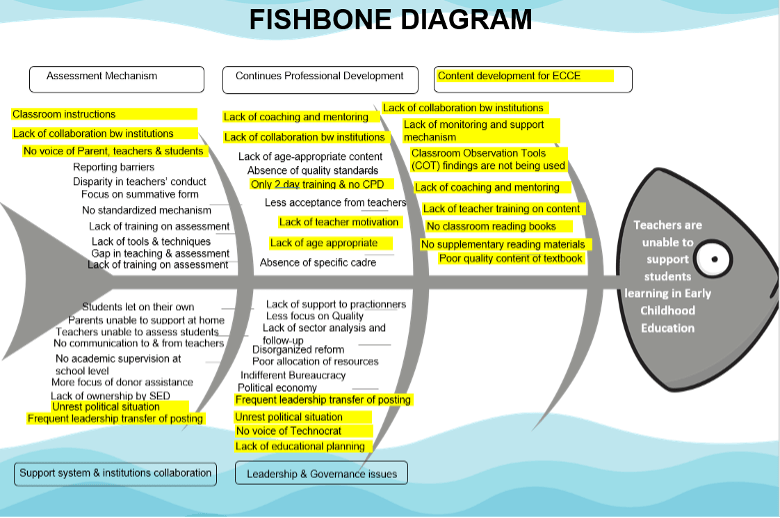
The problem statement, “Teachers are unable to support the students’ learning in Early Childhood Care and Education,” was developed by a group of us who were working for the Punjab Government’s School Education Department and PDIA.
This 12-week journey began with the construction, reconstruction, and reconstruction of the problem statement. Understanding the local context, engaging the greatest number of stakeholders, interacting with various educational institutions, learning, unlearning, and relearning were all part of the process. This all process was not possible with a strong team that was intensely focus on their learning how to lead. The PDIA approach and faculty enabled us to keep an eye on small wins and small wins surprised with big achievements that were witnessed through this process.
Constructing the problem using PDIA What is the problem?
Teachers are unable to support the students’ learning in Early Childhood Care and Education
Why does it matter?
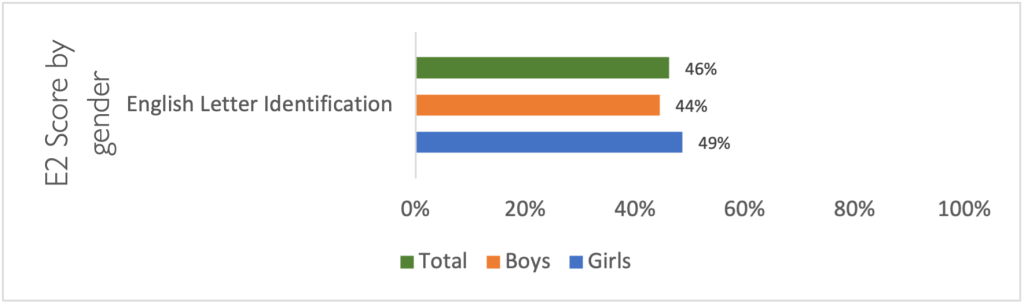
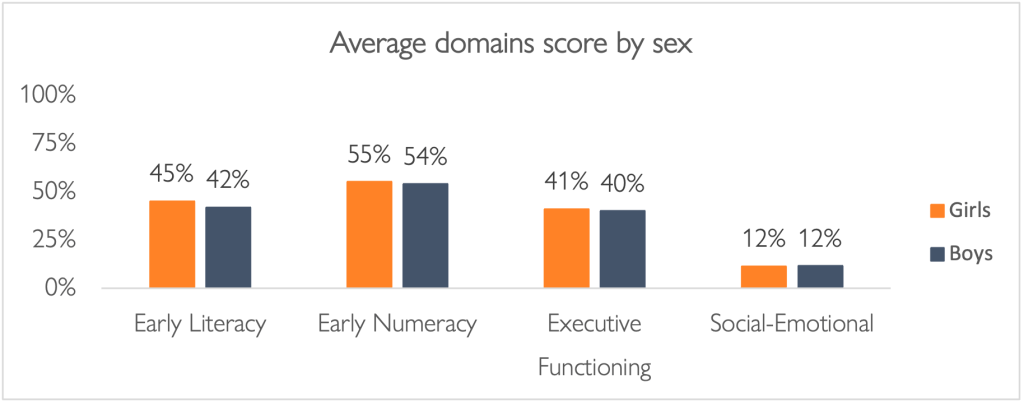
The School Education Department does not measure Early Childhood Care and Education learning however, the Annual Status of Education Report (ASER) 2021 indicates that most Pakistani students are not learning to read at grade level in primary school. Forty-nine percent of grade 3 children could not read sentences in the language of instruction in their schools (Urdu, and English). Why does it matter? A Baseline survey (2022) conducted by our project below figure 1 shows that fifty-four percent of grade 1 children are unable to identify the letter. The Letter Identification (English) subtasks cover English language familiarity skills that children need to acquire to effectively learn and serve as foundation of reading skills.
Why does it matter?
The gap between the academic achievements of students who do not learn to read by grade 1 and those who do grows exponentially every year. If a student is not a good reader at the end of grade 1, there is a probability (.88) that he/she will remain a poor reader at the end of grade 4 (Juel, 1994). As a result, we observed massive dropout in higher grades.
To whom does it matter?
The lack of quality education has the greatest impact on children and parents because most uneducated parents are unable to support their children. The Department of School Education and Pakistan’s future generations are also concerned.
Who needs to care more?
School Education Department, QAED, PMIU, PEC, PCTB, DEAs, schools teachers and community/parents
How to improve the situation? School Education Department may bridge the gaps between allied institutions to play their due role to develop students assessment mechanism, improve teaching learning content/materials, develop teacher training modules, train teachers and caregivers, develop mentoring and coaching system to improve literacy and numeracy in early grades.
What will the problem look like when it is solved?
All children in Punjab can learn to read and read to learn by grade 3.
Deconstructing the problem using Fishbone tool (version 1)
As a team we have narrowed down the problem into different root causes. This helps in prioritizing some of the areas to work on and make small progress. The below figure elaborates causes of the problems, are a lack of systematic assessment plan, process restrains, lack of policy implementations, lack of institution coordination, content development and teacher training.
Iterated version of problem deconstruction (version 2)
Discussing the problem with different stakeholders to learn the root causes of the problem helped to priorities the areas. After different iteration the below fishbone diagram updated and root courses of the problems are rephrased and additional sub-causes (highlighted) were added:
The other tools were also used to deep dig out the problem causes and to do small steps to resolve it. Such as Triple-A change space analysis worksheet to reflect on the contextual change space for your AAA (Authority to engage, Acceptance & Ability) estimation for each sub-cause. Finally, determine the change space for each sub cause (large change space, some change space or no change space).
Where will you look for your authorization needs? – this tool helped look it the different authorizations and assumption to engage them. Iteration worksheet – It helped to plan different weekly actions, learn issues, reflect on challenges and next move.
Local problem and local solution – problem diagnosis
The team thinks that ‘miscommunication’ contributes to data collecting and making sense through leadership lens. The addressing this problem statement required to engage multiple stakeholder and to meet their interest level through frequent communication would be a challenge too.
‘Power of small things” with a defined objective and small wins can have a great impact. The fact that these small wins add up to major goal attainment inspires me as well. It’s also true that celebrating a modest victory can lead to feelings of fulfilment and joy that ultimately lead to inner fulfilment. This promotes persistence in pursuing the following small steps and ultimately the main goal.
However, this process requires support system from the organization head, authorities and stakeholders.
Some significant learning points the team learned are:
- better comprehend the dynamics and effectiveness of PDIA (Problem Driven Iterative Adaptation).
- encouraged an experimental and iterative approach where multiple ideas were identified and then put into action.
- evident in resolving the problems, the process of continuous feedback and input from stakeholders enables the development of a solution that matches the local context.
- important it is to involve the community and parents as well as other pertinent stakeholders in reform efforts.
- The PDIA materials helps us to reflect on our own lives, our practices, our strengths and areas for development. From taking stock of our time, to building an environment of trust and empathy, to giving clear and compelling direction, to making notes of what worked and what didn’t on a daily basis, each reading added to our learning.
- We have learnt that reforms need a well-defined local problem with its causes to understand why and whom it matters, who needs to care more and how to persuade them to give it more attention? The second stage of the reform journey begins with a series of iterations with both identified and unidentified stakeholders. This process then requires a strong team, which they develop by practicing trust. As a result it helps the team and individuals build a belief system in order to solve the problem with the collective efforts.
We have made good progress on our problem. We brainstormed, de-constructed, got information from different stakeholders and looked at the problem from different angles. We have a clear idea of what is going on but the question is, will we alone be able to bring about any change. Multiple people and departments are involved if our teachers are to be supported. Bringing all stakeholders together, ensuring that everyone works in an organized and consistent way towards achieving a shared vision would be a challenge, especially given the changing political climate.
This PDIA approach will make us tackle problems differently. We will use the fishbone as a tool to help me tackle problems in a more systematic way. We will actively think of what worked and what didn’t. We will try our best to keep our team’s morale high and acknowledge and celebrate each milestone – big or small.
Ms. Ayesha will use the progress diary to see what works what doesn’t and why. To understand the catalysts, nourishers, inhibitors and toxins. To see patterns in team members style of work and to celebrate progress no matter how small.
Ms. Zobia is planning to use PDIA for Formative Assessment Implementation.
Mr. Atique aligned his project objectives with the PDIA course. Together, the team, hired firm and team create content for ECCE teachers and students, develop training modules for teachers, and train ECCE teachers in 3400 schools across Punjab. The team is also helpful in this endeavor. As a result, teaching, learning, and assessment resources will be accessible to teachers and students, and teachers will be qualified to instruct and evaluate learners. In the end, student learning will be evaluated and improved in order to support their continued education in higher grades.
This blog was written by the alumni of the PDIA for Education Systems Online Executive Program at the Harvard Kennedy School. 56 participants from 8 countries successfully completed this 12-week program from September – December 2022.