
Developing a Workplace of the Future in Dearborn, Michigan
Guest blog by Rana Allawnha, Laura Demarse, Angela Fortino, Zaineb Hussein, Mariam Jalloul, Amanda Bright McClanahan, Anisa Sahoubeh.
The City of Dearborn’s young and energized workforce is not equipped to fill the jobs of the future.
While cities across Michigan are losing their populations, Dearborn’s population grew by 12% according to the last census, the fastest growing city in the State. This means we have a young, energized, and growing population that historically stays local and settles in Dearborn or nearby. It matters that we create workforce opportunities for them to thrive.
While there is evidence of high academic achievement among youth, there is not a clear path for those students or other low-earning adults to gain relevant accreditation and subsequent employment in the region’s leading industries.
Absent intervention, the City of Dearborn will not attain the necessary job growth for 1) median incomes to rise; 2) for increased business and corporate investment; 3) or to become the talent hub in the State of Michigan.
The public value that will come from solving this problem is that our local economy will grow, we will have increased tax revenue, people’s standard of living will rise and cycles of poverty will be interrupted, and we will reduce income inequality in the city. In short, we will help neutralize the disparities that exist and persistent between low-income and high-income earners in the city by providing tools and resources that will help with economic mobility.


One of the most important insights we gained while tackling this problem is how important it is to construct and deconstruct the problem. Deconstructing a complex problem into smaller, more achievable goals with action plans is essential when addressing issues at the city level. This approach helps to break down a seemingly overwhelming issue into manageable parts, making it easier to identify the root causes of the problem and develop effective solutions. Moreover, by deconstructing the problem, it is possible to identify specific areas that need improvement, allowing for a more targeted approach to problem-solving. For example, in our problem of our young workforce not having the tools to meet the jobs of the future, one of the issues we identified through our fishbone diagram (below), is that the city has never had a person spearheading this type of work around workforce development. We were able to identify that and make it one of our solutions by hiring on a person to do this work beyond this program. This allowed us to focus on that specific issue and tackle it, which was a lot more manageable than trying to solve this larger complex problem.
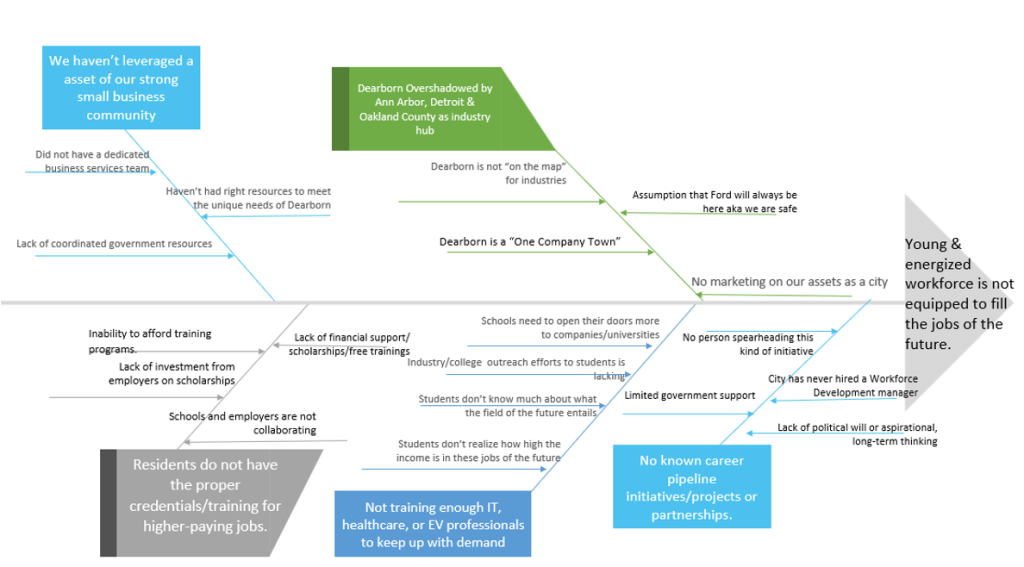
Additionally, one of the most important takeaways we had as a team is to ensure that the problem being addressed is not oversimplified to a lack of a solution. For the longest time, we thought our problem statement is that “Dearborn is not the talent hub of the State of Michigan.” It is very clear that this statement is a lack of a solution (the solution being that we become the talent hub). It wasn’t until we met in New York City as a team that we were finally able to narrow in on the actual problem, which coincidentally was inside our initial fishbone diagram as a bone. By taking the time to understand the complex problem and breaking it down into smaller components, we were able to really hit the ground running with our work streams and pushing this forward.
Lastly, we really learned about how important it is to bring stakeholders to the table who have historically not had a place or historically not invited to the table. These stakeholders, such as marginalized communities, may have unique insights and experiences that have not been considered in the past. The equity piece is huge here: including their perspectives in the problem-solving process can lead to a more comprehensive understanding of the issue and can result in more effective solutions that work for all members of the community.
This new approach has been such a gift to the city and to our team. We feel confident that when future problems arise, we will do the important work of deconstructing our problem into smaller bits. We’re also going to be a lot better about being comfortable just simmering on what the actual problem is rather than jumping into solutions mode. We’ve learned more than anything that finding and identifying the correct problem is half the work, and once that is done, the solutions will be fruitful and meaningful to solving the problem.
As we alluded to above, as soon as we were able to solidify our problem statement, we were able to hit the ground running in terms of making progress. Our gameplan was to have each member of the team spearhead a specific pilot pipeline program that will give youth and adult job seekers resources to grow in their careers.
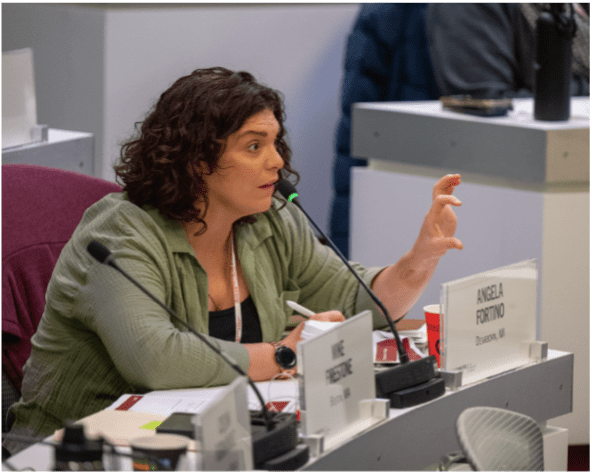
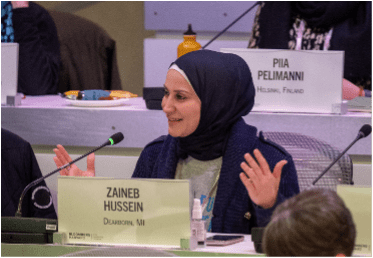
So far, we have accomplished the following, with action plans to keep this work going:
- We are in the midst of a proposal between a local college and a major hospital in the city to create a nursing pipeline – the proposed pipeline entails the hospital providing a scholarship to students going through the nursing program and after successful completion of the program, students will have a guaranteed job at the hospital, graduating debt free and employed with a good paying job.
- We have also completed the logistical work to bring Google Career Certificates for free to Dearborn residents, which will be administered by a local non-profit that is represented in our team of 8. We will be announcing this at the State of the City!
- We have also just begun conversations around bringing an EV training academy to the city of Dearborn, where students in high school and college can receive training to meet the growing field of EV technology.
- We have also finalized and posted a job posting for a Workforce Development Manager at the city to ensure that these partnerships persist.
Advice to others
- Trust the process! While it can be daunting, and sometimes feel repetitive, it will truly allow you to diagnose a complex problem and be successful in solving it.
- Don’t fear failure! This process almost requires experimentation and learning from failure. Don’t be afraid to try new approaches and take risks. Don’t be afraid to test out a pilot program and evaluate how it does, and then adjust that program.
- Baby steps! As mentioned in the title, PDIA is inherently an iterative process, so start with a small, manageable parts of the problem and go from there. Break the problem down into smaller components, and work on them one at a time, with clear tangible steps and someone responsible for those steps.
- Be a team player! Having a team that you can be psychologically safe around is so important, but building that culture doesn’t happen in a vacuum. It is important to be communicative and honest with your team, whether it is that you can’t attend a meeting, or maybe the person you report may be getting second thoughts about the program you’re helping in creating. Either way, it is so important to create a culture that allows for success.
- Have fun along the way! Speaks for itself. Remember that you are all working towards a goal that matters to each of you. So make friends, build connections, and have fun!
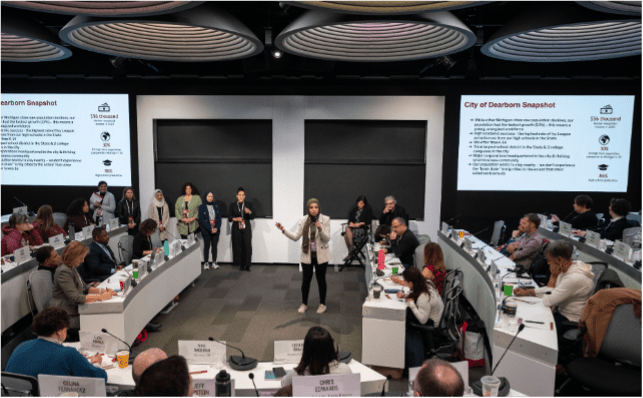
This is part of a blog series written by city leaders who participated in the Bloomberg Harvard City Leadership Initiative cross-boundary collaboration track during 2023.
Implementing PDIA in Digital Transformation of Riga City
Guest blog by Rasmuss Filips Geks
Back in 2001, something groundbreaking occurred. Seventeen technologists gathered in the Wasatch mountains of Utah to draft the Agile Manifesto. It was a set of principles for IT Project Management that would fundamentally change software development. Today, any user-friendly digital product we use was probably developed using these principles.
In a way, PDIA or Problem Driven Iterative Adaptation is a similar innovation. Rather than software, it offers a concentrated toolkit to address complex public policy challenges. These are problems where the types of potential obstacles are impossible to predict and can’t be solved using a generic Plan and Control approach. Unsurprisingly, the digital transformation of Riga City is indeed a complex challenge and PDIA helped to fundamentally change my approach towards addressing it.
(more…)Improved Public Spaces and Infrastructure for the People of Compton, California
Guest blog by Karen Harris, Rosalind McGary, La Shawn Kindle-Young, Jimmie Smith, John D. Strickland Jr, Maria Villareal, Alonzo Williams
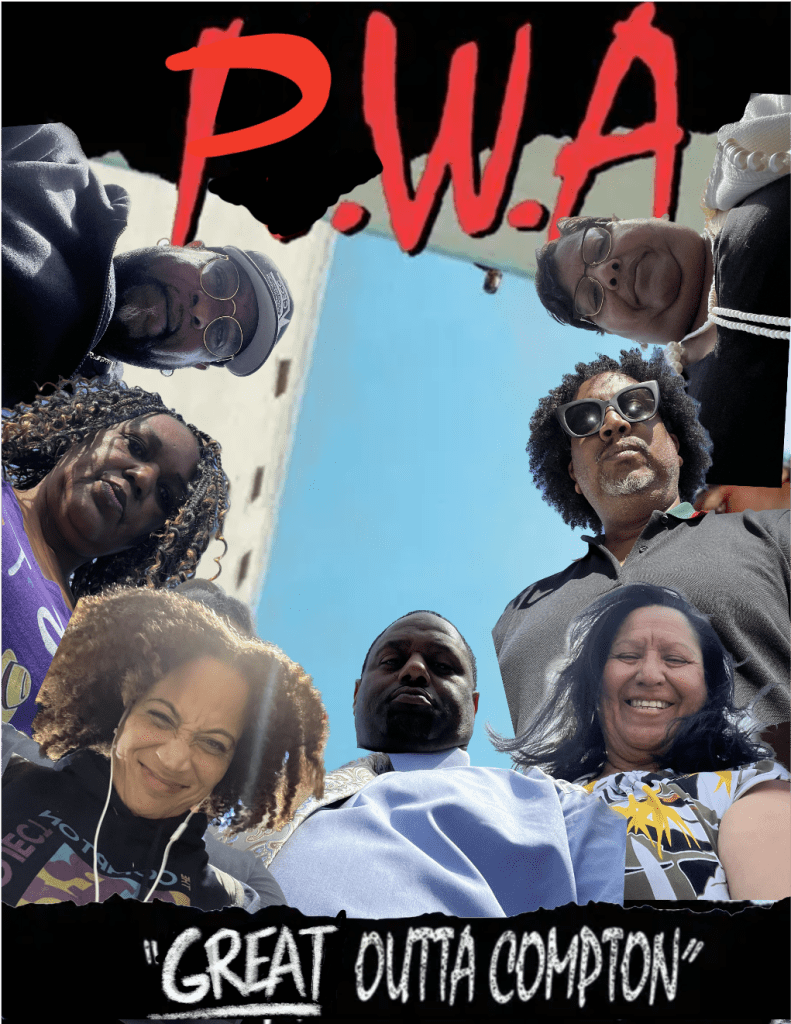
The Great Outta Compton team was officially established in January 2023 by Mayor Emma Sharif to tackle some of the problems facing our community. The team consists of community stakeholders, and city staff; each of them have committed themselves to the betterment of the Compton community.
On February 11-17, 2023, the team participated in the Bloomberg Harvard City Leadership Initiative Cross-Boundary Collaboration Track sessions in New York City, New York. This was an intense leadership development session for ten city teams worldwide.
The Great “Outta” Compton team began its mission of refining our problem statement. We struggled with working together as a newly developed group and trying to adapt and integrate our hectic schedules into our newfound assignment. We initially started out by identifying our problem statement to be the City’s public spaces and infrastructure is deteriorating leading to issues directly affecting the physical and emotional well-being and health of the City of Compton residents.
We then asked ourselves
- Why does it matter? Because the City’s public spaces and infrastructure impact the health, safety, and well-being of its residents.
- Why does it matter? It matters how others view the City.
- Why does it matter? It would change the image of the City to encourage more people to stay, work and invest in the city.
- To whom does it matter? It matters to everyone that lives, works, and grows up here, as they are impacted by the conditions of our public spaces and infrastructure.
- Who needs to care more and why? The residents, business owners, political leaders, school district, County, and State officials.
- How would you get them to give it more attention? We would point out the consequences of not addressing the issues which include failed streets, safety issues, lawsuits, homelessness, loss of revenue, increase in crime, and unsafe health conditions.
- What would the problem look like when it is solved? The City of Compton will have clean paved streets, renovated buildings, clean water, affordable housing, anchored communities, more development, an increase in investors, an increase in revenue, more visitors, and an increase in population. Overall, a better quality of life.
In speaking with stakeholders, street improvements constantly came up as a main concern in the community. Some didn’t believe the efforts that City staff had made were enough. There were constant debates within the team on whether street improvements had been consistently implemented throughout the City. There appeared to be a disconnect between what was happening in city hall and what the stakeholders saw. This was the central focus of our debate. Thus, after weeks of iteration, the team decided that our problem statement should include the lack of civic engagement and trust as it relates to street improvements.
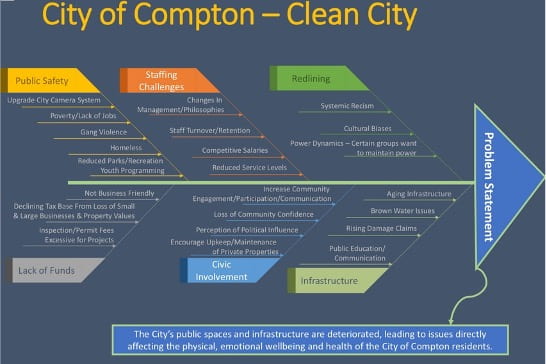
After several team meetings, we were able to develop six causes and sub causes related to our problem statement: Lack of Public Safety, Lack of Staff, Redlining, Lack of Funding, Lack of Civic Involvement, and Aging Infrastructure. After several iteration exercises, we located where we had the authority and entry point to tackle a portion of the larger issue. The team was then able to solidify its problem statement to read “We will tackle the lack of civic engagement and trust related to street improvements because the citizens of Compton deserve safe navigable streets“.
We learned:
- the importance of identifying a problem that people uniquely share and the value of developing a problem statement that clearly states the challenges in front of you.
- it is important to have a champion that will advocate for you while you work to solve your problem.
- problems need to be deconstructed in order to identify entry points that you can utilize to begin to tackle them. These issues have causes and sub- causes that should be broken down to obtain Authority, Acceptance, and Ability.
- the importance of having small wins in problem solving. Thus, solving problems incrementally can build momentum needed to solve complex problems over time through the process of iteration.


Progress and Insights
Since the inception of our program the team has made great strides. We have developed our own group Facebook page, providing updated information regarding street improvements. We have engaged with the community through our participation in a group podcast. We have participated in presenting to the community our priority projects through the budget process. We are advocating for an arts district. We have engaged with our block clubs and have a representative of our team as a major advocate for civic engagement and building trust. Three of our team members are on the Parks and Recreation Commission and the Beautification Commission. The team was instrumental in developing the City’s Capital Improvement Plan. The team has been a part of the hiring of additional staff in the Public Works Department.
The team was directly involved in the construction of three street reconstruction projects. The team lead the charge in civic engagement and meeting with homeowners to increase transparency in communicating the progress of our street improvement projects. The team continues to build trust and communication with our block clubs, elected officials, school board, college board representatives, small businesses, and community. We continue to be asked to participate in various problem solving sessions by community members. Our team has received special recognition from our Mayor and City Council for their outstanding participation is the areas of volunteering and beautification.
The tools we’ve learned through the program will forever change our view of how we approach problems in the future. Oftentimes, we are faced with very complex problems. Through this program we’ve learned to approach these issues differently, to understand the source and history and the “why” of them.
We learned to develop a problem statement to narrow down the specific problem to address. Who should care about the problem and what might we do to convince them to care. We learned the value of deconstructing the problem into various parts, causes and subcauses using the fishbone diagram.
We learned to determine the entry points by developing the change analysis to determine where we have Authority, Acceptance, and Ability (AAA). Where we have a high level of Authority, Acceptance, and Ability, we’ll know to take the necessary action to engage and iterate.
Additionally, we have learned to determine who else we need to talk with (everyone!), and who are the authorizers that we need to further iterate with. We’ve learned to continue to iterate, reflect, take action and most importantly, to celebrate small wins.
Finally, we learned the importance of building a team, scheduling regular meetings, developing our team bylaws, documenting our progress, and continuing the Problem Driven Iteration Adaption process with all stakeholders to assist us in solving complex problems.
It’s all about community!
This is part of a blog series written by city leaders who participated in the Bloomberg Harvard City Leadership Initiative cross-boundary collaboration track during 2023.
Declining Downtown Densification in Western Canada: Problem Definition is the Foundation to Getting it Right
Guest blog by Dawn Kobayashi
I had the absolute privilege of attending the IPP program on behalf of Harvard Bloomberg. I had the internal belief that I had some inkling knowledge about public policy….I was completely incorrect. I now understand why its called “Implementing Public Policy” because the implementation is the most difficult part of this journey!
Problem Driven Iterative Adaptation, sounds a little intimidating until you meet the most passionate, knowledgeable, and motivating team there is at Harvard — the PDIA team who took the time to break these steps into smaller steps, allowing us to try each step; iterate and figure out what we learned along the way. My single greatest learning was problem definition and why it is critical to getting off to the right start and preventing the dire statistics of public policy failures which do not focus on responding to the problems encountered by “both people and society”. The concept of legitimacy was fascinating to me because more times than not, this is overlooked. Many of us don’t take the time to garner political and public support for policy changes which ties in beautifully to the concept of lessons and leads. We build momentum and support by continually chasing leads and the learnings we gain from each of these interactions. Throughout this process of problem definition; we modify, iterate and hone the problem we are trying to solve.
(more…)Life Sciences Work Force Development in Boston
Guest blog by Gretchen Cook-Anderson, Mike Firestone, Trinh Nguyen, Eustacia Ready MacNaught, Laura Rubin, Zach Stanley, Alexandra Valdez, Rev. Willie Bodrick II
On December 20, 2022 Mayor Michele Wu called a Life Sciences Workforce Development meeting in Boston, MA also known as ‘the Hub of the Universe’, to announce her 1000 jobs in the Life Sciences initiative. This is where the journey began for the now famous, team of eight.
The goal? To tackle the problem:
Boston’s booming life sciences industry needs to hire thousands of workers to meet growth demands. Black and Brown residents and those without college degrees are excluded from the sector’s wealth and prosperity exacerbating persistent inequity.
(more…)Connecting Young Professionals to Local Government Public Service in Scottsdale, Arizona
Guest blog by Stephanie Zamora, MPA
Taking on large organizational or societal challenges requires a degree of creativity, risk-taking, and discomfort in addressing them properly. While we can certainly continue to rely on traditional methods of policy implementation, we may find ourselves missing the mark, not delivering on promises, and depleting the most scare resource: time. So what can we do to ensure we are eliminating challenges to create public good when plan-and-control is no longer working?
As an early-career professional, I placed a high level of expectation on myself to deliver on the original ask of expanding internship opportunities at the city. I was down on myself for not having fully accomplished that task by the end of my service-learning year with the city. Plan-and-control tends to do that to passionate people who care about executing.
(more…)Go Fish! Tackling Chronic Street Homelessness in Central Beaverton
Guest blog by Mike Backman, Alicia Bermes, Dawn Borgardt, Jenny Haruyama, Kim Haughn, Stacy Jepson, Marni Kuyl, Sia Lindstrom
When our team first began our journey to tackle homelessness, we were looking through a fisheye lens. The problem we wanted to tackle was broad, it involved a large area – all of Beaverton – and it encompassed helping all unhoused residents while also appeasing the community who didn’t want them in their city. Fast forward to the Bloomberg-Harvard City Leadership Initiative…next thing we knew, we found ourselves looking into the fish’s eyes and focusing on its bones to help us narrow our focus and problem that we needed to tackle. We started off with a goal of ending homelessness in Beaverton and, through the iterative PDIA process, we took the critically important step of narrowing it. Our final problem statement was focused and powerful in its simplicity: To tackle chronic street homelessness in central Beaverton – because everyone deserves to be safe and housed.
We were off to a rocky start trying to figure out the root causes of homelessness and how that could help lead us on a path to problem solving. After many iterations of the fishbone diagram that we were tasked with pulling together on a very short timeline, our “fish” evolved from a minnow to one beefy salmon. Each team member contributed their perspective on reasons why people find themselves living on the streets and fending for their lives day after day. Coming up with causes was not a simple process but the subject matter expertise at our team’s table brought together a narrative that painted a much larger picture of what was happening and why. By parsing out our problem’s causes bone by bone and adding sub-bones that we felt contributed to each larger cause, we were able to determine entry points to begin tackling our wicked problem. This exercise had us narrow to manageable areas that would allow us to move forward on our journey.
(more…)Tax Administration in Trinidad and Tobago
Guest blog by Chiedza Juru, Gigi Hui, Michael Bediako, Manuel Sada Vazquez, Therese Wagner
As we found out throughout this course, the challenges faced by the Government of Trinidad and Tobago are many, not least of which is the profound issue of declining tax revenue and generalized tax evasion. While this problem is not new to developing countries, it is clear that no single solution works across the board. Instead, we found ourselves challenged by striking a balance between local solutions and external best practices both cognizant of and adapted to the specific bureaucratic, social, and political dynamics of Trinidad and Tobago.
(more…)Tackling Affordable Housing in Tarrant County Texas
Guest Blog by: Abby Yang, Amina Benzakour Knidel, Gulnaz Kordanova, Priyanka Varma, Sana Ikram, and Shashwat
These past seven weeks, the six of us, all from different personal and professional backgrounds, worked together to learn about and practice how to apply the problem driven iterative adaptation (PDIA) approach to a real-life issue. Specifically, we worked closely with Maggie Jones from Tarrant County Community Development to address challenges of affordable housing in Tarrant County, the third most populous county in Texas, where housing and transportation combined make up roughly half of the county residents’ average household income.
Imagining the Future of Parks and Libraries in Bristol, UK
Guest blog by Louis Costa, Sofia Martinez, Anjali Nemorin, Mahabuba Rahman, Leonardo da Silveira, Prasanya Thirupathy
Over the course of the “PDIA in action” class at the Kennedy School, our team, The Night Owls, worked together in a very dynamic way to find entry points to a real-world, complex problem in just seven weeks. Our team consisted of six students from three different Harvard graduate schools (and MIT!) and we all had different nationalities, backgrounds and prior experience.
The first hurdle was to find a standing time to meet with our authorizer, Kevin Slocombe, chief of staff to the Mayor of Bristol, UK. This ended up being at 8 am every Wednesday, which was a challenge in itself, given we are the NIGHT Owls! We made the best of it, including using technology to be more flexible for our meetings, which were often hybrid.
(more…)