
New Podcast Series: A Decade of Building State Capability
This past year, Building State Capability (BSC) celebrated its 10-year anniversary. To commemorate this milestone, we are very excited to launch our new podcast series, A Decade of Building State Capability. This series will feature interviews with practitioners who reflect their engagement with Building State Capability over the past 10 years and their experience using the PDIA approach. We will release one episode per week, so stay tuned for further announcements!
Our first episode features Awa Touray, who we met for the first time in South Africa in May 2017 when she participated in our Building Public Financial Management Capabilities program in collaboration with CABRI. Awa is the Deputy Chief of Party for USAID’s Education Systems Strengthening Activity (ESSA) in Liberia, a project that uses PDIA as a key approach to build a more capable education system. She joined FHI 360, a global development organization, in July 2023. Prior to joining FHI 360, Awa has worked as an international consultant in Sierra Leone, an Associate and PFM Specialist at CABRI, and a public servant at the Gambian Ministry of Finance. Learn more about her experience and listen to the podcast.
(more…)Learn from our PDIA Case Studies
Our case studies allow you to learn more about how Problem Driven Iterative Adaptation (PDIA) works in practice.
Navigate to our website to access cases on the following topics with more coming soon:
(more…)Lack of Infrastructure Funding for Communities in Wyoming
Guest blog by Kiley Ingersoll, LEG’23
Over the course, there are so many ideas and take aways I learned. However, one of the most valuable was the relationships I gained with not only my Wyoming Business Council team members who also took the course, but with my group members. As we were working in our last group session, we talked about how important it was to the course that we had each other to lean on and much we felt like friends. This was something I never expected. The value, especially for a small town Wyoming girl, in learning about different cultures and meeting people from all over the world is immeasurable in many ways. It was wonderful to connect with my group and learn from them, hear their perspectives, and take interest in their lives. We celebrated children’s birthdays, met pets, and learned where others were headed on vacation. We also found commonalities, differences, and challenges we were all facing. The group allowed for us to check comprehension, laugh at our confusion, and help give feedback. Quickly, I learned they were there to lean on and bounce ideas off of even outside of the class hours. Our What’s App group will last far beyond the ten weeks. And I now how friends from Trinidad and Tobago, Dominican Republic, Lesotho, and Namibia. I feel like having this group has given me hope within my growth challenge and the feeling that we aren’t alone. This class has given me a group who understands the process and structure of the method who I can continue to utilize outside of the short time frame we studied together. Overall, while I feel the course was so effective in teaching the PDIA method and looking into my growth challenge, it is the relationships I have gained that truly make this course so valuable.
(more…)Insufficient Housing in Western Australia
Guest blog by Jason Whiteaker, LEG’23
I came into this program thinking about how the program would help me identify solutions to the growth challenges being faced by my region. Within the first two weeks my thinking had completely changed, moving away from the solution-based approach and very much focusing on identifying the problem / challenges the region actually faced. Without doubt this is the single most significant take away I have had from this program.
The 1804 challenge was a great way to introduce and differentiate between complex and complicated problems. Developing my understanding in this area has been beneficial not only in an economic development context but in a general management and leadership context.
Looking at economic development through the lens of a complex problem has challenged my thinking around how to address growth challenges being faced in my region. Taking a more iterative approach to developing our regional economy certainly makes sense. A good illustration of this is I recently reviewed a regional economic development plan which had over 50 actions identified. I was talking with the economic development manager of this region and asking how they were going to deliver economic growth, given the number of actions – the response was by simply working through the 50 actions and ticking them off one by one. So, the outcome they were looking to achieve was implementing the actions, not delivering growth!
(more…)Discover and Learn from our Self-Paced Guides
Did you know that the PDIA Toolkit is not the only guide we have available on our website?
In an effort to make more tools and resources accessible, we added self-paced guides to our website, putting you in the driver’s seat of your learning journey. You can explore blogs, videos, and podcast collections on the following topics:
(more…)Reducing Income Inequality in South Africa
Guest blog by Sibusiso Thami Gambi, LEG’23
A key learning from the course is that, simply put: context matters. One cannot simply apply “best practices” blanketly. There is a ready example in South Africa’s public spending on education. The country’s spending (as a share of GDP) is higher than the OECD, but education outcomes have not nearly matched the size of this spend.
Benchmarking or “box-ticking” approaches to reforms have largely not been a key driver of growth accelerations, as highlighted by the research of Pritchett and Rodrik. Many best practice policy solutions downplay the starting point from which they are to address a particular challenge. In South Africa’s case, there are significant barriers (spatial, socioeconomic) just accessing physical and human capital that present significant “spanners in the works” and all but rule out a “copy-paste” approach.
(more…)Building Coalitions and Empowering Local Leaders in Papua New Guinea
written by Salimah Samji
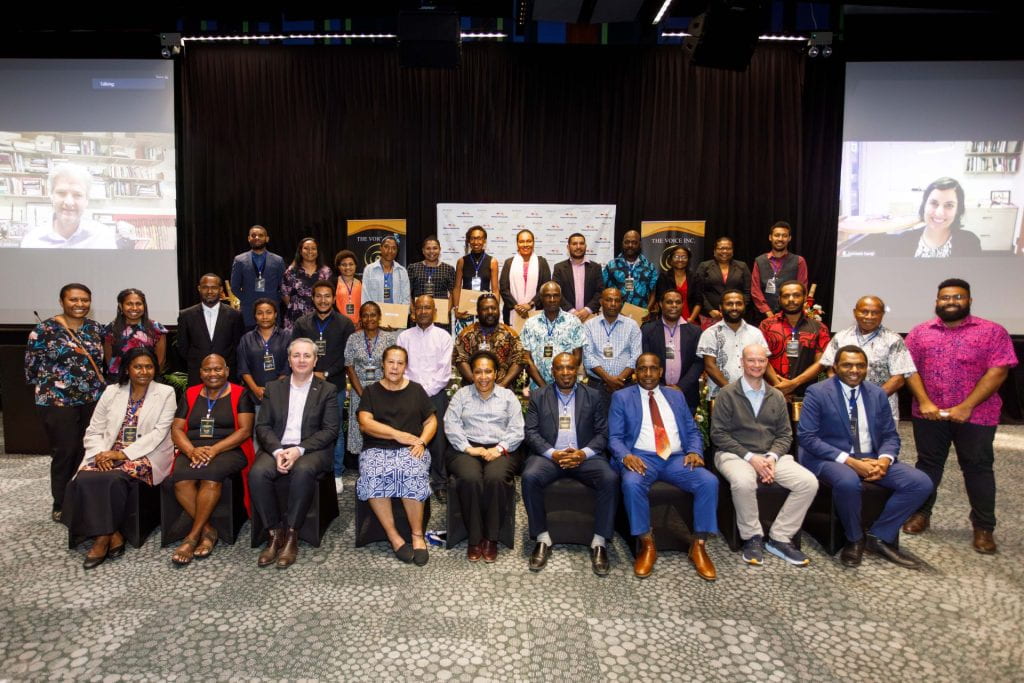
31 Developmental Leaders from across seven provinces in Papua New Guinea (PNG), working to reduce Sorcery Accusation Related Violence (SARV) and other complex problems, who successfully completed the PDIA online program were honored at an event held in Port Moresby on August 23, 2023.
The program was offered by The Voice Inc. (TVI) through its Local Leadership and Collective Action Program (LLCAP) funded by the Australian Government through the PNGAus Partnership Building Community Engagement in PNG program.
This was a significant occasion for TVI as this is the first cohort of PDIA leaders under the LLCAP which aims to support a network of groups and leaders acting on PNG’s most challenging problems. The program works on reform in three ways; growing dialogue, knowledge and debate on an issue, then supporting leaders and organisations taking action on that issue and, around these leaders, encouraging a broader coalitions of actors to bring increased resources to the reform objective.
(more…)How does a resource-rich state collaborate to increase economic confidence?
Guest blog by Kristin Fong
I’ve enjoyed the Leading Economic Growth (LEG) course immensely and some of the key takeaways I’ll continue to utilize regularly in the future are (1) the power of asking questions, (2) doing the hard work of listening before proposing solutions, and (3) airing hypotheses with partners from different backgrounds and with varying expertise.
Wyoming had a LEG up (pun intended) from the outset of my enrollment in the course since the State contracted with Harvard Kennedy School (HKS) for the Pathways to Prosperity Project last year. Now that we’re about 18 months into our contract with the HKS team and about 15 state representatives have completed the course, I see that the Growth Lab’s Growth Perspective and interpretation of data provided within was really just one input to our overall understanding of Wyoming’s Growth Problem itself.
(more…)Exploring how Shenzhen can increase circular/regenerative entrepreneurship
Guest blog by Gordana Kierans, LEG’23
Due to my four years at the Shenzhen Technology University in China, where I taught, among other subjects, the circular economy and systems thinking, I decided to focus my project within this programme on implementing the circular/regenerative entrepreneurship. Shenzhen is a megacity with over 17 million inhabitants, 99% of which come from other parts of the country, as Shenzhen was a small fishing village before being declared a Special Economic Zone (SEZ) forty years ago. Since then, the city has experienced an unprecedented growth and an innovation drive. Today, the city is home to over 4 million enterprises, of which some are global players; in electronics names like Huawei, Xiaomi, Oppo, Foxconn (Apple) and BYD among electric car producers. Hence, I didn’t select Shenzhen because of its lack of growth. I selected the city because of lack of circularity/circular growth.
As the factory of the world, China is the major polluter. For the same reason, it demands lots of critical resources, of which it has in own reserves and the others it imports. The city of Shenzhen is committed to supporting China’s commitment to carbon neutrality by 2060 and it plans to close the loop in the next few years. However, there is no awareness of its impact on other parts of the world due to its production of electronics. This is the focus of my project.
(more…)A Lesson on Complexity, Curiosity, and Modesty
Guest blog by Albeck Yair, LEG’23
While it seemed at the beginning of the program that we all in our working group are facing the same problems, along the program we have realized how different the solutions are, which highly depend on the particular context. That led me to the first takeaway, which is that problems are much more complex then as it seems at first glance, and therefore it’s difficult to copy-paste from external examples. As the program progressed, our areas of focus diverged.
Because of that, The PDIA approach is a strong framework. It pushes us to take doable actions rather than wait for the perfect conditions that never come, to build authority, acceptance, and ability along the way (which are completely different in different places), and create the relevant knowledge required in order to solve the complex problems that emerge during the process of actions and learning. Looking for external best practices for inspiration, or trying to figure out existing and latent practices or positive deviances are practical tools in this regard.
Identifying the underlying problem is the halfway to the solution – finding the binding constraint is essential to reach the solution that will ignite economic growth, and the tools we acquired during the program such as the PDIA toolkit, Fishbone diagram, and growth diagnostics are useful for that. These tools are not so complicated and easy to understand and operate, which makes them very practical.
(more…)