
Event: Learning, Failure, and Blame in the Public Sector
Problems in the public sector are numerous. It is an arena where critique is constant, mistakes are magnified, success is taken for granted, and the risk of failure has public consequences. In this complex landscape, how do you pivot from finger-pointing positions of ‘winner-loser’ and ‘we-they’ to creating a learning environment of “us?” Is failure without blame possible? We explore these questions in this panel discussion on “Learning, Failure, and Blame in the Public Sector” with Lant Pritchett, Salimah Samji, Dan Honig, and Matt Andrews.
(more…)New Podcast: Applying PDIA in Mozambique
We have released a new episode in our podcast series A Decade of Building State Capability. In this episode, BSC Director Salimah Samji interviews Cara Myers, who we met in 2018 when she took our MLD103 class as an MPAID student at the Harvard Kennedy School.
In this episode, Cara discusses her work with Mozambique School Lunch Initiative which provides school lunches to children in drought-stricken areas of Mozambique. She shares her journey scaling this work, iterating along the way, and ensuring the work remains locally driven.
(more…)Event: They Eat Our Sweat: Transport Labor, Corruption, and Survival in Urban Nigeria
The informal transportation network, characteristic of many African cities, is notoriously dangerous. In Lagos, drivers are constantly threatened and forced to pay bribes; they suffer health problems like hypertension and partial blindness, and accidents are common. Fear is a form of governance. The police and the union extract money from transport drivers and share it with each other. The money passes up the ranks, to the union authorities and to political leaders.
In this book talk, Daniel Agbiboa, author of They Eat Our Sweat: Transport Labor, Corruption, and Everyday Survival in Urban Nigeria, discusses his first-hand experience as a minibus conductor in Lagos as a way to better understand the culture and complexity of corruption and learn more about how such a harrowing and corrupt system can endure.
(more…)The developing world needs to get ‘shoveling’
Guest blog by Yaveneshaa Madurai, LEG’23
The Harvard Kennedy School Leading Economic Growth (LEG) programme challenged me in quite a different way, than I’m ‘used to’.
As a Strategist, I’m used to delivering things that are ‘neatly processed’ – you choose your ‘weapon of choice’ (a previously developed strategy model by one of the ‘gurus’, or develop your own), stick to that model and you win every single time. Being able to have an end result I can predict, and continuously studying ‘strategy’ in programmes and courses over the years, to constantly ‘level up’, have given me a sort of academic comfort zone.
LEG turned out to be a completely different story – a strategist looking through the long lens of an Economist. It was ‘the perfect storm in an evolutionary tea cup’.
(more…)New Podcast: Michael Woolcock Shares how he has Applied PDIA at the World Bank
We have released a new episode in our podcast series A Decade of Building State Capability. For our third episode of the series, BSC Director Salimah Samji interviews Michael Woolcock, a co-author of the Building State Capability book.
In this episode, Michael discusses the process of coming up with the PDIA approach to help development practitioners engage with their work in a fundamentally different way and how he’s utilized this approach at scale at the World Bank.
(more…)Low Private Sector Investment in Liberia
Guest blog by Marcus B. Zarway, LEG’23
Through the course, I learned many things; especially things related to my past and present work, as well as totally new ideas. I have developed and implemented catalytic private sector (entrepreneurship) and other development projects successful, and now supporting government agencies in reforms for economic development, unknowingly applying some of the ideas I learned from this course but in unstructured ways. Through this course, I have been able to learn many things I did not know before and had to struggle to search for workable ideas. Among many things I learned from this course, the following are among my key takeaways:
- Economic growth problems identification, construction, deconstruction, sequencing, iteration, and learning using the PDIA was an eye opener for me. Understanding the nature of growth problem either as a complex or complicated ones, helped me to understand that many times, we fail not because we are unable to solve problems but our inability to effectively understand the problems; their roots causes, and being able the derive solutions from the analysis.
Growing through Understanding: Tackling Namibia’s Income Inequality Problem
Guest blog by Anna Niita Etuna Nahambelelwe Shatika, LEG’23
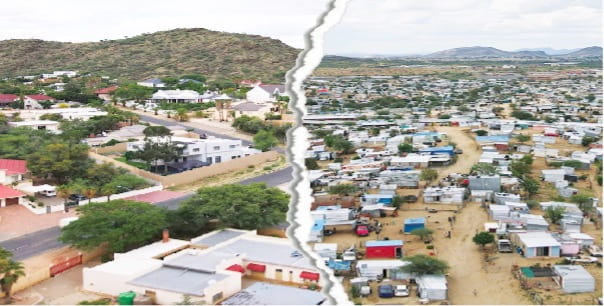
Embarking on the Harvard course on Leading Economic Growth has been a transformative 10-week journey. Throughout the course, I gained invaluable insights and knowledge that will shape my approach to addressing the growth challenges faced by Namibia. In this blog, I will share key ideas and progress made, highlighting the specific weeks in which these learnings were gained.
In the first week, I identified the pressing growth challenge that Namibia faces: high income inequality. This challenge has persisted despite various attempts by the government to address it, making it a critical issue to tackle. During week two, I delved into the connection between knowledge, growth, and complexity. This week highlighted the importance of understanding the underlying causes and complexities of income inequality in Namibia, which is crucial for developing effective solutions. In week three, I applied the knowledge gained to deconstruct my growth challenge. By utilizing the rubric provided, I identified the root causes contributing to income inequality, enabling a comprehensive understanding of the issue.
(more…)Rapid Inflation and its Implication in the UAE
Guest blog by Tariq Alsuwaidi, LEG’23
The realization that addressing inflation is essential to achieving sustainable economic development is one of the most important things that may be gained from taking this course. For instance, the United Arab Emirates (UAE) has suffered from the negative impacts of excessive inflation, such as a drop in buying power, a reduction in the global competitiveness of sectors, and the possibility of societal unrest.
To solve this issue, a fishbone diagram has been proposed as a method for determining the probable reasons of the growth problem as well as the remedies to this issue. Promoting economic diversification as a means of mitigating the dangers of over-dependence on income derived from hydrocarbons and executing prudent monetary and fiscal policies as a means of maintaining price stability are the primary entry points for policy action. Both are necessary in order to keep prices stable. The United Arab Emirates has the capacity to generate economic stability and sustained development via the use of such policies.
(more…)New Podcast: Andrew Lawson Reflects on his Evaluation of PDIA in Africa
We have released a new episode in our podcast series A Decade of Building State Capability.
Our second episode of the series features Andrew Lawson who did an independent evaluation of PDIA during our work with CABRI in Africa in 2018, commissioned by the Gates Foundation. He published a related piece in the World Development Perspectives in September 2023.
In this episode, Andrew discusses how he started his PDIA journey as a skeptic of the approach, but his opinion changed as he saw PDIA in practice during his evaluation of CABRI’s Building PFM Capabilities in Africa. He details how he and his team conducted their evaluation process, the key takeaways and impact of the program, and offers suggestions for future program iterations.
(more…)Event: Reflecting on a Decade of Building State Capability around the World
Over the past decade, we have engaged with over 3,500 practitioners in 148 countries. At a recent event, our team discussed the evolution of PDIA and its pedagogical methods, as well as shared reflections on their journey of building capability and igniting change.
The event featured a presentation reviewing our work since 2012 and featured voices of key team members as well as global practitioners who have used our tools and approaches.
Watch the event recording and access the transcript.
(more…)