


- This event has passed.
Crisis to Transformation: Policy Lessons from Ukraine
May 12 All day
Online
About the Talk
Ukraine is a live laboratory of reform under pressure. Wartime disruption, combined with the momentum of EU accession, is creating an opening for deep systemic change. The question is no longer whether to act, but how: How can we deliver lifeline reforms in a volatile, complex environment? How do we protect and grow human capital while institutions are still adapting? And what can Ukraine’s resilience teach other democracies about preparing for future shocks?
Speakers

Anastasiya Dyakova, Policy Researcher and Founder & CEO of Dignity Online
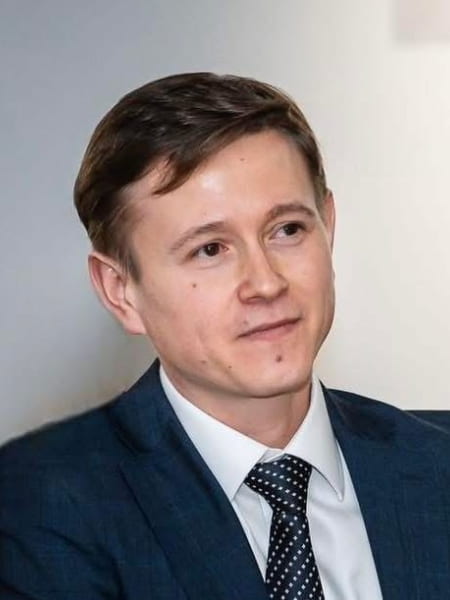
Artem Shaipov, Team Leader for Legal and Policy Advice, Strengthening Ukraine’s EU Alignment in the Rule of Law, GIZ

Johannes Uhl, Implementation Manager, Strengthening Ukraine’s EU Alignment in the Rule of Law, GIZ
Event Recording
Transcript
Salimah Samji Welcome everyone to our session titled Crisis to Transformation: Policy Lessons from Ukraine. My name is Salimah Samji. I’m the Executive Director of Building State Capability and I will be your moderator for today’s session. I’m really excited to announce and introduce our speakers today. Our first speaker will be Anastasiya Dyakova. She’s a policy research and founder and CEO of Dignity Online. Our second speaker will be Johannes Uhl. He is an implementation manager strengthening Ukraine’s EU alignment in the rule of law at GIZ. And then we will have Artem Shaipov, who is the team leader for legal and policy advice on the strengthening Ukraine EU alignment in the Rule of Law at GIZ. Both Artem and Anastasiya are both alumni of our Implementing Public Policy executive program. And we’re really excited to have alumni of ours at this session. So the session is gonna be each of our presenters, our speakers is gonna do a short presentation and then I will ask them a few questions and then we will open it up for your questions. So please, as they speak and you have questions, put them in the Q&A and we will get to them towards the end of the presentation. So with that, I’m gonna invite Anastasiya to kick us off with her presentation. Welcome Anastasiya.
Anastasiya Dyakova Thank you, Salimah. Hello, dear participants, and big pleasure and honor for me to be here today and to share with you experience from Ukraine, right now based in Kiev. So it’s really our experience. So let’s start. Since February 24, 2022, air raid sirens have sounded in my city for more than 2,100 times, lasting in combined totally more than 2,500 hours. That when we calculate it, it’s more than 100 interrupted days when you should be in bomb shelter and you cannot do anything. This means that you cannot plan anything in your life. An alarm may be going in the middle of your night forcing you to wake up immediately. As this night happened in my life, and run to a shelter. It may stop you on the way to dropping your children off at school. It may interrupt the training session you are running or our today event. Because when the sirens sound, everything should stop. And everyone must move underground. It may cut your doctor appointment or even a surgery. It may stop a concert or force passengers to leave a train in the middle of the journey because Russian forces are now targeting civilian trains. This means that people should leave their train and they should wait in the field and forest until the straight pass. Commercial aviation has been suspended for more than four years. So you cannot fly from Kiev to Warsaw that previously took two hours. Now you should use two trains that will take you more than 24 hours to get from Kiev to Warsaw. You cannot even plan a grocery run on the weekend because if the alarm sound while you’re in the store, you must leave immediately. Living with a radical uncertainty about even the next moment, not we are not talking about the next year, even the next moment, the next minute of your life, has become the new normal for Ukrainians. Moreover, the new normal as well is keeping a supply of water at home as Russia destroyed. Knowing how to set up a tent inside your own apartment, as this winter a lot of people in Ukraine already know. To keep warm when Russia destroys the central heating, owning a large portable power station for when the grid doesn’t work. And if you run a business, even own your own generator for your coffee shop or for small shop, because the enemy is systematically destroy our energy infrastructure, heating system, and water supply. The new normal as well means choosing an apartment, not by neighborhood, price, or proximity to work, but by the size of the bathroom, because when you no longer have the strength to run with your children to a shelter in the middle of the night, as this night, the bathroom became your refuge. Choosing by floor, because below the fifth is safer, or by location, mapped by where the strikes have been further. The new normal means as well having a will drawn up in your thirties, as I did. Offering paid mental health day to your employee after a night in metro as a shelter, as my team did this night. Maintaining an emergency vocation plan for your team. Having a company policy to compensate staff whose home have been destroyed. We had such case in our team last year. Running a dedicated emergency communication channel. And choosing your office not for its culture or design, but for whether it has a generator. Because the office has become a resilience hub, a place where your team can always count on electricity, water, internet and heating. From 2017 to 2021, I worked in the office of the President of Ukraine. And in 2024, I completed my master’s degree at the London School of Economics where my dissertation examines social investment trends and their practical implementation and addressing Ukrainian’s wartime labor market challenges. As you can imagine, we have a lot. Human capital and the longevity economy have become my deepest professional passion. And the impact of Poli-crisis on both, including geopolitical fragmentation, as we see this year and previous one, ecological disruption, technological transformation and the global demographic agent is now my primary area of research. So I would like to move from the individual and organization level we just explored to the national human capital challenges facing countries at war, because I really believe this experience holds lessons far beyond Ukraine borders. I genuinely hope, but cannot fully convince myself, that Europe will escape further Russia aggression, especially given the scale of military preparation we are witnessing in Belarus and beyond. In an area of accelerating geopolitical fragmentation and military escalation, the lessons Ukraine is living through may become relevant for more countries than any of us would wish. We have already seen how Ukraine’s wartime experience has become directly relevant beyond our borders, most recently as countries in the Middle East sought to learn from our military lessons during the US-Iran conflict. But military knowledge is the only one part of what war teach us. Ukraine’s experience of managing human capital under conditions of active war may provide equal, if not even more, valuable experience. Because I really believe that no nation can win or prosper or lead globally without a strong, resilient human capital base. What’s the impact of a long-lasting war on the human capital? Let’s scale up. To the national level, to the whole country. Since the full-scale invasion begun in February 2022, a large share of Ukrainian workforce has emigrated or been internally displaced or joined the armed force or been lost to occupation and captivity. By January 2026, approximately 5.9 million Ukrainians has become refugees, mostly in Europe. Represented 14% of the pre-war population. But what’s even more critically from this nearly 6 million, 75% of them are working-age women and children. The demographic foundation of future population grow the primary drivers of consumer demand and an irreplaceable part of the labor force. So it’s much less people in the country who can work and who can buy and support businesses. Furthermore, 4.6 million people are internally displaced. It’s creating enormous pressure on housing, health care, education in receiving regions and generating significant structural unemployment. As skilled and professionals profiles of displaced workers from one region to another region doesn’t fit each other. War also fundamentally reshapes society’s demographic composition. Ukraine has experienced a sharp decline in the number of children, driven by mass emigration, as I already mentioned, and a collapse in birth rate. The working-age population is shrinking through emigration and wartime casualties. Older people, who are much less likely to emigrate, now represent a growing share of those who remain. Ukraine currently holds the world’s highest mortality rate and together with it the lowest birth rate. The result is a demographic structure of profound fragility. So what do we have? We have 10.7 million workers supporting 10.2 million pensioners, 1.7 millions veterans and 3.6 millions of people with disability. So you understand that 10 million people who work support 10 million pensioners, nearly 2 million veterans and 3.6 million of people with disability. It’s an incredibly big pressure on budget. War has also fundamentally transformed the role of Ukrainian women in society and economy. Many have become solo breadwinner overnight, working full-time while simultaneously caring for children. As well alone, and their older relatives. And in many cases, managing businesses, their partners previously run together because their man and husband moved to army. This shift is not temporary. It’s reshaping the labor market, family structure, and social policy needs for generation. And as well, we have a really high level of divorces. As the impact on children has been equally profound. BAR has disrupted schooling on a massive scale, resulting in significant learning losses, the breakdown of social connection between different children and their relatives, and repeated displacement. Many Ukrainian refugee children are simultaneously enrolled in schools in their host countries and attending Ukrainian online schools. That created double academic pressure that few academic system and real children really can survive. We are absolutely seeing children spend more time online than ever in any way during COVID pandemic. Why it’s happened? Using a digital space children try to escape from the violence and instability of their offline reality. This has direct implications for their development, mental health, and future productivity. Veterans represent a not critical and growing demographic. Most are of working age, but they carry long-term needs for health care and social support that will shape public spending for decades. Ukraine’s national strategy is rightly working to adapt the labor market to this new reality. But the scale of the challenges is significant, and the policy infrastructure is still catching up. Older citizens who we already mentioned, however remain the most underinvested group in the Ukrainian society. This is a paradox because evidence consistently show that people aged 50 and above face greatest barrier to employment and require targeted risk-killing programs and active efforts to address workplace discrimination. I would argue that longevity economy approach one that actively integrate older workers into the labor market rather than treating them as a fiscal burden could become one of the most important pillars of Ukrainian long-term resilience. The need is concrete. The Ministry of Economy estimated that 4.5 million additional workers will be required for the reconstruction efforts alone. All the Ukrainians who remain in the country are an underutilized resource that Ukraine cannot afford to ignore. With each passing year of war, the share of refugees willing to return, of course, declined. The state has therefore begun to explore alternatives, attracting foreign workers, deepening engagement with the diaspora without requiring them physical return, and deploying a range of instruments from investment bond and expert exchange programs to even dual citizenship. None of these are simple solutions, but they reflect a necessary rethinking of what human capital strategy looks like when your people really spread it across countries and even continents. And underlying all of this in the fifth year of full-scale war and the 13th year of Russia occupation of Donbas in Crimea is a mental health crisis that can no longer be treated as a secondary concern. Be honest, you are not robots. We are ordinary people living under extraordinary and really sustained pressure. The evidence is clear. Mental health challenges have a direct and measurable impact on workforce productivity, economic output, and the long-term capacity of human capital to drive recovery. I want to close with a broader reflection, because what’s happening in Ukraine is not an isolated story. We are living through the era with the highest number of simultaneous armed conflicts since the Second World War. And war doesn’t not only destroy life, it restructures entire economies and societies in ways that resonate generations. Increased defense spending crowds out investment in everything else, from green transition and education to infrastructure and social protection. Moreover, labor market shift as military production scale up and absorb workers from other sectors. The combination of rising defense budget and political instability drives inflation and erodes living standards. Long-term planning becomes just nearly impossible for governments, forcing government into expensive and less effective scenario-based approaches that consume resources really without providing certainty and real result. War also diverts attention and funding away from the ecological crisis while simultaneously accelerating environmental damage through weapons manufacturing, emissions, and the direct ecological destruction of combat operations. It’s a compounding harm that rarely appear in the same policy conversation. So, in recent years, not a single international monetary fund meeting has begun without a new global crisis, even as the previous one remained really unsolved. We are living in the age of the Poli-crisis, and it’s our new reality, and the defining challenge of this era is that most governments are managing only one of these crises that are directly in front of them. Ukraine is focused on war, the United States is grappling with the transformative and now militarized implication of the AI. Australia is already hosting the world’s first climate migrants forced from their homes by rising seas and extreme weather. Japan has spent decades confronting demographic aging as it is now one of the fewest countries with active longevity economy policy in place. Each of these governments see only one wave, but there are four of them – war, AI, demographic aging and ecological crisis. And they are all moving forward and toward every country simultaneously. When they converge, the impact on human capital, on economies, on societies, and ultimately on the social contract between government and the citizens will be tectonic. The question is not whether this conversion is coming. Is it in which government we’ll see it’s in time? And whether they will have the framework, the tools, and the political courage up before the waves arrive. That’s the question I have dedicated my work to. And I believe it’s one of the most important policy challenges of our generation. Thank you.
Salimah Samji Wonderful, thank you so much, Anastasiya. I think it’s really wonderful that you’ve painted this context for us of from what a day-to-day life looks like in the Ukraine today from hearing the sirens and leaving the grocery store or leaving wherever we are to its impact on the demography, to education, to the labor market, to the future, to mental health. And thank you very much for that. We’re now gonna move to Johannes to be able to share his presentation. Johannes, welcome.
Johannes Uhl Yeah, thanks a lot. And thanks a lot to Anastasiya for painting this very tangible picture of what the reality in Ukraine currently is like and what we see in our day-to-day work with our teams on the ground as we say in Kiev and other places in Ukraine. What I would like to do is to also widen this picture a bit because I think what we’ve just heard is a very drastic account, a very fitting account also of what we can also see across news and across the discourse that are happening. But there’s even more to that. And this is what we are working on what is our day to day activities. And this is that we see that the crisis is not only about destruction, it’s also about the opportunities for change that it brings about, and we conceive Ukraine also as a really good and live laboratory of transformation under pressure. We see these different levels of crisis response of different levels of transformation that are happening. If you look at the immediate needs, the safety needs, the infrastructure needs, dealing with the chaos, that is of course, also already a level of transformation, but you have more layers to that. You have the midterm change, the functional change of systems, of institutions, and then also the long-term transformational level, where it is about yeah, the systematic, sustainable, long term building back better, if you will. And what the prices in Ukraine really shows us is that there is an opportunity to develop, especially this long term, sustainable change. We have seen over the past four years, an incredible amount of support to…To Ukraine and one of the key elements here is the EU accession process. As you know, Ukraine has submitted an application for membership in the EU, which was granted and the process is now ongoing, but that in itself already creates a huge challenge, a huge task for policy makers and international partners. And this is something that we are supporting the Ukrainians that we’re working on with our team in Kiev, supporting the country in moving forward with the proposal that is needed to move to the European family and to be a member of the European Union. And I would like to use this as an example of how the adaptive engagement and how our approaches are a good case for this. A new reality and that this can be also a lesson learned for others when it comes to these transformations in crisis. What we see when it come to the reforms that are needed and that are required in order to move Ukraine closer to the EU, and a huge amount of policy making demands. We have a long list of requirements that are needed. In essence, it is about aligning the Ukrainian law with the European standard of European law. And that then translates into more than 500 individual items alone in the top of the rule of law, judicial reform, fundamental rights, anti-corruption and so on. And the stakes are really high about this. And what Ukraine has decided to do is to come up with a roadmap and to break this down into actionable items. But at the same time, of course, accomodate the resource strategies that are there inevitably because of the process that the country is in and the dire situation that the company is in. So we have on the one side, a very formalized set of requirements that is imposed on the country and there is a contextual given. On the other side, there are all the political states and geopolitical realities that have to be accommodated. We’ve had lots of discussions within the EU over the past month and years, with supporters of Ukraine moving for as big as possible accession… Particularly also some, yeah, accelerated procedure, something that others have been very much opposed and using the institutional metrics and yeah, to slow down things for whatever political interest there is to gain. And then, of course, we are talking about a very complex and very long term process, where the rules of the game can also change while we go into that. So, the core task and the task of the Ukrainian partners really is to find a way to manage this in an active manner, but at the same time, accommodating for these challenges. And as I said, we have created jointly with our Ukraine partners, this roadmap, which is really about creating ownership across all the stakeholders that are responsible to really break everything down into additional items and reform packages. And at the same time, also create the feedback loops that are necessary. Because, of course, these kinds of reforms, we’re talking about systems-level change, we talking about the change of mindset in institutions, we’re talking about unlearning a lot of things that have been established for decades, if you will, and this doesn’t come across, and then this doesn t work. So, I don’t know if you wanted to build a house or a bridge, it’s really about being adaptive in these circumstances, and this is why we support that in creating feedback loops and creating a monitoring structure that is very robust and creates tangible outcomes, honest outcomes, honest feedbacks that the stakeholders and the decision makers are then being given. And what we get up then is a very complex structure of working groups of specialized, you get some specialized teams that work on these aspects. So for example, we have work dealing with specific elements of the judiciary for how cases are being treated. Then we have others that are dealing with specific elements of fundamental rights, data protection, the exchange of information internationally and by dividing all of this into these very small and tangible units and have a uniform structure behind it, we are able to make the problem tangible, we’re able to make the problem adjustable to a certain extent, and also tangible in terms of monitoring. Important is this approaching the stakeholders in a comprehensive manner. It’s not just about giving factual input, it’s not just about providing information and insight, which is relevant, but it goes beyond that. It goes also to recall the exchange, and that is talking to others, to peers in other circumstances. To learn the language, to learn what it’s actually about, what is the goal, to see it, to feel it, and also to build networks beyond the formal processes of the environment and to get new ideas from exchange with academics, for example, civil society with the influential decision makers and thought leaders, so that the reforms can be approached in a very comprehensive manner and seen also as an opportunity for creating this additionality that really people don’t always think about. Do I have to tick this box and how can I kind of fulfill the requirements that I have here on paper but really approach it in a manner that is creative and that also creates additional benefits. We’ll leave it there. I think we will have some Q&A later on for discussion. And back to you, Salimah.
Salimah Samji Wonderful, thank you very much, Johannes. And now I’m gonna turn it over to Artem to provide his comments. Artem, welcome. Thank you.
Artem Shaipov Yeah, thanks so much. It’s always a pleasure to be back at the Kennedy School, even if virtually. And many thanks to Salimah and the team of the Building State Capability Program for the invitation and for putting this event together. In my presentation, I’ll give you a macro picture and then zoom in to the rule of law sector building off what Johannes just mentioned, and also provide some insights into the efforts to develop a community of practice in Ukraine related to implementing adaptive iterative problem-driven approaches to policy implementation. And I’ll conclude with some lessons learned and recommendations for practitioners. When it comes to the macro picture. And that’s something that Anastasiya highlighted, and Johannes mentioned in their remarks, war increases complexity exponentially. And as we know, policy work, especially when it comes to reforms, it’s something that is related to a lot of complexity in the context. And in the context of war especially, you know, planning horizons, shrink and short-term sometimes prevails. However, in the context of Ukraine, the EU integration effort provides an institutional development anchor that actually helps Ukraine to better conceptualize and receive some sort of institutional scaffolding for building state capability through a comprehensive reform agenda. And in that sense, Ukraine is very lucky to have the EU accession perspective as this kind of institutional anchor and scaffolding for the reform effort. When it comes to some insights into the wartime policy reality, especially when it comes to the early days and months of war, first thing people think about, you know, immediate safety and especially after the full-scale invasion began, there was a bit of uncertainty to pose it very mildly when it come to the future. And programs need to be developed and policies implemented in this kind of context as well for the country to continue running. When it comes to midterm functionality and the need to restore or rebuild systems, this is where the first order of change comes into play. And when it comes to the long-term transformation focus, this is where, as Johannes put it, building back better and rebuilding the country and making sure that the second order of change can be achieved. This requires this kind of long-term approach. And going back to the EU accession context, this is what Ukraine gets in its efforts to join the EU, this longer-term perspective, institutional. Scaffolding that I keep talking about. And it’s critical to ensure this transition point from traditional linear reforms to more adaptive, iterative, and problem-driven approaches. And in the context of war, especially traditional linear reforms, policy approaches, they fail and they fail very fast. And that’s something that we’ve learned through practice. When it comes to the promised zoom into the rule of law sector, so building on what Johannes mentioned, and just to give you a couple of examples of some comprehensive instruments that we have in place for the respective sector-specific reform. For instance, there is the rule of law roadmap that Johannes mentioned, plus we also have the comprehensive law enforcement reform strategy and action plan, anti-corruption strategy and action plan, and that amounts to hundreds and hundreds of policy implementation measures. And in this context, it’s critical to build trustful partnerships with Ukrainian institutions. In the case of our program, we are privileged to have a really fantastic professional connection with the Deputy Prime Minister’s Office, who is responsible for the European and Euro-Atlantic integration. The Minister of Justice of Ukraine who is leading the coordination effort it’s critical to develop this set of partnerships and understanding of what needs to be done and what sequence, what the institutional arrangements should be put in place in order to enable such a massive reform agenda implementation. And it’s also critical to understand that the York session effort, it’s a marathon, you know, if we can use this term, it’s definitely not a sprint when it comes to institutional change, and it requires a lot of policy implementation work. When it comes the need for developing this community of practice, providing you with some insights into what myself, in particular, what I’ve been doing to promote problem-driven iterative approaches to policy implementation building on the online materials of the Building State Capability Program. I’ve been focusing on conveying the concepts, the basic concepts of building state capability and problem driven iterative adaptation at Ukrainian schools of public administration. That’s something that, and especially those of you who had the privilege of going through training at the Building State Capability Program at the Kennedy School, that’s something that we owe to society. We need to spread the word about such approaches and advance the doing development differently course through our work when it comes to our practitioner side of things, but also sharing the insights and lessons learned with people. And in addition to that, what I would like to flag, and that’s something that might encourage other people to do the same in their respective countries. I about a year ago launched a podcast series on policy and action. To bring in policy practitioners, policy makers, civil society activists in a dialog about how a real change happens, you know, what works, what doesn’t work, what are the lessons learned and in the context of Ukraine, it’s something that provides a selection of case studies when it comes to implementation of numerous reform initiatives ranging from, say, medical reform to public administration reform and other aspects of policy implementation work in Ukraine. And in conclusion, just to give you a couple of lessons learned from my side. And echoing what Johannes mentioned, crisis indeed creates not only a challenge, but also creates opportunities, and it accelerates change. And that’s another reason why traditional approaches, they don’t work in this kind of context, when the change has been accelerated due to the demands of war. That kind of massive challenge. We really need to stay problem-focused, adaptive, and make sure that we can iterate until we really solve the problem at its root causes. And it’s critical to navigate complexity through specific, timely set, adequate structures that could help us limit uncertainty when it comes to institutional engagement and dealing with bureaucracies in respective institutions, making sure that people working on change are aligned and well resourced and supported. It’s also critical to ensure local ownership. And in the case of Ukraine, the government of Ukraine who is in the driver’s seat, and it’s supported by the people of Ukraine and civil society, businesses, and international development partners to enable this massive transformation of the country. And of course, it’s critical to understand that reforms, they don’t equal strategies and plans or even adopted laws. It’s a process of continuous adaptation and institutional cultural change. And in the case of Ukraine, the EU provides this institutional scaffolding, which I mentioned earlier, for this kind of change. And it’s critical to move from control-focused approaches to facilitated emergence. In the context of change in Ukraine, it’s visible through analysis of different industries, for instance, when the feedback loops in the context of Ukraine are very short, people can really iterate solutions and adapt to the changing context of the war and institutional transformations. And it’s critical to support coordinated learning systems as opposed to just formal strategies and plans. So this institutional learning is key for success in this fluid political context. And we really need to embrace complexity and uncertainty and keep learning to navigate it and share our learning. And I’m very pleased to have this opportunity to share some insights with you and glimpse into the Ukrainian context. And my final message to you, if you can please consider visiting Ukraine. To witness how the country at war is changing real-time and very fast. Of course, there is a risk, but being a Ukrainian living in Kiev, I’m telling you, it’s the risk worth taking. Thank you so much.
Salimah Samji Wonderful, thank you very much. I will now just ask you a question and I’d like the three of you to be able to respond to this. All of you have talked about uncertainty, living with complexity, et cetera. And I was wondering if each of you could just pick some features of this complexity in your policy context and explain to our listeners how you’re managing it. So some concrete examples from each of your. Anastasiya, why don’t we start with you?
Anastasiya Dyakova Yeah, I think I will start from personal complexity, right? Because we all live in this context. So sport, sleep, when you don’t have a bomb alarm, really support and meeting with friends and meditation is really my base and don’t have toxic relationship in your team or with friends or with colleagues. But in the organization, how we work with complexity, we have additional weekend every month. Friday is our additional weekend. We have mental day off that’s paid. And we have only one day in office. So all the rest of the day team choose whether they want to go to office or they don’t want. So we really try to make our work as flexible as we can because we understand that different people have different contexts as well. We have families where husband is fighting in army and his wife working in our team. We have team members where their friends already were killed in battlefield. Some who have a husband or brother in captivity. So it’s really a different situation. And when you work with team in such a conflict context, you should as well understand people, it’s not ordinary people like in 2020 or 2019, who come to work and they should just do their task. There are a lot of things, a lot of context that they bring to office. And everyone is really different. So for me, as a head of the organization, it’s a big challenge to combine different people, some of them internally displaced, some of the refugees would work remotely. So it’s really challenging. But adaptivity to different people in different contexts and their level of resource as well, because none of them have 100% resource. It’s a really important leadership role and leadership understanding.
Salimah Samji Wonderful. Thank you, Johannes.
Johannes Uhl Yeah, well, I think first of all, the key is to have a second set of microphones and speakers and audio is better now, sorry for the glitches previously. Joking aside, I think one important element here is also to look at the resources that you have at hand in terms of the stakeholders and the actors that are involved. And what we do as an institution, for anything that we do in our global operations, we don’t conceive necessarily of what we as project management, but actually the first course that people take when they join us. It’s called creating and maintaining systems of cooperation. And I think this is the key here, that we think of what we do as not only executing a predefined plan of something that is there, but think of it as an interaction of stakeholders of actors of people with different interests, of course, with different capacities, with different backgrounds and conceive of the day-to-day work essentially as Venn diagrams to see where is the overlap that I can work with and that is conducive to whatever I have on my desk as task. And that of course then has a lot of underpinning with a very structured approach to that in terms of stakeholder analysis, in terms of mapping interests and relationships, in terms of assigning certain goals and certain effects, certain aims that you want to achieve to certain stakeholder groups and have a well-defined and well-sharpened toolkit at hand and knowing when to use what.
Salimah Samji Artem, go ahead.
Artem Shaipov Yeah, and if I may, yes, essentially you first of all need to learn how to apply which tools to which context to manage the complexity a bit better because complexity has to do with a lot of uncertainty that I was talking about in my presentation and in the context of war as we discussed, uncertainty surges. And in our case, for instance, through our program work. We have supported, for instance, in the context of the rule of law roadmap implementation that includes 500 plus measures. So essentially, it’s a massive fishbone diagram on paper. And you really need to navigate this complexity of implementation. And in our case, we have supported the Minister of Justice in setting up and conceptualizing the coordination and monitoring mechanism that is essentially a set of snowflake groups where you have people at the top at the political level coordinating the political aspects of this work, then technical level comes in with multiple groups focusing on specific aspects of work, coordinating and communicating needs to international technical assistance programs. And this is our approach to manage the complexity of this task in the rule of law context in Ukraine. But of course, as Johannes mentioned, it also requires constant communication and coordination at various levels, not only kind of formal working groups, but also informal working contacts, professional communication throughout this whole process. That is critical to better manage the complexity that we are dealing with.
Salimah Samji Thank you. I really like the thread from all of what you guys have talked about is the flexibility, meeting people where they’re at, whether they’re people on your team or they’re stakeholders, understanding their interests and just being really flexible and being ready to pivot and change. I’d like to ask you another question and then I’ll open up to any questions that you listeners may have. If listeners, you have questions, put them in the Q&A and we’ll get to those. So my second question is, you know, there’s been loss in funding from organizations like the USAID. Can you speak to what the consequences have been to that loss of funding and what are some ways forward to be able to make, to close that gap, if you will? Thank you.
Anastasiya Dyakova Maybe I will start, may I? Yeah, first of all, I think it’s a geopolitical field, right, and level. And we understand that globally, in a lot of cases where USA left, China came. So it’s mean as well changes in superpower role, and such element as like a soft power shift as well. But moving from like international context to more national context, For a lot of Ukrainian NGOs, it was really a nightmare. So some of them just closed. They left people without work for the next day. And when you live in war, it’s really, really big challenge. Some of the organizations had to scale down their programs and projects. But it’s not the same situation as in other countries, because take into account that Ukraine in war, more than 50% of our budget is spent for defense. So government institutions really rely on us and on civil society sector in supporting different initiatives. For example, in our organization we provide a huge capacity building support on children online safety and preventing child sexual abuse and exploitation, we train civil servant from teacher and school psychologist, fellow enforcement and prosecutors. So, government really needs this support from civil society sector, but civil society sector to work need financial support as nearly 100% now come from abroad. So it really shakes the whole system and last winter was a really nightmare for everyone. Thank you and I’m really happy to pass to colleagues.
Johannes Uhl Yeah, maybe I can continue here from kind of the other side of the of the value chain, if you will, for those who don’t know, GIZ is essentially the German equivalent of USAID. So of course, this has this had a huge impact on us as well, again, on these three levels. So we had this immediate survival response, if you will, because we saw that a lot of our partners that we work with, especially in civil society, were not able to act anymore because literally from one day to the other, they were stripped of a large part of their funding. So that, of course, then also led us to reprogram certain things, the German government to reprogram certain things to account for these gaps and that of course then has created the need to rethink certain elements of what we have been doing and then on the more structural level of course many of our activities and many of our programs have also relied on other elements of the value chain to be covered by the American funding. We see this for example in the Buffalo area that a lot of this structural support infrastructure that was provided in terms of IT equipment and so on, that was something where the country relied heavily on American support and that means that in a certain way we had to open up and to kind of fulfill these gaps as well and adjust our approaches, our standards in that regard. And when it comes to the long-term perspective, of course, it also has an impact on how we do things on a global scale. Because, as Anastasiya has already said, there is now a completely new power balance in this regard. There are new actors coming in with different interests and different approaches and different kind of preconceptions to that kind of work. That we want to create cooperation with and have to create a cooperation with. And then again, I think if we look at the more narrative element of this, of course, the decisions that were taken by the American administration already have an impact on how these policy fields are discussed also in our domestic context in Germany. And so there is much more pressure on us to justify why we are doing what we are doing to justify the the efficacy of that. And it’s also an opportunity here again, the crisis is an opportunity because it gives us the reason, occasion to reflect on what we may have thought of as being the ultimate truth, which of course it never is. There is no such thing and that gives us the opportunity to innovate and to reflect critically on what were doing as well.
Artem Shaipov If I may come in as well with my reflections. A big part of the problem with the USAID withdrawal had to do not only with the funding, but also with the timing. It came unexpectedly and without any transition period and of course it left a huge void in in the whole sector, or set of sectors rather, that benefited from USAID support, and a silver lining to this all is that, in particular, again, thanks to Ukraine’s path towards the European Union, countries in the EU and other European countries that are outside of the EU really stepped up to provide Ukraine with It’s vital, and this is not a figure of speech, truly vital support in the context of war. And some countries really prioritized the support for Ukraine. And of course, in the global context of aid, this is something that Ukraine has been criticized for when you know people say You know, some other countries are lacking funding, and Ukraine has been prioritized. Of course, you know, being Ukrainian, I am biased in this kind of situation, but the main point here is that for the country at such a massive war, full-scale modern warfare, I believe it’s justified. And this kind of support is very critical to have, and it’s important that European countries stepped up to fill in the void left by the USAID withdrawal. And from what I see, this effort to fill the void is still ongoing. So the amount of funding that Ukraine was denied hasn’t still been matched when it comes to international development support, and it’s still a work in progress, of course, for the country of war and the country that needs to be rebuilt from scratch sometimes. When I said this, I was thinking about my home city, Bakhmut, which has been ruined, in shatters, it has to be rebuilt from scratch. We require a lot of support to make sure that the country can thrive one day in the future. Thank you.
Salimah Samji Wonderful, thank you. We’ll take two questions. I will ask the first one and then the second one. The first question is really about both building back better and the longevity income. And the question is, what would be a genuinely transformative narrative? And for the longevity economy, how would it be genuinely transformative? For example, rethinking all system levels, dimensions from values, norms, power structures, to infrastructure, and tackling root causes. Maybe I’ll ask both questions and then you can choose to answer these questions. We have a second question on, Johannes talked about the fact that Ukraine will also need to de-learn a lot of successful institutional change. Can you give an example? Those are the two questions. Thank you.
Anastasiya Dyakova I can start about longevity, maybe. I shared the name of the book, but I’m not sure if everybody were able to see it. The Longevity Imperative: How to Build a Healthier and More Productive Society to Support Our Longer Life by Andrew G. Scott. I really recommend this book, so it’s more about how the system should be changed. But there are a lot of different levels. So it’s not only about older people. It’s more about how we get older. It’s about saving, about building relationship, preventive health care, right, and testing. So the whole system should be changed because we cannot first of all afford pension because people now live 20 years more in comparison for how many years this financial system were expected. But moreover, we have less people at the labor market. So we need more people to work. And the last point is that going to pension increase dimension risks are really significant. So it’s even better for people to work. So I can discuss the longevity for hours. So I just will stop here at these ideas and recommend you the book because I’m really crazy passionate about the topic of longevity economy and I really believe that it’s one of the silver bullets for the Ukrainian economy.
Artem Shaipov If I may step in responding the building back better question, when the full-scale invasion broke out in Ukraine, there were a lot of discussions to kind of conceptualize the reconstruction effort. Essentially, if not from day one, you know, from day 30th, that’s for sure. And I was part of many of those. And one of the key narratives that emerged is that indeed, we don’t need to just rebuild what was there in the first place. We need to kind of just re-create, rethink how our country should look like and use this opportunity for renovation as an opportunity to transform the country for something substantially better. Not just rebuild the buildings back or the industries that were there before the full scale invasion. And that’s something that people keep thinking about in the context of Ukraine. And the country continues to kind of reinvent itself. And when it comes to our position, as you could probably already have observed, I have observed the positioning of Ukraine in the international arena has been changing throughout this full-scale war, and the country continues to reinvent itself. When it comes to our positioning, our domestic efforts to rebuild, to reconstruct, even under the conditions of war. Because when we have occupied territories, of course, we need to consider the additional challenges with the occupied territories. But when we’re talking about the Ukrainian government-controlled areas, and that’s why invited people to come and see first-hand, because new industries are emerging. Not only in defense tech, but also in other things that Ukraine is innovating in and reinventing itself. So that’s something that has been constantly on everyone’s radar in Ukraine. But when it comes to the international development context and what would be the better motto for international development, something instead of building back better, we need to think about that. And I would welcome your suggestions, colleagues.
Johannes Uhl And let me just give a quick reply to Barbara’s question regarding what to unlearn. I think there are many examples for this. Just one thing that comes to the top of my head right now is this concept of multi-level governance, which becomes especially relevant now in the EU accession process, but it has already been before. I mean, we have worked for almost decades already, on the decentralization reform in Ukraine, so giving more power from the central government levels to municipalities to local level, and follow the principles of subsidiarity there. And of course the same will be mirrored now as Ukraine joins the EU and as certain competencies will be transferred to the supranational level in this regard. And I think this is something that not only Ukraine for that matter, there’s a lot of other examples for this centralized way of thinking that is something that has to be unlearned to a certain extent. And I think then there are many other examples, but this could be then continued for hours.
Salimah Samji Wonderful. I’ll do one final question. Are there concrete plans to use PDIA or adaptive approaches in GIZ’s work in the Ukraine?
Johannes Uhl Well, you could say that there are. Not under that name. We don’t claim that copyright here, but we have, as I mentioned, already quite a comprehensive, very well-developed system. How we manage projects, it’s called Capacity Works which is something that GIZ has developed with experts many years ago, and it’s very well established, and this is something that we adapt to the context that provides already some adaptability by focusing on the cooperation, by focusing on the stakeholders and in designing our processes in innovating internally, we are always adapting in this regard as well and coming up with new ways of doing things, both when it comes to our core products, which are these support activities that we provide to our partners, but also our internal mechanisms, our internal administration.
Artem Shaipov And if I may add to Johannes’ response, as long as there are people in GIZ who are trained and understand problem driven iterative approaches, I would say, and I’m a recent person at GIZ. I joined the company about 11 months ago. But I see a lot of openness to problem driven iterative adaptive approaches, that’s how the company operates, that’s our development approach. And even if when it comes to corporate terminology, it’s not called PDIA, but in its essence, it’s very similar and I’m very happy that I have gone through the Building State Capability program to be able to implement my knowledge and apply my skills. In the international development context in Ukraine at GIZ.
Salimah Samji Doesn’t matter what you call it, it matters that you do it, right? And I think what you’ve all shared is with uncertain, we already live in an uncertain world. And I that complexity is continually expanding day by day. You have the additional context of war and flexibility, being able to pivot, to learn quickly, to, I like the build back better, new things, right, to be more innovative. To meet the moment is really very exciting. I’d like to thank you listeners for joining us this morning and to our presenters, Anastasiya, Johannes, and Artem for giving us a real good understanding of what’s going on and some ideas of how they’re managing policymaking in the Ukraine. Thank you very much. We really appreciate your time. Thank you.