
A community-driven approach to flexible learning in Milne Bay Province, Papua New Guinea
Guest blog by Kim Allen, Evangeline Balili, Russel Graham, Jacqueline Matawawina, and Norah Tamarua
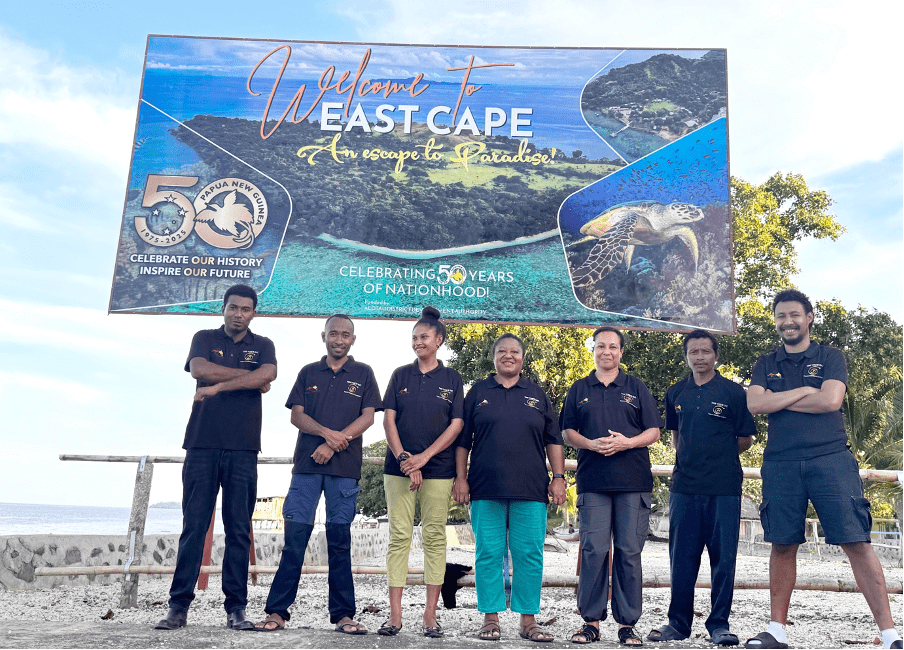
What began as a learning journey for seven individuals became a mission for the Eastern Learners team. A team made up of individuals from the education sector, development sector, and Non-Government Organisations (NGOs). The Eastern Learners team had one mission: ‘to set up a Flexible Open and Distance Education (FODE) Learning Centre on Tubetube’, a remote island in Milne Bay Province of Papua New Guinea. It all started with a transformative learning journey through Harvard University’s Problem-Driven Iterative Adaptation (PDIA) course, a 12-week online program made possible through The Voice Inc. This reflection brings together the lessons, insights, progress, and aspirations of the Eastern Learners Team. It also offers words of encouragement for anyone across the world who is using PDIA to confront complex problems in their own communities.
At the core of our approach is our community’s hope to bring to reality the dreams and aspirations for a better, more positive future.
A key lesson learned from this course is the ability to adapt to a changing environment. The team reflections identified the following:
- Complex problems cannot be solved with quick fixes. The high rates of school dropouts in Milne Bay Province are not caused by a single factor, nor will they be solved by a single intervention.
- Real progress begins with constructing and deconstructing the problem. Until we identify the issue, we won’t be able to provide appropriate interventions.
- The fishbone diagram is a practical tool for problem identification.
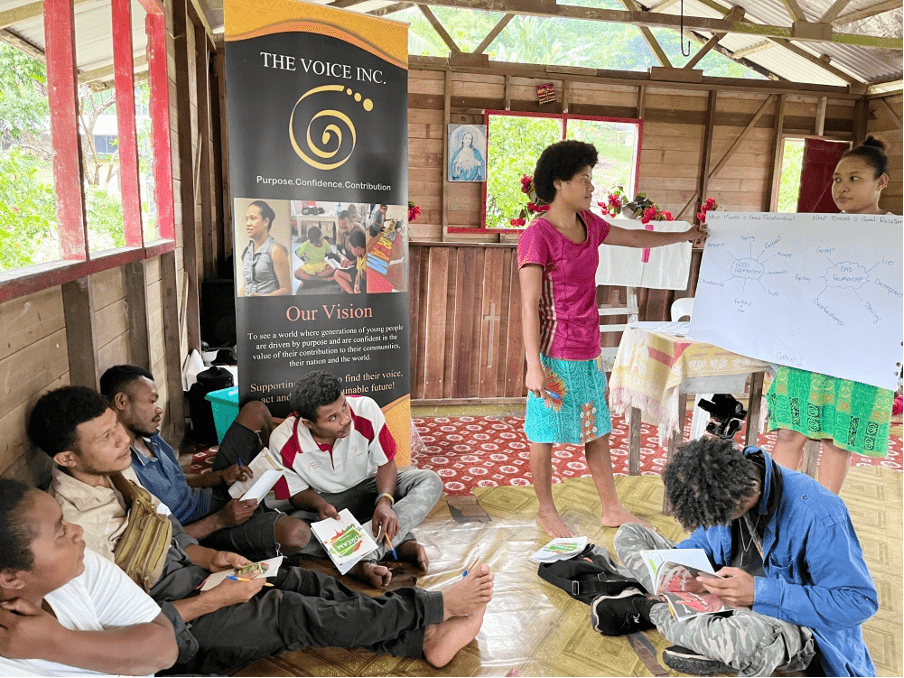
- Through the iteration process, the team tested ideas on a small scale, learned from what worked and didn’t, and then adapted them for implementation.
- Iteration helped reduce the pressure to be right from the start, replacing it with a mindset of learning through small actions. Small experiments in communication, awareness–raising, and centre engagement yielded insights.
- Stakeholder engagement and community awareness and engagement are necessary for sustainable community interventions.
“Through the PDIA, I am hoping to address the high rate of grade 8 dropouts in the three schools, Tubetube, Kwaraiwa and Bedauna Primary Schools in Samarai Murua District, Milne Bay Province.” Evangeline Bailili, Team ‘Eastern Learners’.
Identifying the problem
To identify the problem, the team drew on PDIA learnings and adopted the Fishbone Diagram. We focused on the Tubetube, Kwaraiwa, and Bedauna Primary schools in the Samarai Murua District of Milne Bay Province, Papua New Guinea. We draw on the members of the Eastern Learners Team’s experience in working in these communities.
As we reflected, discussed, and drew on the team’s experience, we identified the key problem the team is focused on addressing:
“62% grade 8 dropouts on Tubetube, Kwaraiwa and Bedauna Primary School”
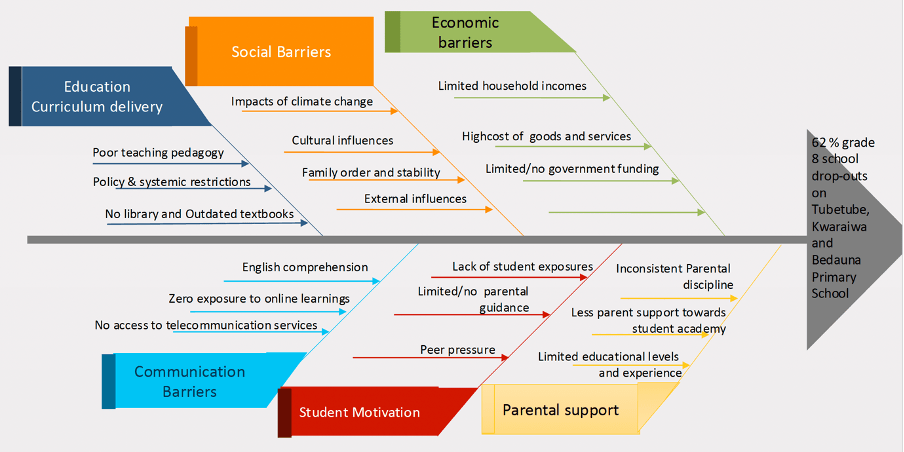
Identifying the problem reflects the existing challenges. Key questions arise from the Fishbone Diagram.
Among the Eastern Learners team is Mr Fred Mosebuya, the Milne Bay FODE Coordinator, responsible for authorising the team’s proposed FODE interventions in the proposed schools.
“Through PDIA, this problem, long accepted as just the way things are, suddenly became something I could interrogate, unpack, and begin addressing systematically. Through PDIA, I learned new ways of thinking, new tools, and a new mindset for tackling complex issues in settings shaped by geography, limited resources, cultural diversity, and systemic fragmentation,” Mr Mosebuya shared with the team.
The key question that remains for Mr Mosebuya, as a policy maker and implementor, is ‘Why do so many Grade 8 students in the remote islands of Milne Bay Province drop out before progressing to Grade 9?’
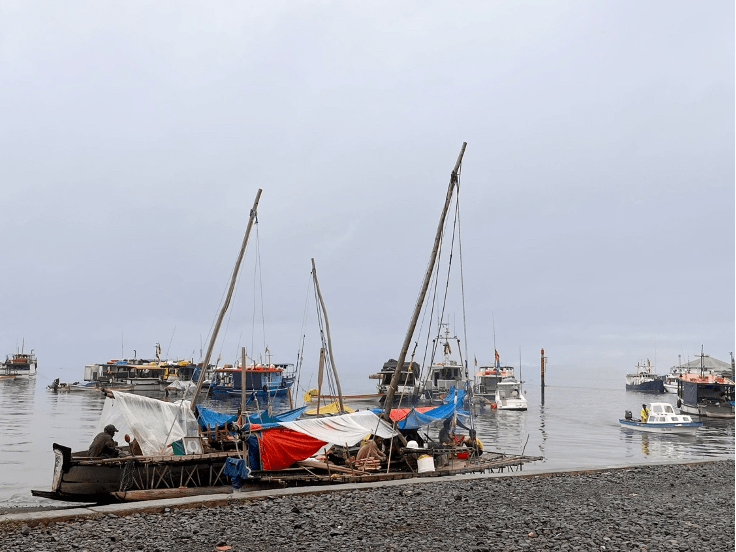
The question reflects the province’s geographic challenge, and it’s no different for Tubetube, Kwaraiwa, and Bedauna islands. With hundreds of islands scattered across long sea passages, most schools and households are accessible only by boat. For students on remote islands, progressing beyond Grade 8 is often a journey filled with risk, cost, and uncertainty. Initially, the team assumed the main reason for dropout was the lack of nearby secondary schools.
Throughout the problem deconstruction phase, the team identified the following challenges:
- Economic Factor: fees, transport costs, food shortages, and family financial instability.
- Transport & Safety: dangerous seas, unavailability of boats, and long distances to secondary schools.
- Academic Preparedness: weak literacy and numeracy foundations, irregular attendance, and limited learning materials.
- Social & cultural Pressures: expectations to help with gardening, fishing, or caring for siblings; teenage responsibilities, and early relationships.
- Systemic Constraints: limited Grade 9 spaces, inconsistent communication from schools, and unclear pathway for transition.
- Awareness Gaps: low understanding of FODE as a viable alternative for students who cannot access conventional schooling.
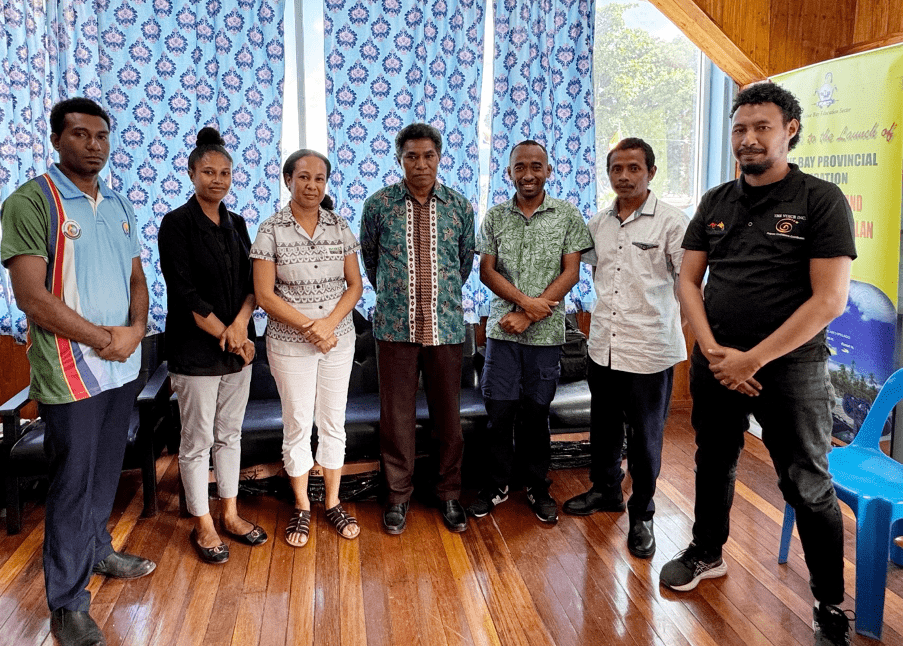
The team acknowledges that to ensure a sustainable and holistic approach, we need the support and authorisation from key government agencies and external stakeholders. With support from The Voice Inc., the team held consultations and dialogues with the Milne Bay Provincial FODE Division team, the Milne Bay Education principal Advisor, and the Milne Bay Provincial Administrator, all of whom provided key support and authorised FODE interventions for the three target schools.
“I hope that through my efforts, I will be able to assist many grade 8 dropouts to pursue education once again and inspire them to work on creating a better life for themselves. Education is a right for all children, and I am determined to make sure that it is accessible to as many young people.” Graham Russel, Team ‘Eastern Learners’.
We didn’t just stop at consultations at the provincial level. The team, from the very start, believed that community engagement and awareness are crucial to the success of the FODE intervention.
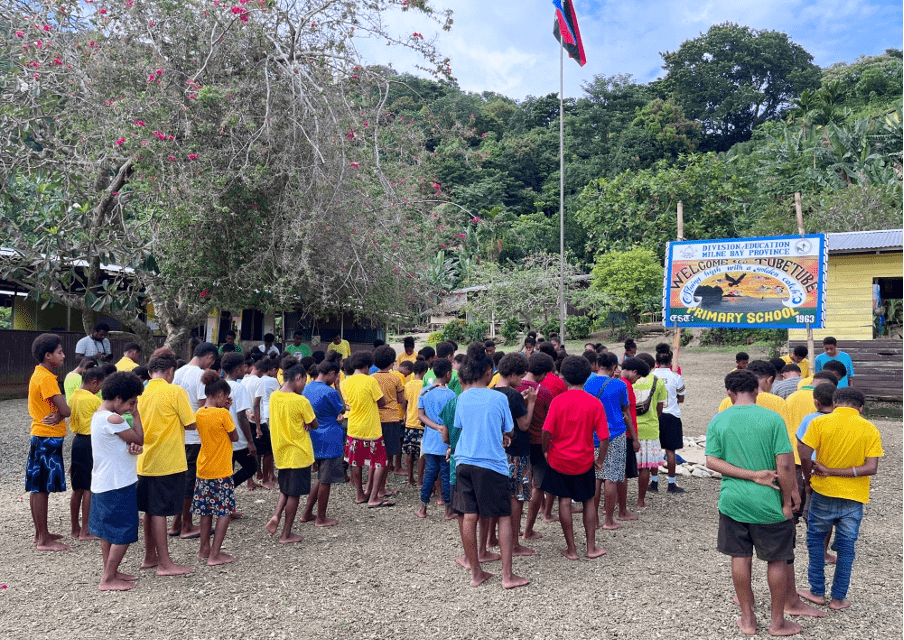
At the core of our proposed solution is the communities on Tubetube, Kwaraiwa and Bedauna, including neighbouring island groups. The team travelled for three hours on a dinghy to Tubetube Island to conduct community awareness. The team held community awareness sessions on Tubetube and Kwaraiwa Island and met with community leaders and head teachers of Tubetube and Kwaraiwa Primary Schools.
“One thing I am most passionate about is community engagement. I come from the ‘big village’ in Port Moresby, and there are so many challenges that we face daily. I am all about working with young people in the community to help them stay away from harmful lifestyle practices,” Norah Tamarua, Team ‘Eastern Learners’.
The communities were receptive to the proposed interventions, with progress toward forming the Community FODE Committee, led by the Tubetube Primary School Head Teacher.
Now, we can’t back off. The communities are counting on our team to make the appropriate interventions. They are hoping. They are praying. They believe that the FODE interventions will change their lives and those of their children in the future.
“I am committed to making sure that children, not just in my province but across PNG, get the education and opportunities they deserve,” Jacqueline Matawawina, a teacher by profession and member of Eastern Learners, said.
Our Eastern Learners team is motivated by these challenges, has learned the skills through our PDIA journey, and has taken on the challenge of addressing the high dropout rates at Tubetube, Kwaraiwa, and Bedauna Primary schools.
Words of Wisdom
We learned that every significant action requires small actions. Starting small reduces the fear of how big the problem is and increases learning. We learned to trust the process, even when progress feels slow. Celebrate small wins and keep the momentum. Embrace failure and stay curious, utilising data to guide your next steps. Addressing complex problems requires patience, humility and courage. You may not change everything at once, but every step counts to address the issue.
This blog was written by participants who completed a 12-week PDIA for PNG online learning program from August – November 2025. 44 participants successfully completed this program.