
Improving Public Spending Efficiency and Transparency in Panama
Guest blog by Daniel Lombana, IPP ’25
Enrolling in the Harvard Kennedy School program Implementing Public Policy has been one of the best educational decisions I have ever made. I am a lawyer by profession, with a degree in Law and Political Science and a master’s in Procedural Law. Over the years, I have pursued continuous education in areas like public law, parliamentary leadership, and constitutional law. In my professional life, I have worked consistently in the public sector, specifically in legislation, law formation, and social security.
Still, I felt the need to grow. I did not want another course just for the sake of adding a line to my résumé—I wanted something that would push me far ahead of where I was. When I came across the Implementing Public Policy program on the Harvard website, I decided to apply. I submitted my essays, went through the process, and was overjoyed to be admitted.
I expected a highly academic, formal program filled with theory and rigid frameworks. Instead, what I found was something very different: a deeply human learning environment.
Right from the start, the faculty surprised us with an unusual assignment: we had to work in our small groups and perform a non-monetary act of kindness for one of our classmates. It sounded simple, but it was daunting—how do you create something thoughtful for someone you barely know, living halfway across the world? That small challenge pushed me out of my comfort zone and, more importantly, reminded me that this program was not just about concepts and tools; it was about people, relationships, and trust.
We studied concepts such as plan and control, Problem-Driven Iterative Adaptation (PDIA), functionality, and legitimacy. But we didn’t just memorize them—we reflected on what they meant in practice. Questions arose: “Do I really understand what’s happening?” and “Do I really know how to approach the problem?” Every assignment pushed me to look at my challenge in new ways: Was it bureaucratic? Was it political? What did I need to move it forward? This was not theory for theory’s sake. It was learning designed to be applied.
I chose to work on a tremendous challenge: making public spending in Panama more efficient, traceable, and transparent. Through the PDIA journey, I decided to narrow my focus to one critical area: the revenues from the Panama Canal delivered to the national treasury.
The Panama Canal is not just infrastructure—it is part of our national identity. It represents a generational struggle. The United States administered the Panama Canal and the Canal Zone until the Panama Canal Treaties were signed in 1977. These agreements paved the way for the full handover of the Canal to Panama on December 31, 1999. Since then, the Canal has flown under the Panamanian flag and remains our most treasured national asset.
Every year, the Panama Canal Authority (ACP) delivers significant revenues to the national treasury. But what happens next is less clear. Citizens often lack accessible, transparent information about how this money is allocated and spent. For a resource so tied to our history and identity, this lack of traceability risks weakening trust and legitimacy. Through our fishbone analysis, we identified this gap as a critical problem: Panamanians deserve to know clearly how Canal revenues are being used for the benefit of all.
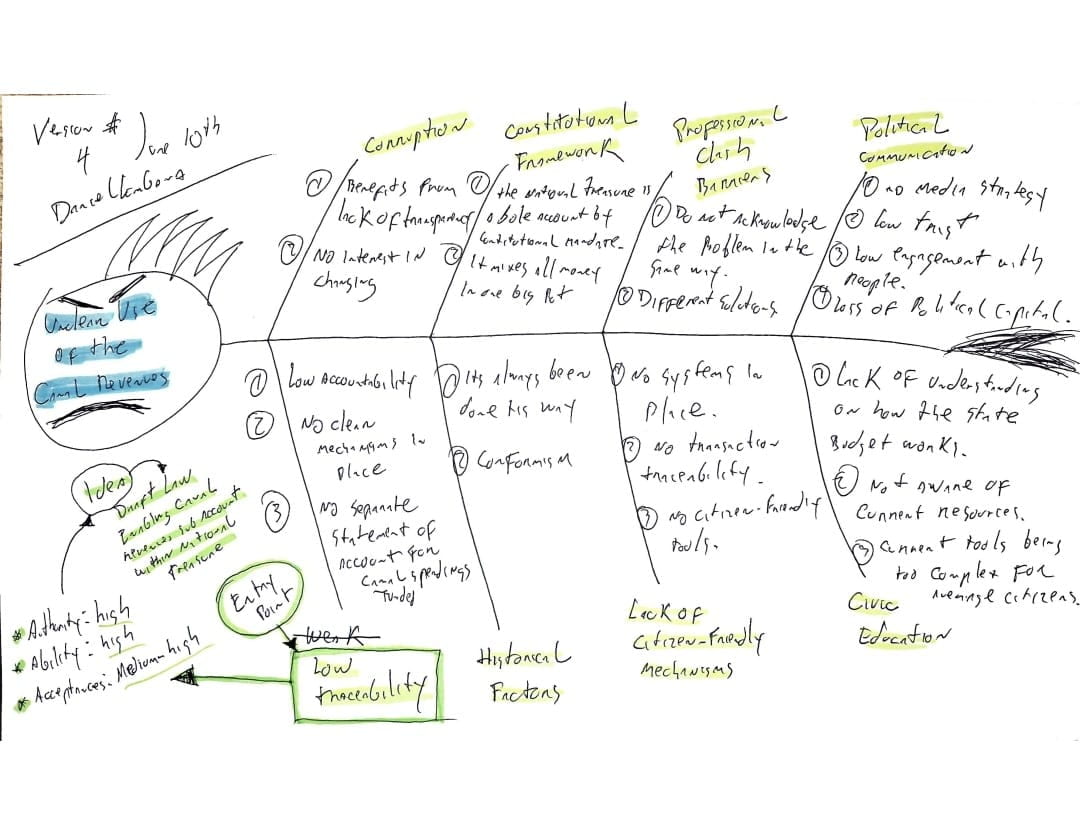
Working on this challenge through the PDIA framework was eye-opening. Instead of treating “inefficiency” as a single technical problem, I learned to deconstruct it into root causes. By doing so, I realized the problem wasn’t only about efficiency—it was also about legitimacy and trust. We then started exploring small entry points: reflecting on transparency measures, testing ways of publishing more accessible budget data, and drafting a bill to be presented to the Panamanian parliament.
These were not huge movements, but they were real steps forward. What began as a simple idea evolved into a bill that was formally presented to parliament and is, as of today, on its way to becoming law. The Economic and Finance Committee decided to take up the bill for consideration, and it has already been assigned to a subcommittee for further analysis.
Reflecting on this journey, I carry forward five lessons:
- Fishbone diagrams are transformative. They force you to move beyond vague diagnoses into the messy reality of causes and sub-causes.
- Iteration works. We don’t have to solve everything at once. Small, gradual steps are both valid and effective.
- Teaming matters. Success depends on the people around you, their trust, and their complementary skills.
- Everything is about people. Behind every policy are relationships, motivations, and communication. Ignore that, and nothing moves.
- Small wins are big. Recognizing progress, even when modest, prevents discouragement and builds the momentum to continue.
One of the most lasting lessons I take with me is this: public policy is about people. Too often, governments and public servants become overly technical and distant. They design policies in isolation, forgetting the human beings these policies are meant to serve. PDIA reminded me that legitimacy comes from building support, and functionality comes from solving real problems—not from producing elegant documents that never get implemented. This realization has already begun shaping my vision. In my work, I am starting to deconstruct problems systematically, look for root causes, and design more adaptive approaches to policy challenges.
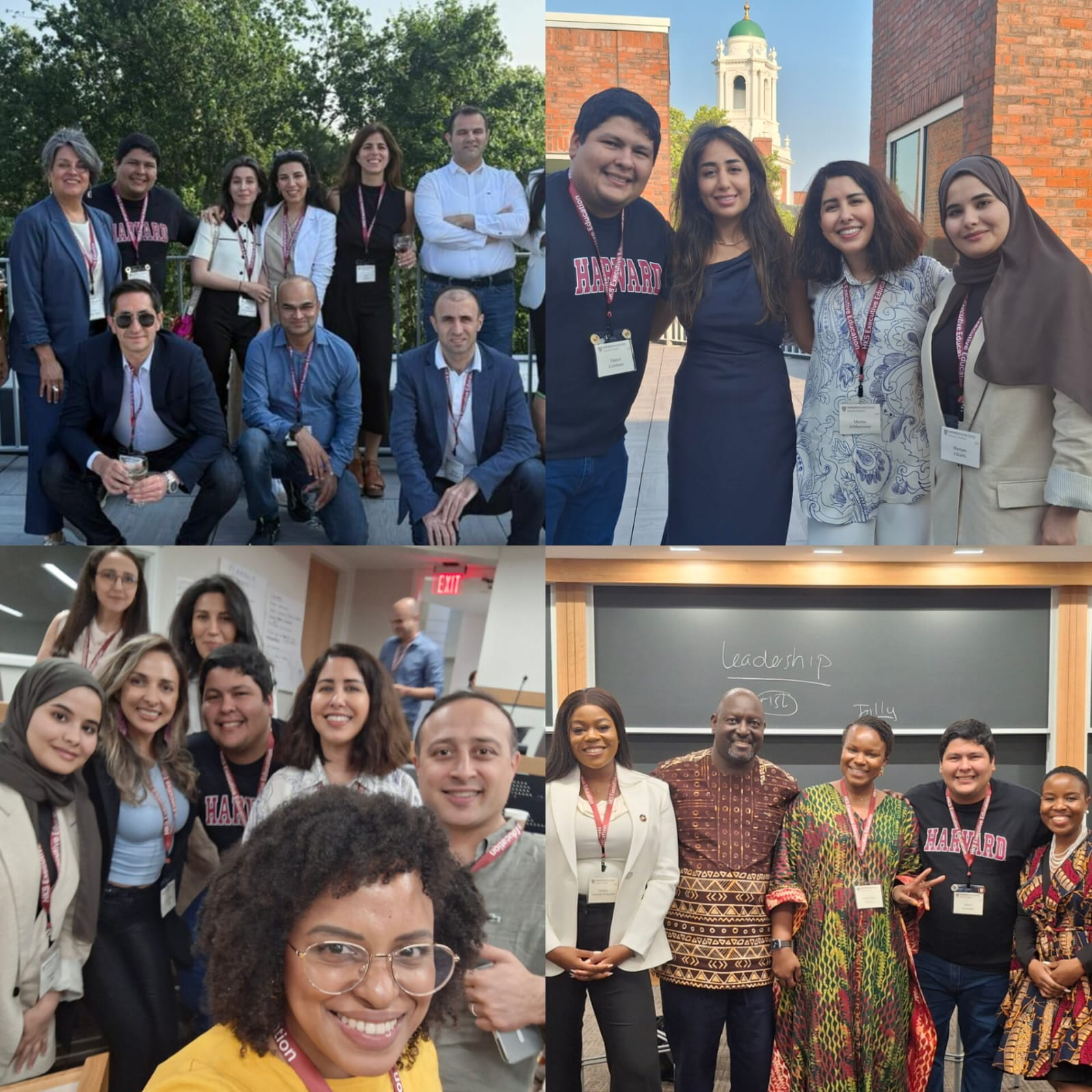
To my fellow PDIA practitioners around the world: keep going. This work is not easy, but it is meaningful. Remember that in public policy, we are not just designing processes—we are working to create a better world. And we cannot create a better world unless we remain close to people. Stay human, stay iterative, and never lose sight of the fact that legitimacy and trust are as important as technical efficiency.
This program did not just add to my knowledge—it reshaped the way I see problems, people, and possibilities. I leave with practical tools, but more importantly with a mindset that embraces complexity, values continuous learning, and keeps humanity at the center of public policy
This is a blog series written by the alumni of the Implementing Public Policy Executive Education Program at the Harvard Kennedy School. 36 Participants successfully completed this 5-month hybrid program in September 2025. These are their learning journey stories.